The heavy oak doors of the Elysée Palace do not merely close; they seal. Behind them, the air always smells faintly of beeswax, old paper, and the unspoken anxieties of statecraft. When the announcement dropped that Donald Trump would cap his G7 summit trip with a private dinner hosted by Emmanuel Macron at Versailles, the news wires treated it like a scheduling update. A line item. A logistical note at the bottom of a diplomatic brief.
They missed the theater of it.
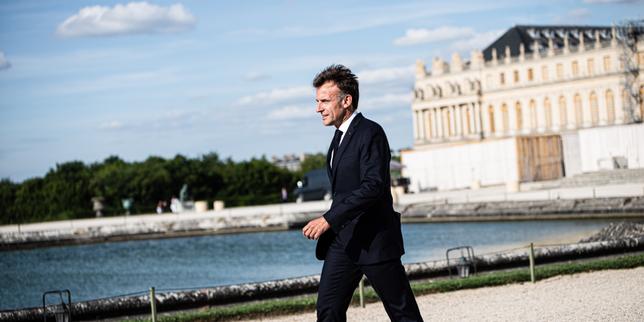
To understand modern geopolitics, one must stop looking at policy papers and start looking at the staging. Politics at this level is not a boardroom meeting. It is an opera. And in this particular production, the backdrop is everything. Versailles was not chosen because it has an excellent kitchen. It was chosen because its walls were built to intimidate, to dazzle, and to remind anyone who walks through them of the sheer weight of history.
Consider the optics. Two leaders, radically different in style, philosophy, and temperament, sitting across from each other in a palace built by the Sun King. It is a calculated gamble wrapped in silver service.
The Architecture of Power
Every state dinner is a battlefield disguised as a hospitality event. For the French presidency, hosting a foreign leader at Versailles is the ultimate diplomatic chess move. It is a venue that shifts the power dynamic the moment the wheels of the motorcade touch the cobblestones.
Imagine the arrival. The Sun is setting, casting a long, amber glow over the Hall of Mirrors. The glare bounces off hundreds of historic glass panes, creating an atmosphere that feels less like 2026 and more like an eternal, gilded past. For a guest who famously values scale, luxury, and the visual markers of success, Versailles is a mirror reflecting those exact desires back at him—but with a distinctively French accent.
Macron has played this card before. Early in his first term, he invited Vladimir Putin to the Trianon Palace within Versailles. Later, he treated Trump to a Bastille Day military parade and dinner at the Eiffel Tower. This is a deliberate strategy. When dealing with populist leaders who view the world through the lens of personal relationships and strength, conventional diplomatic memos fail. You do not convince them with a spreadsheet. You engage them with a spectacle.
But the stakes this time are different. The G7 summit is always an exhausting gauntlet of multilateral negotiations, communique drafting, and polite disagreements over trade, climate, and security. By the time the final press conferences wrap up, the collective energy is spent. Most leaders want nothing more than the quiet cabin of their official aircraft.
Instead, Trump and Macron chose a dinner. Just the two of them, accompanied by their closest advisors and translators, isolated from the rest of the traveling press corps.
What Happens When the Cameras Turn Off
The public sees the handshake. We see the stiff posture, the practiced smiles, the aggressive grip that political commentators love to analyze as if it were a physical sport.
But the real story begins when the doors click shut and the photographers are ushered out.
In the silence of a private dining room, the nature of the conversation changes. Without the need to perform for their respective political bases back home, leaders can drop the rhetorical posturing. Or, at the very least, they modify it.
The menu itself becomes a tool of negotiation. French cuisine is not merely food; it is a cultural export, a statement of soft power. Every course is timed to allow for specific conversational pivots. Over the starter, the pleasantries and the recap of the summit. By the main course, the thornier issues—tariffs, NATO spending, unilateral foreign policy decisions. By dessert, the attempt to find a shared understanding, or at least a truce.
It is a deeply human paradox. The fate of international treaties and economic alliances often hinges on whether two men, sitting in a room filled with eighteenth-century art, can find a rhythm in their conversation. If the wine is good, if the steak is cooked to the guest's precise liking, the friction of a morning disagreement can melt into an evening agreement.
Conversely, a cold room or a mismatched tone can harden resolve. History is shaped by these micro-moments. The public tracks the grand arcs of policy, but those arcs are frequently bent by the mood of a single evening.
The Ghost in the Room
You cannot eat at Versailles without dining with ghosts. Louis XIV built the palace to centralize his power, to keep his nobles close, and to project an image of absolute authority to a fractured Europe. It was a monument to the idea that the state and the ruler were one and the same.
When modern democratic leaders meet there, that history hovers in the background. It serves as a stark reminder of the transience of power. The empires rise, the kings fall, the treaties are signed and torn up, but the stone remains.
For Macron, Versailles is a stage to project French leadership on the world platform, positioning France not just as a member of the European Union, but as the essential bridge between the old world and the new. For Trump, it is a venue that matches his affinity for grand, historic stages, a backdrop fitting for a leader who views his presidency as a series of historic moments.
There is a vulnerability in this kind of diplomacy. It relies entirely on the chemistry between individuals. It assumes that personal connection can override institutional friction. Sometimes it works. Sometimes the theater succeeds where the bureaucrats failed.
As the night deepens, the tourists are long gone from the palace grounds. The fountains are still. The motorcades idle outside, their exhaust plumes visible in the cool night air, drivers waiting for the signal that the dinner has concluded.
Inside, two men finish their coffee. The plates are cleared away. The future of transatlantic relations doesn't look like a signed treaty or a joint declaration. It looks like two figures walking slowly down a long, dimly lit corridor, their footsteps echoing off the marble, deciding the fate of nations between the silence of the sentences.