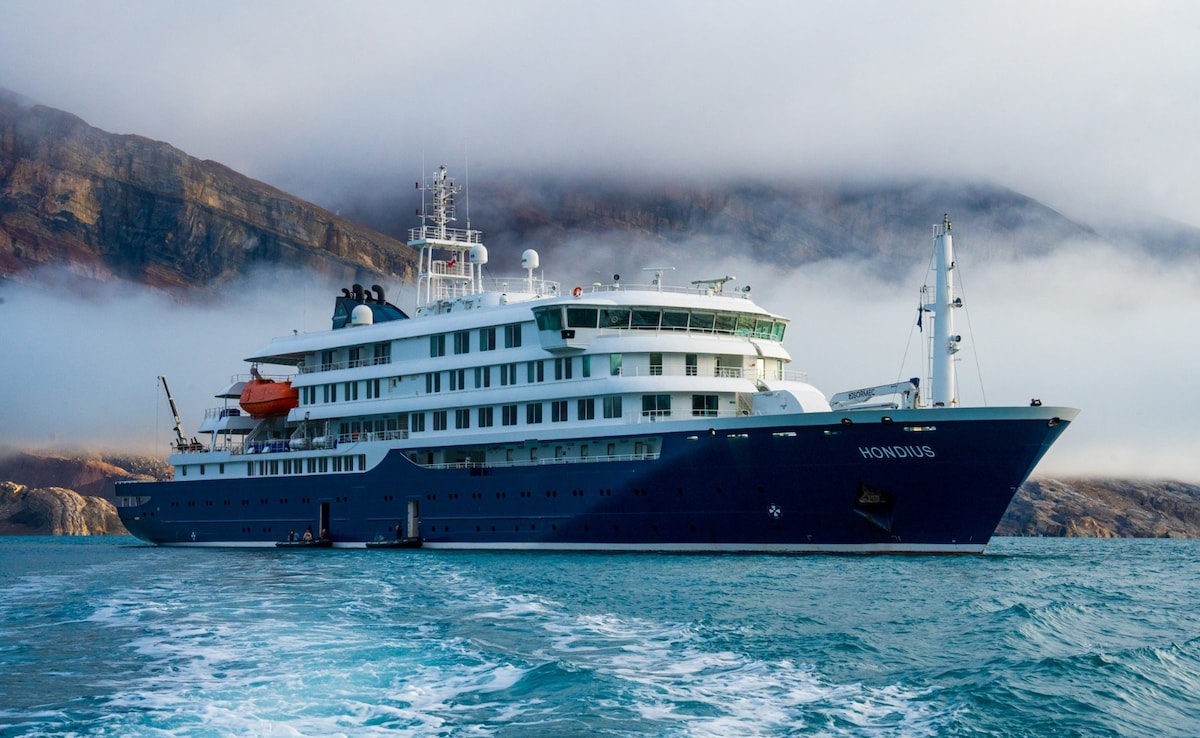
The air inside a luxury cruise cabin is designed to feel like a whisper. It is temperature-controlled, filtered, and faintly scented with something expensive—perhaps sea salt or white tea. But for a passenger recently docked at a U.S. port, that same air suddenly felt heavy, charged with the invisible weight of a biological question mark. The door didn't just close; it sealed. On one side lay the promise of a vacation, the buffet lines, and the midnight shows. On the other, the sterile reality of a hantavirus quarantine.
Isolation is a strange state of being. It transforms a high-end suite into a gilded cage. To understand the gravity of this moment, you have to look past the mahogany veneers and see the microscopic intruder that brought a multi-million dollar vessel to a psychological standstill. Hantavirus isn't your garden-variety flu. It doesn't travel through a cough in a crowded theater. It is a ghost of the wilderness, usually left behind in the dusty corners of rural sheds or forest floor debris, carried by rodents and breathed in by the unlucky. Seeing it manifest in the middle of the ocean feels like a glitch in the matrix of modern travel.
The passenger—let’s call him Elias—found himself staring at a tray of food left outside his door by a crew member wearing a mask that looked entirely too industrial for a pleasure cruise. This is where the dry headlines fail us. They tell you "Passenger Adjusts to Quarantine," but they don't mention the sound of the plastic seal on the meal tray, or the way the silence of the hallway starts to hum in your ears.
The Biology of a Shadow
We often treat our bodies like fortresses, but they are more like permeable sponges. When Elias began to feel the first tremors of muscle aches and the creeping heat of a fever, he likely thought of exhaustion. Maybe too much sun on the lido deck. Perhaps a lingering cold from the flight.
But Hantavirus Pulmonary Syndrome (HPS) plays a longer, more sinister game. It mimics the mundane before it attacks the vital. Within the lungs, the virus triggers a specialized inflammatory response. Your own immune system, in a desperate bid to eject the intruder, begins to flood the air sacs with fluid. It is a terrifying irony of biology: your body tries so hard to save you that it risks drowning you from the inside.
Statistics tell us that HPS has a mortality rate of around 38%. That is a staggering number. It sits in the back of the mind like a cold stone. In the clinical setting of a hospital, that percentage is managed with oxygen and monitoring. In the isolation of a ship cabin, it is a ghost under the bed. The transition from "traveler" to "patient zero" happens in the heartbeat it takes for a thermal scanner to beep red.
The Logistics of Loneliness
How does a massive floating city respond to a single point of failure? It moves with a surgical, cold precision. The crew doesn't panic; they follow a binder. Protocols developed after years of Norovirus outbreaks and global pandemics kick into gear.
For the ship's management, the stakes are financial and reputational. For the public health officials waiting at the pier, the stakes are containment. But for the person inside the room, the stakes are entirely existential. Elias watched the shoreline of the United States crawl closer through a porthole. He was home, but he wasn't allowed to touch it.
Quarantine in the 21st century is mediated by screens. You scroll through news reports about yourself. You see the grainy footage of the ship from a news helicopter and realize you are a pixel in a story about "The Outbreak."
Consider the friction of this reality:
- The constant ping of a thermometer against the forehead.
- The chemical smell of high-grade disinfectant that lingers in the carpet.
- The sight of the shore—close enough to see the cars on the highway—while being legally forbidden from stepping onto the asphalt.
It is a lesson in the fragility of our borders. We think of "The Border" as a line on a map or a wall in the sand. In reality, the most significant border is the skin of a single human being. If that skin carries a pathogen, the entire machinery of a superpower can grind to a halt to keep it contained.
The Source in the Silence
The mystery often haunts the patient more than the fever does. Where did it come from? Hantaviruses are typically transmitted through "aerosolization." Think of a cabin in the woods, closed up for the winter. A deer mouse leaves behind droppings. Someone sweeps the floor, kicking up a fine, invisible dust. That dust is inhaled.
For a cruise passenger, the source is a puzzle. Was it a pre-cruise hike in a scenic port? A dusty souvenir shop in a remote coastal village? The virus can lie dormant for one to eight weeks before the first shiver begins. This long fuse makes tracing the movement of the illness a nightmare for epidemiologists. They aren't just looking at where Elias is; they are looking at everywhere Elias has been for the last two months.
This is the "Invisible Stake." Every person Elias talked to, every railing he touched, every elevator button he pressed becomes a data point in a giant, frantic connect-the-dots game played by people in white lab coats. They aren't just treating a man; they are hunting a trail.
The Mechanics of the Wait
Waiting for a test result in quarantine is not like waiting for a flight. It is a suspension of time. The ship's engines thrum beneath the floorboards, a constant reminder of a journey that has technically ended but won't let you go.
The U.S. Centers for Disease Control and Prevention (CDC) works in tandem with the Coast Guard and local port authorities. It is a massive orchestration of bureaucracy designed to solve a problem the size of a strand of RNA. They check the air filtration systems. They interview the cleaning staff. They look for the "vector"—the specific moment of contact.
Meanwhile, the passenger adjusts. You learn the rhythm of the ship’s skeleton crew. You learn which floorboards creak. You start to see the dust motes dancing in the sunlight coming through the window and wonder if they are enemies. This is the psychological toll of zoonotic diseases—illnesses that jump from animals to humans. They turn the natural world into a minefield. The very air we breathe, usually the most forgotten element of our existence, becomes something to be scrutinized and feared.
The Return of the Human
Eventually, the gangplank is lowered. Not for the cheering crowds, but for a specialized transport unit.
The story of a hantavirus quarantine isn't really about the virus at all. It’s about the thinness of the ice we walk on every day. We move across the globe at hundreds of miles per hour, crossing oceans and climates, assuming that our technology and our itineraries protect us. But we are still biological creatures, tethered to the ancient laws of the wild.
Elias eventually stepped out of that room. The air outside was different—unfiltered, chaotic, and sharp with the smell of exhaust and salt. He was no longer a headline or a case study. He was a man who had been to the edge of the glass wall and looked through to the other side.
We live in an era where we can track a cruise ship in real-time on our phones, but we still struggle to track a single breath. The lesson isn't to stop traveling or to fear the woods. It is to recognize that we are never truly isolated from the world around us. Even in the most expensive cabin on the highest deck, the wild has a way of finding its way in.
The glass remains. We look through it every day, watching the world go by, rarely realizing how lucky we are that the door still opens.