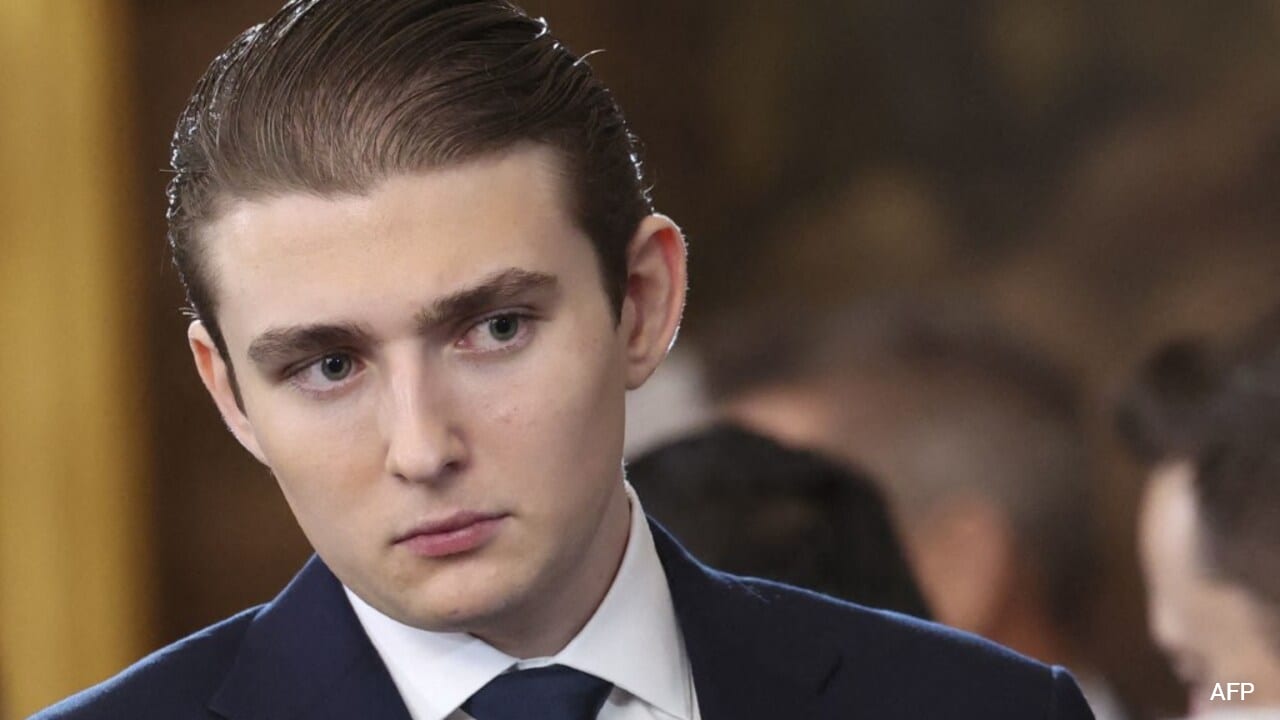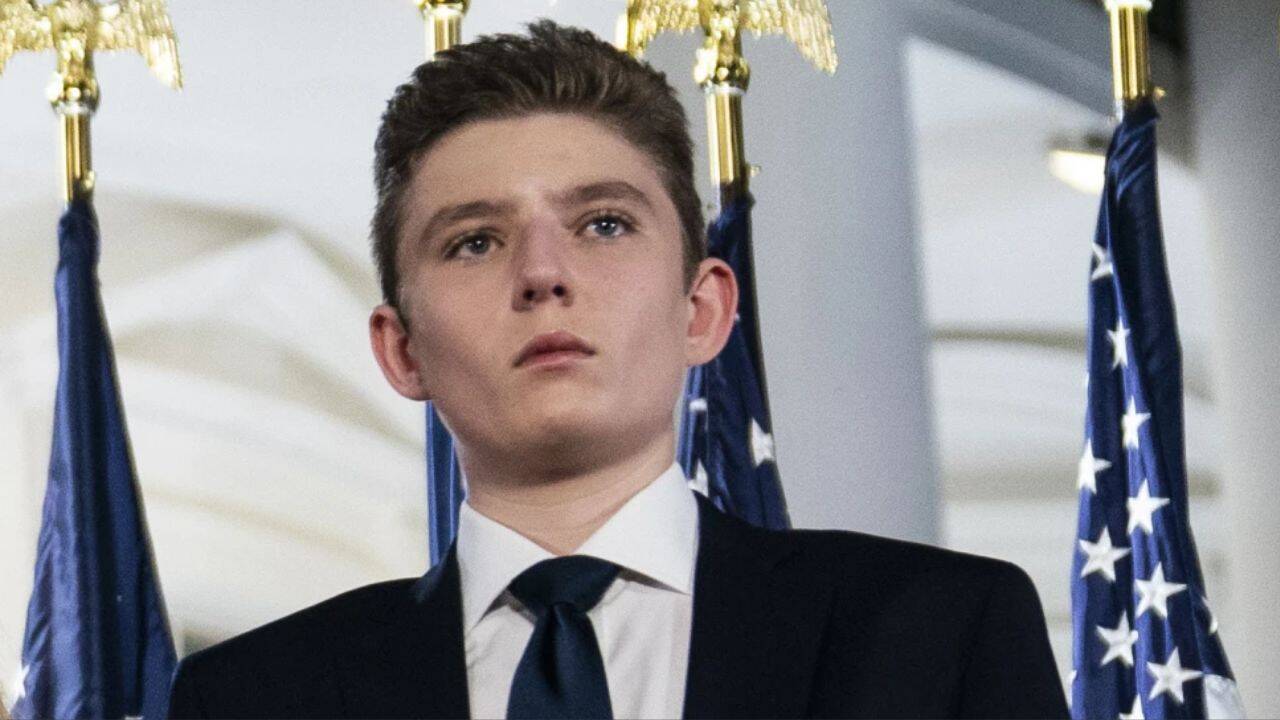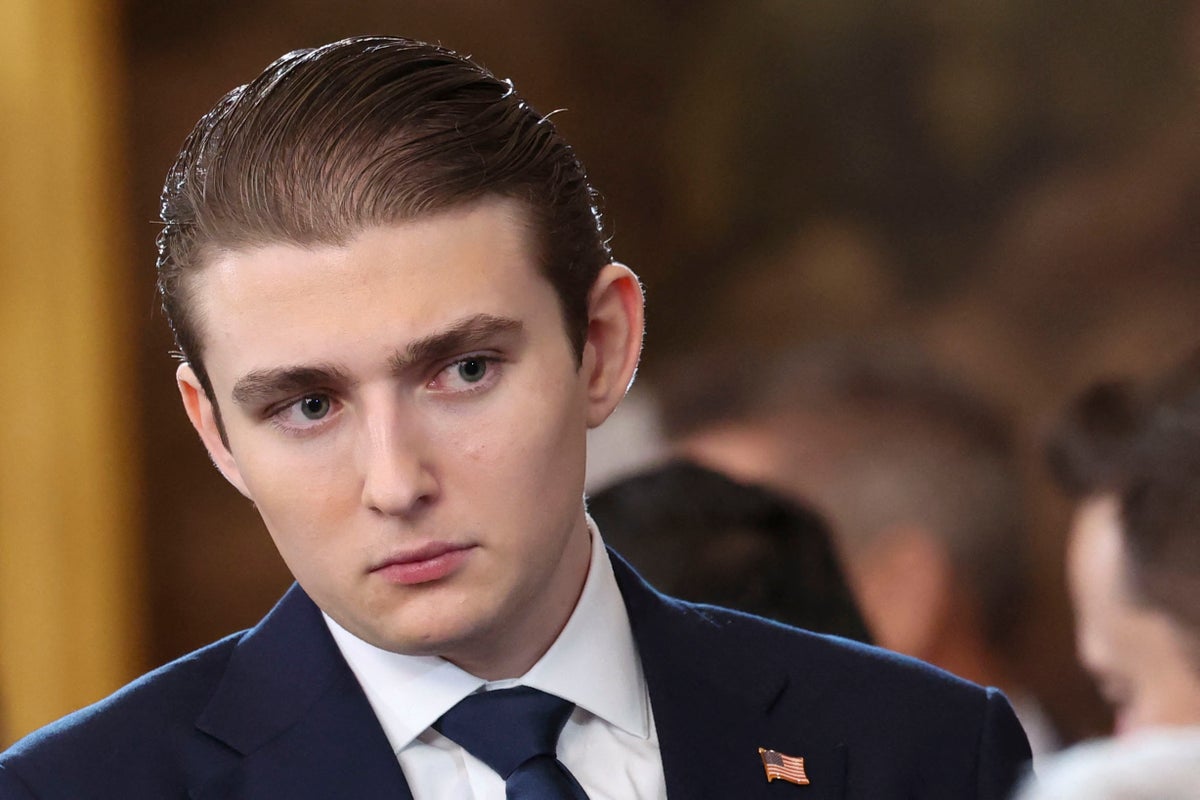
The world looks entirely different when viewed through bulletproof glass.
Most eighteen-year-olds worry about parking spots, calculus finals, or whether their favorite playlist will sync properly before a road trip. They navigate the messy, chaotic transition into adulthood with a certain clumsy freedom. They stumble. They recover. They blend into the crowded hallways of college campuses or the bustling corners of coffee shops, entirely unbothered by the heavy gaze of history.
Barron Trump does not have that luxury.
Recent headlines paint a stark picture of a young man retreating inward, drawing the heavy drapes against a world that has suddenly grown remarkably hostile. Reports point to a chilling convergence of events. A foreign bounty call carrying deadly geopolitical weight. The raw, violent shock of Charlie Kirk’s assassination framing political discourse in shades of blood and panic.
Isolation is no longer just a choice for privacy. It has become a survival strategy.
Consider what happens when a teenager’s ordinary milestones are hijacked by forces far beyond their control. Walking out the front door becomes a calculated risk assessment. Every stranger in a crowd is filtered through the anxious lens of potential threat.
The security detail is always there. A low hum of murmuring walkie-talkies. Dark suits blending into the background. Eyes scanning rooftops, exits, and peripheral movements. For a kid trying to figure out who he is, this constant, suffocating surveillance creates an invisible cage.
Fear alters architecture. It redraws the boundaries of daily life until the perimeter shrinks from a sprawling estate down to a single, locked room.
The psychological toll of living under a permanent crosshair is difficult to fathom for anyone who has not experienced it. Imagine waking up every single day knowing that your very existence is treated as a geopolitical chess piece or a target for anonymous radicals half a world away. The nervous system never gets to power down. The fight-or-flight response becomes a permanent baseline.
When threats cross international borders, the rules of normal youth evaporate completely. A bounty issued by a hostile regime transforms a college dorm or a quiet suburban street into a potential theater of asymmetric conflict. It is terrifying. It is deeply unfair. And it forces an abrupt, brutal end to childhood innocence.
Then came the violence closer to home. The assassination of Charlie Kirk sent seismic shockwaves through the conservative movement, but for families living in the immediate blast radius of high-profile political figures, the impact was visceral and terrifyingly personal. It was a stark, bleeding reminder that the modern political arena is no longer confined to fiery speeches and heated debates. It has spilled over into physical reality.
Bullets do not care about political affiliation. They do not care about age.
When violence enters the chat, the response is rarely defiant bravado. More often, it is silence. It is withdrawal. It is the instinctual urge to pull the people you love into the center of the fortress and bolt the heavy iron doors.
Public figures often talk about resilience as if it were a muscle you can simply flex through sheer willpower. But resilience requires air. It requires space to make mistakes, to walk down the street anonymously, to feel ordinary. When every movement is scrutinized, mocked, or weaponized by an internet culture that feeds on outrage, the instinct to become reclusive isn't a sign of weakness.
It is a desperate bid for self-preservation.
We live in an era that demands total transparency while offering zero mercy. Every expression, every sighting, and every rumor is dissected by millions of strangers who feel entitled to a piece of a young man's life simply because of the last name printed on his birth certificate. They want drama. They want updates. They want to know why he isn't smiling for the cameras.
They fail to see the weight of the armor he is forced to wear just to walk across a room.
The silence stretching across the hallways of Mar-a-Lago or private academic settings speaks volumes. It is not the silence of peace. It is the heavy, loaded quiet that settles just before a storm breaks.
A shadow moves across a drawn curtain, catching the afternoon light for a fraction of a second, before disappearing entirely behind the glass.