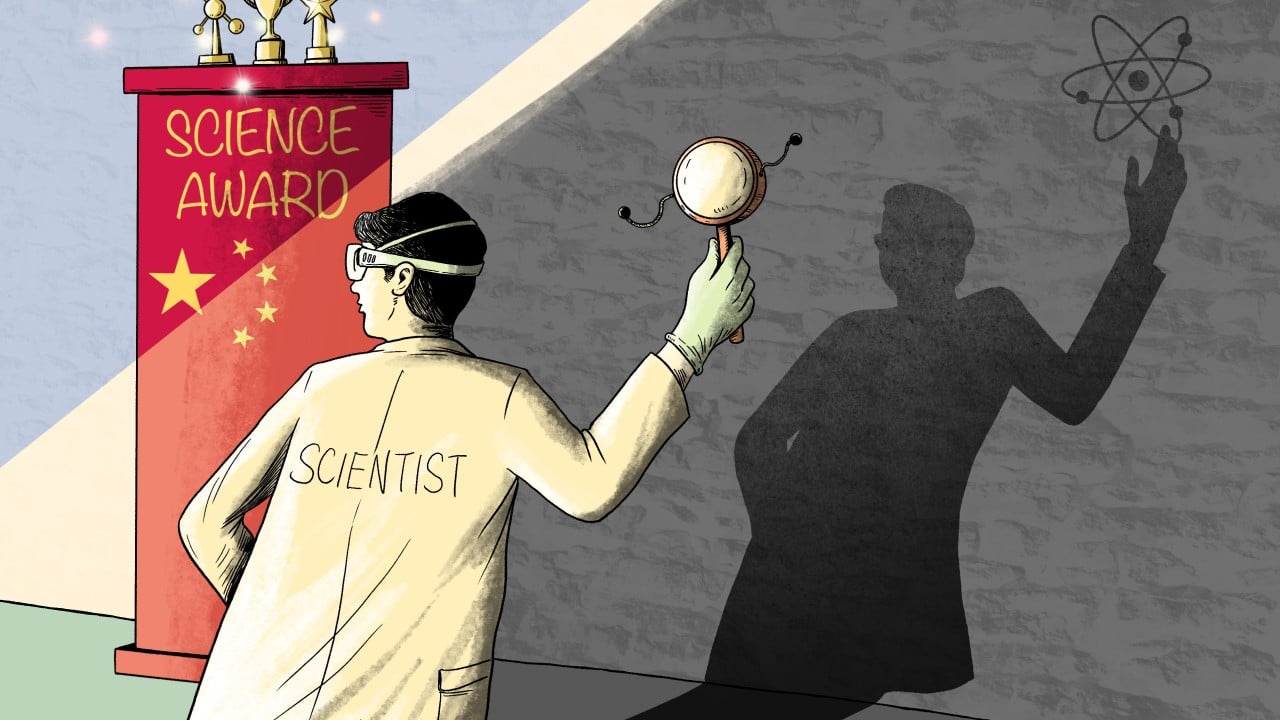
Li Wei sits in a small, windowless office in Beijing, the blue light of a monitor reflecting off his glasses. It is 2:00 AM. On his screen is a research paper that represents five years of his life—a breakthrough in semiconductor heat dissipation that could, quite literally, change the efficiency of global computing. But Li isn't looking at the data. He is looking at a list of names.
These are the names of the "recommendation experts" for the National Science and Technology Awards. In the world of Chinese academia, these people are more than peers; they are gatekeepers to a kingdom. Without their nod, Li’s work is just ink on a page. With it, he gains the prestige that secures funding, tenure, and a seat at the table of national progress.
The problem is that Li has never met any of them. And in the shadowy corridors of the current awards system, that is a terminal diagnosis for a career.
For decades, the path to a National Science Award in China hasn't just been paved with rigorous data and peer-reviewed excellence. It has been greased by guanxi—the intricate, often invisible web of social connections and reciprocal favors. The system was designed to honor the best minds, but it slowly morphed into a machine that rewarded the best-connected.
The Ghost in the Laboratory
Behind every major scientific breakthrough in the country, there is a shadow. This shadow is the "lobbying" phase. In the weeks leading up to the award selections, hotel lobbies near the Ministry of Science and Technology traditionally buzzed with a specific kind of energy. It wasn't the energy of scientific debate. It was the frantic, hushed choreography of scientists-turned-politicians.
They call it "running for awards."
Imagine a marathon where the winner isn't the one who runs the fastest, but the one who knows the referees’ favorite brands of tea or where their children go to school. This isn't just a matter of hurt feelings or unfair trophies. It is a systemic rot that threatens the very foundation of innovation. When the "shadowy practices" of lobbying and back-scratching become the standard, the real science starts to suffer.
Li Wei knows colleagues who spent thirty percent of their annual budget not on lab equipment, but on "socializing" with potential award nominators. That is money that should have bought microscopes. Instead, it bought expensive dinners and "consultation fees" for experts who hadn't read a single page of the research they were supposedly evaluating.
The Cost of a Silent Room
When the reward for brilliance is stolen by the well-connected, the brilliant stop trying. Or worse, they leave.
China is currently locked in a fierce global competition for technological supremacy. From Artificial Intelligence to quantum computing, the stakes are existential. Yet, the engine of this progress—the individual researcher—is being throttled by a legacy system that prioritizes seniority and networking over raw, disruptive output.
Consider the "Selection Committee" of the past. Often, these committees were permanent or semi-permanent fixtures. If you were a young researcher with a radical idea that challenged the work of a committee member, you didn't just face intellectual pushback. You faced a career dead end. The awards system became a self-perpetuating loop: the old guard rewarded the young followers, ensuring that the status quo remained unchallenged.
The human cost is a pervasive sense of cynicism. If the game is rigged, why play by the rules? This mindset leads to data manipulation, "salami slicing" of research to inflate publication counts, and a culture where the lab coat is discarded for a business suit the moment a scientist hits thirty-five.
Breaking the Mirror
The Chinese government isn't blind to this. A series of radical reforms has begun to roll out, aiming to smash the glass ceiling that has kept people like Li Wei in the dark.
The first blow to the old system was the introduction of a "discovery-based" nomination process. Previously, scientists had to self-apply for awards—a process that practically invited lobbying. You had to go out and "sell" yourself to the nominators. Now, the system is shifting toward a model where experts must "discover" and nominate talent without the scientist ever asking for it.
It sounds like a subtle shift. It is a revolution.
By removing the self-application element, the reform attempts to cut the umbilical cord between the researcher and the lobbyist. If you aren't supposed to know you're being considered, you can't spend your nights at 2:00 AM wondering which expert's favor you need to buy.
Then came the "Blacklist." In a move of uncharacteristic transparency, the Ministry signaled that any expert found engaging in "shadowy practices"—taking bribes, attending unauthorized "briefings," or engaging in reciprocal voting—would be banned for life. Not just from the awards, but from the entire ecosystem of national funding.
The Weight of the New Guard
But can a culture be changed by a memo?
Li Wei is skeptical. He has seen "reforms" before. Usually, they just move the shadows to a different corner of the room. The real challenge isn't just changing the rules on paper; it's changing the "invisible stakes" of the award itself.
In China, a National Science Award is more than a trophy. It is a currency. It is the primary metric used by universities to determine who gets a house, who gets a car, and whose children get into the best schools. As long as the award is the only thing that matters, the pressure to cheat will remain immense.
To truly fix the system, the government is attempting to diversify how success is measured. They are trying to tell the academic community: "The award is a result of your work, not the goal of it."
They are introducing "representative works" evaluations. Instead of looking at a scientist’s entire, bloated CV, reviewers are asked to look at just three to five pieces of high-impact work. This is designed to favor the "quality over quantity" approach. It protects the researcher who spends a decade on one massive problem versus the one who churns out ten mediocre papers a year just to keep their stats up.
The Invisible Stakes
We often talk about "innovation" as if it’s a weather pattern—something that just happens. It isn't. Innovation is the result of thousands of individuals making a choice every morning. Do I spend today doing the hard, uncertain work of actual discovery? Or do I spend today playing the game?
If Li Wei chooses the game, China loses a scientist. If he chooses the science and loses the award to a "player," China loses his future.
The reforms are an attempt to ensure that the next generation of Chinese scientists doesn't have to choose. There is a newfound emphasis on "Small and Medium-sized" awards managed by professional societies rather than government bureaus. The idea is to move the decision-making closer to the people who actually understand the science, rather than administrators who only understand the paperwork.
There is also the "Reviewer Randomization" protocol. In the past, you could guess who would be on your panel. Now, the pool of experts is larger, internationalized, and selected by an algorithm just hours before the review begins. It’s hard to bribe a ghost.
A Cold Morning in Beijing
The sun is beginning to rise over the skyline, hitting the glass towers of the Haidian District. Li Wei closes his laptop. He didn't send any emails to "experts" tonight. He didn't look up anyone’s home address or check the dates of the next big academic conference to see who he might "accidentally" bump into.
He spent the last three hours actually refining the thermal conductivity equations in his paper.
The air in the room feels slightly different. It’s still heavy with the scent of instant coffee and old books, but the cynicism has a new rival: a sliver of hope. It is a fragile thing. The "shadowy practices" of the past are like a deep-rooted weed; you can cut the top off, but the roots remain in the soil of tradition and necessity.
The success of these reforms won't be measured by the number of medals handed out next year. It will be measured by the number of researchers who feel they can finally afford to turn off their monitors at midnight, confident that their work will speak louder than their connections.
Li Wei walks out of his office and into the crisp morning air. For the first time in years, he isn't thinking about the list of names. He is thinking about the heat dissipation of a silicon chip, wondering if he can squeeze just two percent more efficiency out of the next iteration.
In that quiet moment of pure, unadulterated curiosity, the reform has already won its first battle.
Would you like me to analyze the specific metrics the Chinese Ministry of Science and Technology is now using to track the effectiveness of these anti-corruption measures?