The FBI is not merely closing a cold case with the arrest of Rex Heuermann; they are treating his digital and physical trail as a Rosetta Stone for the next generation of serial killer profiling. By dissecting the decade-long gap between the first discoveries at Gilgo Beach and the handcuffs clicking shut in Midtown Manhattan, federal investigators are refining a lethal new methodology. This approach combines mass-scale cellular data harvesting with the granular analysis of "digital ghosting"—the ways in which modern predators attempt to vanish within the very networks that eventually betray them.
For years, the investigation into the Long Island Serial Killer (LISK) was a masterclass in jurisdictional friction and technological limitations. However, the pivot that led to Heuermann’s doorstep represents a fundamental shift in how the Bureau intends to handle high-frequency, low-visibility offenders moving forward. They are moving away from the "hunches" of traditional profiling and toward a hard-data model that treats a suspect’s life as a series of trackable pings, receipts, and genetic markers. For an alternative view, see: this related article.
The End of the Anonymous Burner Phone
The most immediate lesson the FBI is extracting from the Heuermann file is the systematic deconstruction of the "burner phone" myth. For a long time, the prevailing wisdom among both criminals and law enforcement was that a prepaid device bought with cash provided a shroud of near-total anonymity. Heuermann relied on this, allegedly using multiple burners to contact victims and taunt their families.
The FBI’s Behavioral Analysis Unit (BAU) and its digital forensics wing are now codified in their belief that no device exists in a vacuum. Investigators used "billing billing" data—not just the location of the burner, but the location of Heuermann’s actual personal cell phone at the exact same moment. When two devices move in tandem across a bridge or through a specific neighborhood repeatedly, the statistical probability of them belonging to two different people drops to near zero. Related insight regarding this has been shared by The Guardian.
This "co-location" analysis is now a standard tool being pushed to state and local task forces through the FBI’s Violent Criminal Apprehension Program (ViCAP). The Bureau is teaching investigators to look for the "shadow" device. They assume the predator is carrying a legitimate phone for their "civilian" life and a burner for their "predatory" life. By mapping the two against each other over months or years, the anonymity of the burner evaporates.
Genetic Genealogy and the Pizza Crust Factor
While the media focused on the dramatic recovery of DNA from a discarded pizza box, the FBI’s interest is far more clinical and systemic. The Heuermann case proved that the "abandoned DNA" strategy can bypass the legal hurdles of obtaining a direct warrant for a suspect’s swabbing.
The Bureau is now refining the legal and ethical framework for what they call "tactical surveillance for biologicals." This involves the deliberate, prolonged tailing of a suspect specifically to wait for a moment of biological discard—a cigarette butt, a coffee cup, or a half-eaten meal.
The federal strategy is to use Investigative Genetic Genealogy (IGG) to narrow a pool of thousands down to a handful of names, and then use this tactical surveillance to clinch the match. It turns the entire world into a crime lab where a suspect cannot help but leave their signature behind. The FBI is currently lobbying for expanded access to private DNA databases, citing the Gilgo Beach success as proof that these tools do not just solve "old" crimes, but stop active threats.
The Architect Profile and the Suburban Camouflage
Rex Heuermann was not a drifter. He was a professional, an architect with a business in the heart of New York City, a commuter, and a family man. This "successful hide" is a specific sub-type of offender that the FBI is now re-studying. The Bureau is looking at how Heuermann used his professional knowledge—specifically his understanding of city layouts, building permits, and administrative dead zones—to facilitate his alleged crimes.
Traditional profiling often looked for the social outcast. The new FBI playbook, informed by the Heuermann investigation, looks for the man who is "hiding in plain sight" through hyper-conformity. They are analyzing his professional records to see if his travel for work coincided with "clusters" of missing persons reports in other jurisdictions. This is a shift toward "occupational profiling." If a suspect is an architect, a long-haul trucker, or a traveling consultant, the FBI is now more likely to run their professional itinerary against national databases of unsolved disappearances.
Managing the Jurisdictional Nightmare
One of the biggest failures in the early LISK investigation was the lack of cooperation between the Suffolk County Police Department and federal agencies. The FBI is using the post-arrest debriefs to identify exactly where the communication broke down.
The new "Heuermann-era" protocol emphasizes federal oversight much earlier in cases involving multiple victims. The Bureau is pushing for "centralized evidence repositories" where local police departments can upload digital evidence—like cell tower dumps—directly to federal servers for AI-assisted pattern matching. This removes the local bottleneck. If one precinct has a suspicious disappearance and a neighboring county has a body, the federal system can flag the connection before a local detective even picks up the phone.
The Digital Footprint of the Sadist
The search of Heuermann’s Massapequa Park home reportedly yielded a massive amount of digital material. The FBI is not just looking for evidence of the Gilgo Beach murders; they are looking for the evolution of a predator’s online habits.
They are investigating how he accessed the "dark web" versus the "clear web," what kind of encryption he trusted, and how he used social media to scout or track potential victims. This data is being fed into the FBI’s "Threat Assessment" algorithms. By understanding the digital consumption habits of a high-functioning serial offender, they can create "red flag" profiles for internet service providers and tech companies to report. It is a move toward a more proactive, predictive form of policing that targets the behavior before the act.
The Search for the "Interstate" Connection
A primary focus for the FBI right now is determining if Heuermann is responsible for more than the "Gilgo Four." They are looking at his properties in South Carolina and Las Vegas. This is the "expansion phase" of the investigation.
The Bureau is utilizing a technique called "Geographic Life Mapping." They take every known address, every vacation spot, and every business trip a suspect has taken over a thirty-year period and overlay it with the ViCAP database of unsolved murders. In Heuermann’s case, this means looking at every transit corridor he frequented. The FBI is currently encouraging other states to re-open cold cases that fit the LISK profile, using the specific "signature" behaviors discovered in Heuermann’s digital and physical files as a new filter.
Storage and the Hoarder Mentality
The sheer volume of items removed from Heuermann's home—including hundreds of firearms and potential "trophies"—has forced the FBI to rethink its approach to long-term offender storage. Serial offenders who remain in one location for decades, like Heuermann, tend to accumulate "clutter" that serves as a chronological record of their crimes.
The FBI is now training local agencies on "high-density search protocols." This isn't just about looking for a body; it's about looking for the small, seemingly insignificant items—a piece of jewelry, a specific brand of tape, or a scrap of fabric—that link a suspect to multiple, geographically disparate scenes. They are treating the home of a "stable" offender as a living archive.
The Evolution of the Interrogation
Finally, the FBI is using Heuermann’s background to refine its interrogation techniques for high-IQ, "narcissistic" offenders. They know that a man who has successfully evaded capture for decades will not respond to standard "good cop, bad cop" routines.
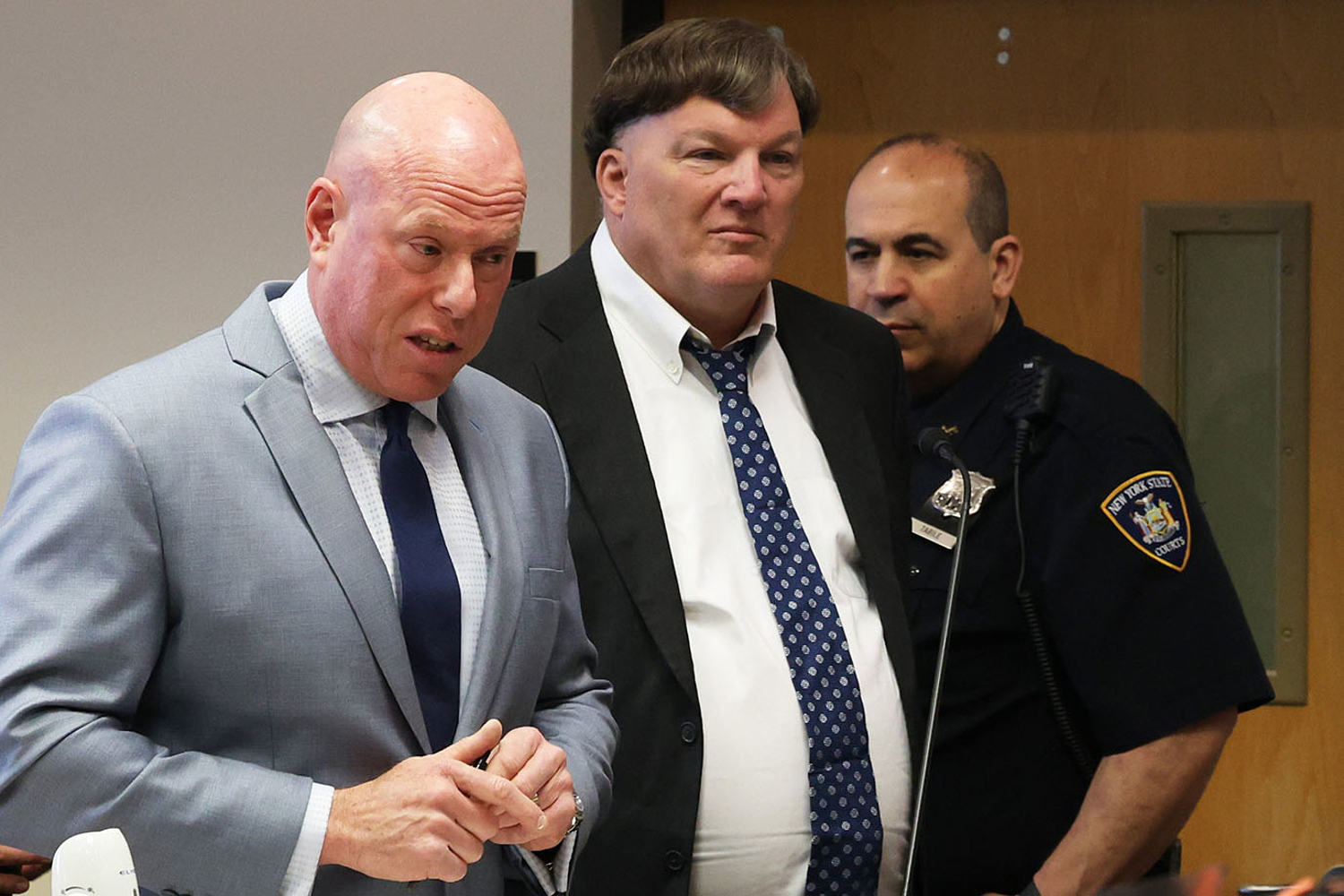
The Bureau’s elite interrogators are studying Heuermann’s reactions to specific pieces of evidence. They are looking for the "cognitive crack"—the moment where the suspect’s belief in his own intellectual superiority fails him. By studying how Heuermann interacts with his legal counsel and how he responds to the mountainous digital evidence against him, the FBI is building a psychological roadmap for breaking the next "unbreakable" suspect.
The investigation into Rex Heuermann has moved far beyond a single house in Long Island. It has become a laboratory for the future of federal law enforcement. The goal is no longer just to catch the killer after ten bodies are found, but to identify the digital and biological patterns of a predator before they can complete their first "cycle." The data extracted from this one man’s life is being used to build a net that is increasingly difficult to slip through, regardless of how many burner phones or "architectural" disguises a predator might use.
Police departments across the country are being told to look at their cold cases through this new lens. The message from the FBI is clear: the era of the "untraceable" suburban predator is over, ended by the very technology they thought would protect them. The Bureau is already scanning the horizon for the next set of pings that don't quite line up.
Check the digital trails of your "stable" suspects for co-location anomalies. Verify every cash-purchased device against the movement of the primary phone. The blueprint has been drawn.
The next step for any major crimes unit is the immediate integration of IGG with tactical surveillance. Waiting for a warrant is no longer the only path; waiting for the discard is often faster and more definitive. This is the new reality of the hunt. One pizza crust at a time.