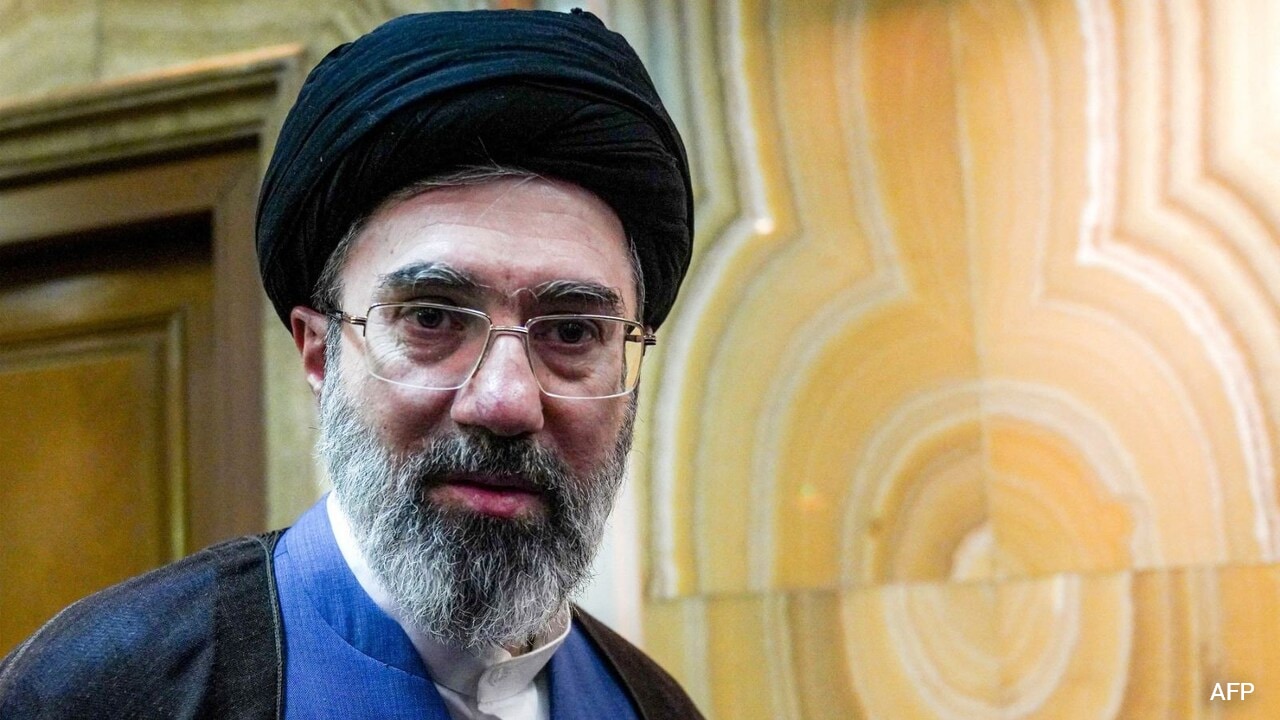
Power does not always walk into a room. Sometimes it waits in the hallway.
A diplomatic cable whispers a paradox that rattles the quiet corridors of foreign ministries from Geneva to Tokyo: Mojtaba Khamenei is physically sound, yet he cannot step into the light. On paper, the son of Iran's Supreme Leader possesses the stamina of a man who spent years navigating shadowy clerical networks and intelligence circles rather than podiums. He is not bedridden. He is not frail. Still, to the outside world, his absence feels almost architectural—a deliberate blank space carved out of public life.
When a diplomat lets slip that a supposedly healthy figure cannot appear in public, the word "healthy" starts to sound like a decoy. In high-stakes politics, health is rarely just a medical chart. It is a shield, a rumor, a bargaining chip, or a cover story for security fears, factional vetoes, or calculated mystique.
I have spent enough years watching authoritarian capitals from afar to know how rumors move through them. They don't travel on wires alone; they ride on lowered voices over cold tea, in embassy waiting rooms where nobody writes down the name of the person they actually mean. You hear the clink of a spoon against porcelain. You watch a press attaché glance toward a closed door before choosing a safer adjective. That small hesitation tells you more than a thousand official broadcasts.
To make sense of why someone healthy stays out of sight, it helps to separate the body from the role. A person can have a steady pulse and normal blood pressure while inhabiting a political position so volatile that a single photograph becomes a liability.
Consider a hypothetical scenario to test this logic. Suppose a mid-level envoy—let's call him Farhad, a composite stand-in for seasoned diplomats who read between the lines of state television—sits across from a Western counterpart after a tense week in Tehran. Farhad isn't leaking state secrets out of rebellion. He is doing what diplomats have done for centuries: managing expectations without crossing a line that costs him his passport or his freedom. When pressed about why a key behind-the-scenes figure remains unseen despite reports of good health, Farhad shrugs with practiced ambiguity. A public appearance invites scrutiny. Scrutiny invites counter-moves. In a system where every gesture is decoded by rivals, hardline clerics, security services, and foreign intelligence alike, staying invisible is not weakness. It is armor.
Metaphorically speaking, power in closed systems often behaves like deep-sea pressure. Near the surface, everything is bright, loud, and easy to photograph. Down in the dark, immense weight holds the structure together—and bringing something fragile or contested up too fast can cause it to rupture.
That metaphor isn't exact, because human beings aren't submarines. Yet it captures a real psychological and strategic truth about succession and influence in the Islamic Republic. For decades, speculation around Mojtaba Khamenei has swirled around a central question: how much real sway does a figure wield when he rarely speaks publicly, holds no formal high office comparable to the presidency, and avoids the stagecraft that other leaders crave?
Observers who equate visibility with authority often get tripped up here. In open democracies, leaders campaign, debate, wave from motorcades, and live under constant camera lights. If a prominent political heir vanished from public view for months on end, voters and pundits would assume a crisis, a scandal, or a medical emergency.
Closed systems play by different rules. Influence can accumulate quietly through personal loyalty, institutional ties to the Islamic Revolutionary Guard Corps, clerical networks in Qom, and proximity to the apex of decision-making. When power is exercised behind closed doors, stepping into the spotlight carries asymmetric risk. If you appear too often, you look like you are campaigning for a crown that is supposed to be decided by consensus or divine/institutional legitimacy rather than ambition. If you appear too little, people whisper that you are sick, sidelined, or too controversial to defend in daylight.
And what if the whisper from a diplomat—"he's healthy, yet he can't appear"—points to something even more practical?
Security.
Modern statecraft is haunted by precision threats, domestic unrest, and factional friction. A high-value figure who steps onto a public stage creates a fixed point in space and time. Every camera angle reveals posture, gait, age, companions, and crowd reaction. Even a brief clip on social media can spark protests, celebrations, or rival narratives within hours. When a regime's stability depends on tight control of information, unpredictability from an unseen actor can sometimes be easier to manage than a scripted appearance that goes slightly off-key.
Still, I should admit something candidly: whenever diplomats speak in riddles about a leader's health or public absence, certainty is a luxury nobody really owns. A diplomat's comment might reflect genuine insider knowledge. It might also reflect wishful thinking, factional spin, or a carefully planted signal meant to test how foreign capitals react. Anyone claiming to know the exact mix of motives inside Tehran's inner circle is filling in shadows with guesswork.
That uncertainty is part of why these stories linger. They tug at basic human curiosity. We want clean explanations. Sick or well? In charge or out? Hidden by choice or held back by circumstance?
Real life rarely hands us a binary switch.
The Architecture of Strategic Absence
Why would a healthy man choose—or be required—to stay off the public stage?
Start with the optics of dynasty. In a republic born out of an anti-monarchical revolution, hereditary succession is a sensitive nerve. Even supporters of a strong, centralized leadership have to weigh how father-to-son continuity looks to skeptical citizens and traditionalists alike. Keeping a prominent son out of routine public ceremonies avoids turning every appearance into a coronation rehearsal.
Then look at leverage. In backroom politics, mystery has a strange currency. When everyone can see a player's every move, rivals can price them in. When a figure stays largely out of view, allies and adversaries alike have to infer intentions from intermediaries, appointments, and policy shifts. Absence forces people to lean forward and listen harder for echoes.
Let's sketch another hypothetical character to see how this plays out on the ground. Picture Layla, an analyst in a neighboring capital who tracks regional briefings for a living. Every morning she scans transcripts, state media clips, and diplomatic chatter for subtle shifts in tone. One week, rumors flare that a key behind-the-scenes figure is unwell; the next, a diplomatic source insists he is healthy enough, simply unable to show his face publicly. Layla doesn't circle one word in red ink and declare the mystery solved. Instead, she asks who benefits from each version of the story. Does the "healthy but unseen" line calm worried insiders while keeping adversaries guessing? Or does it subtly signal friction among factions that aren't ready to present a unified public front?
Notice how the question shifts once you stop treating "healthy" as a medical verdict and start reading it as a political clue.
A person can be free of illness and still face constraints tighter than any hospital room. Political constraints. Security protocols. Factional bargains. Family dynamics. Reputation management. In high-stakes environments, being "unable" to appear rarely means a locked door with a physical guard outside; more often, it means a web of calculations where the cost of walking through the door outweighs the gain.
What Diplomats Actually Mean When They Talk in Hints
Diplomacy is an art of sideways movement. Envoys rarely blurt out raw truths over coffee; they trade in calibrated impressions.
When an Iranian diplomat—or any diplomat from a tightly controlled system—remarks that someone is healthy yet cannot appear in public, several possibilities sit right beneath the surface:
First, a deliberate counter-narrative. If rumors of serious illness have been circulating, insisting on good health pushes back against speculation about imminent collapse or power vacuums. Adding that he can't appear shifts the focus from physical frailty to external or strategic necessity.
Second, a signal of internal constraint. Saying someone cannot appear hints at limits imposed by circumstances, security, or consensus politics rather than personal whim. It suggests that even influential figures operate inside boundaries.
Third, deniability and pacing. By keeping key figures off public stages during sensitive moments, decision-makers preserve room to maneuver. Nothing is locked in by a high-profile photo-op.
History offers plenty of parallels across eras and regions. Across centuries of court politics and modern authoritarian states alike, the most consequential figures have not always been the ones waving from balconies. Sometimes the decisive voice belongs to the advisor in the corner, the relative who rarely gives interviews, or the strategist whose name surfaces only when policy takes a sharp turn.
When you view the situation through that lens, the contradiction in the headline—"healthy" yet "can't appear"—softens into something recognizable. Health is about the body. Appearance is about politics.
The Human Cost of Living Behind a Screen
Behind every geopolitical puzzle sits a human life, even when that life is wrapped in layers of secrecy and statecraft.
Think about what total or near-total public absence does to a person's existence. No casual walk down a familiar street without a phalanx of security. No unguarded conversation that isn't weighed for political fallout. Every movement becomes a calculation; every silence becomes a text for strangers to interpret.
Even if someone chooses a low-profile path out of temperament or strategy, living under permanent surveillance and intense scrutiny reshapes daily reality. You become less a person and more a symbol. And symbols are heavy things to carry, especially when people project their hopes, fears, and grievances onto a face they rarely see.
For ordinary citizens watching from afar, that distance breeds alienation or cynicism. When power feels remote and opaque, rumors rush in to fill the quiet. A single remark from a diplomat becomes fuel for coffeehouse debate, exile commentary, and intelligence assessments alike. Everyone is trying to read a room from outside the walls.
That gap—between what happens behind closed doors and what people on the outside are allowed to see—is where modern political tension lives. Information travels faster than ever, yet genuine transparency in high-stakes power centers remains scarce.
Listen closely to what happens when a diplomat speaks of a healthy man kept from public view. You aren't just hearing about one individual or one capital. You are hearing about how power protects itself when the stakes are highest, how rumors substitute for openness, and how fragile appearances can be when real decisions happen out of sight.
A closed door does not mean an empty room.


