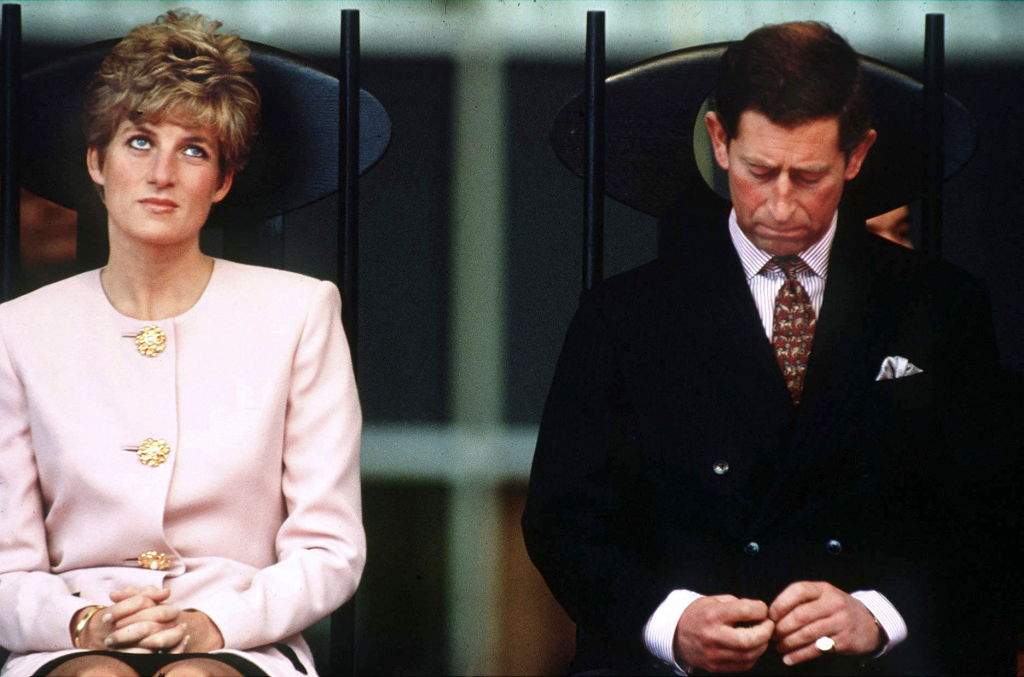
Paper rustles in quiet rooms. Ink dries. Centuries pass, yet old echoes refuse to sleep.
There is an ancient weight attached to a surname like Spencer. To carry it is to carry the memory of flashing camera bulbs on damp London streets, of a cathedral floor beneath heavy satin, of a public grief that shattered national composure and forced a stoic crown to learn a new language of sorrow. When Earl Spencer, brother to Diana, sets pen to paper or speaks from the ancestral halls of Althorp, the world does not merely listen. The world holds its breath, waiting to see which old stone will be turned over next, and what light might bleed into the cracks.
King Charles knows this weight better than anyone. He has lived his entire adult life beneath the long, sloping shadows cast by history, public expectation, and private heartbreak. When fresh claims emerge from the pages of a new book bearing the Spencer name—stirring up the dust of decades-old storms—the immediate machinery of modern media demands a response. A statement. A clarification. A sign of battle or a gesture of peace.
Yet, royalty rarely shouts. It endures through silence. Or, when silence becomes impossible, through measured, careful friction.
To understand the rhythm of these royal collisions, one must look beyond the glossy covers of memoirs and the breathless broadcast tickers. We are dealing with two entirely different ways of experiencing the exact same grief. For the public, Diana remains an eternal icon, frozen in youth and tragedy, a saintly figure carved into the collective imagination. For her brother, she was a sister whose laughter echoed down long corridors before the world claimed her. For Charles, she was a wife, a complicated partner in a collapsing marriage played out on a global stage, and now, the mother of his sons.
When a new book drops a stone into this deep well, the ripples hit the shores of Buckingham Palace and Clarence House with familiar force. The instinct of the modern observer is to demand a winner and a loser. Who scored a point? Who retreated?
The reality is far more fragile.
Imagine standing in a room lined with ancestral portraits where every gaze seems to track your movement. You did not ask for the gallery, but you inherited the walls. In these high-stakes family dynamics, every published word acts as a mirror held up to an era that both men survived, though each carries the scars differently. Earl Spencer guards the memory of his sister with the fierce possessiveness of a younger brother who feels the injustice of her abrupt exit from the world. The King carries the heavy armor of institution, duty, and the relentless march of a crown that must not tremble, no matter how hard the wind blows against the gates.
Public commentary often reduces these moments to petty rivalry or ancient grudges. That is a mistake. What we are witnessing is the collision of private mourning with public architecture. When a Spencer book surfaces with fresh assertions, it pokes at the tender tissue of a national narrative that has never fully healed. People want closure. History rarely offers it. Instead, history offers chapters. And every new chapter forces the central characters to decide whether to fight the old draft or let the ink fade.
Consider the mechanics of how a royal response is born. It does not happen in a flash of digital anger. It is considered over cold tea in high-ceilinged rooms, weighed by advisors who measure words in millimeters rather than paragraphs. A brief statement is issued. The tone is polite, distant, almost glacial. To the untrained eye, it looks like indifference.
It is never indifference. It is boundary-setting in front of a billion spectators.
The press calls it a feud. The public calls it drama. But beneath the headlines lies a profound human exhaustion. Both men are older now. Time has stolen their youth and left them to navigate the twilight of a shared, complicated legacy. Every time a new volume hits the bestseller lists, they are forced to relive the most agonizing chapter of their lives under the blinding glare of total transparency.
We forget that behind the titles and the ancestral seats, these are men who lost someone who mattered deeply to them. Their grief was never allowed to belong entirely to them. It was annexed by the world the moment the first camera flashed. And because it was public property, every book, every interview, and every whispered rumor acts as a retrieval mission, attempting to reclaim a story that was hijacked long ago.
When the King responds—or chooses the harder path of dignified restraint—he is walking a tightrope stretched over an abyss. Lean too far toward defense, and you look defensive. Lean too far toward silence, and you cede the narrative to the loudest voice in the room.
This is the hidden cost of living inside a legend.
The new book will sell its copies. The talk shows will dissect every sentence. The columnists will draft their moral verdicts by midnight. And then, the news cycle will turn its restless head toward the next shiny distraction, leaving the two men back where they started: bound together by an invisible, unbreakable thread of history, grief, and survival.
We watch because we recognize the pattern. Every family has its ancient fractures, its disputed memories, its versions of events that refuse to match. The only difference is that ours play out around a Sunday dinner table, while theirs play out on the front page of every newspaper on earth.
The ink dries again. The palace doors close. The tea goes cold. And the ghost of that summer in 1997 takes her seat at the table once more, silent, beautiful, and impossible to put to rest.


