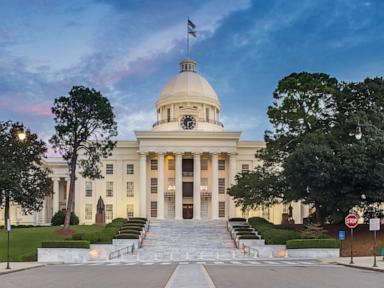
The humidity in Montgomery is already heavy by mid-morning, the kind of wet, low-country heat that clings to the skin and slows down the pulse. Inside the local polling precincts, however, the air feels different. It carries the sharp, electric hum of a high-stakes gamble. For months, news outlets treated the May 2026 primary election as a checklist of names, percentages, and red-and-blue geographic maps.
But elections are not math problems.
They are heavy, human collisions. This year, the friction is sharper because the state is staring at a rare, sweeping erasure of the status quo. With the term-limited Governor Kay Ivey steping aside and Senator Tommy Tuberville vacating his Washington seat to make a play for the governor's mansion, the political chessboard did not just shift. It shattered.
Consider a voter named Evelyn. She is an entirely hypothetical personification of the thousands who walked up the gravel paths of rural polling stations across the Black Belt or drove into the sprawling parking lots of suburban Birmingham. She does not think about "open seats" or "down-ballot synergy." She thinks about her grandson’s crumbling public school roof, the cost of diesel for her farm equipment, and the unsettling feeling that the people making the laws do not live in the same universe she does.
For voters like Evelyn, yesterday’s primary was not an exercise in tracking live vote counts on a glowing screen. It was an interrogation of power.
The Gravity of an Empty Room
When a long-serving politician leaves office, they do not just pack up their desks. They leave a vacuum. It is a physical pull that draws out ambitions, grudges, and millions of dollars in dark-money advertising.
The battle to fill the open U.S. Senate seat vacated by Tuberville quickly turned into an expensive, bruising family feud within the Republican party. Look at the names that populated the ballot. Congressman Barry Moore chose to risk his established footing in Washington, stepping away from his congressional district to gamble on a statewide promotion. He found himself locked in a fierce, expensive cage match against Alabama Attorney General Steve Marshall and tactical training business owner Jared Hudson.
These are not just names in a spreadsheet. They represent fundamentally different ideas of what power should look like. Marshall brought the clinical weight of the state's legal apparatus. Moore brought the raw, populist fire of a sitting congressman. Hudson brought the outsider's aggressive skepticism.
The campaign finance filings told the story long before the first ballot box was unsealed. Millions of dollars poured into thirty-second television spots that flickered across living rooms from Huntsville to Mobile. The ads painted pictures of an empire under siege, each candidate claiming to be the only true sentinel capable of holding the gate.
But while the airwaves screamed, the actual voters were quiet.
That silence is the terrifying part for political machines. It represents the unpredictability of a constituency that feels intensely researched but profoundly misunderstood.
The Redrawn Lines of Belonging
Away from the marquee Senate and gubernatorial brawls, an invisible structural war was fought in the margins of the map. Alabama’s congressional borders have been a battleground of court orders, special legislative sessions, and bitter accusations of disenfranchisement.
When a district line moves, it doesn't just change a map. It cuts through neighborhoods. It decides whether a community’s collective voice is a loud shout or a faint whisper.
In the newly contested congressional matchups, like the 1st District where former Representative Jerry Carl mounted a fierce campaign, the stakes were hyper-local and deeply personal. To the national commentators, these are just shifts in the partisan balance of power. To the small business owner on the Gulf Coast or the timber worker in the pine woods, these lines dictate who answers the phone when a hurricane tears the roof off a town.
The primary system means the true election happens now, in the sweltering heat of May, rather than the crisp winds of November. In a state where one party holds a historical, ironclad grip on statewide offices, the primary is the real crucible. If you lose here, there is no second chance. The general election is often just a formality.
The Long Ride to June
As the midnight oil burned in county clerk offices and the live tallies slowed to a crawl, a sobering reality began to set in for several campaigns.
The math of a crowded primary is brutal. You do not just have to win; you have to dominate. Under Alabama law, if no single candidate secures more than fifty percent of the vote, the top two finishers are forced into a grueling, month-long overtime.
Runoffs are where political movements go to die of exhaustion.
The energy drains. The bank accounts dry up. The rhetoric turns from hopeful promises to scorched-earth survival tactics. For the candidates facing a June 16 runoff, the real nightmare is just beginning. They must go back to people like Evelyn, who already gave up their Tuesday morning to stand in line, and convince them to do it all over again in four weeks.
Evelyn walked back to her car yesterday afternoon, her finger stained with a small smudge of ink. She didn't look at the live-updating maps on her phone. She knew that whoever won the night would not fix the school roof by Wednesday morning, nor would they lower the price of fuel by Friday.
But she voted anyway. Not because she believed the grand promises echoing from the television speakers, but because she knew that the only thing more dangerous than a politician who does not listen is an empty seat where a voice belongs.
The screens will stop blinking with live percentages soon. The talking heads will move on to the next state, the next primary, the next political soap opera. But in the quiet towns along the Alabama River, the decisions made in those curtained booths will linger for six long years, long after the ink on the ballots has faded into history.