The View from the Crusader Wall
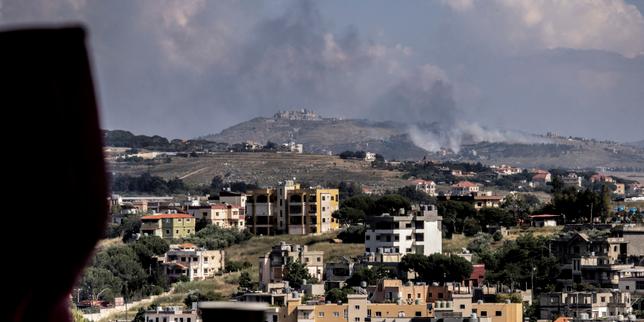
Stone does not forget. If you stand on the highest rampart of Beaufort Castle on a clear afternoon, the world opens up in a terrifyingly beautiful panorama. To the north, the Litani River cuts a deep, jagged scar through the Lebanese valleys. To the south, the green rolling hills of Galilee stretch out toward the horizon. For nearly a millennium, anyone who held this limestone fortress held the keys to the gateway between nations.
But military planners rarely talk about the ghosts.
In the spring of 1982, a young Israeli infantryman—let us call him Avi, a composite of the young men who left their youth on that ridge—looked up at the jagged silhouette of Beaufort. The fortress did not look like a modern military objective. It looked like a medieval nightmare grafted onto a modern warzone. The Palestinian Liberation Organization had turned the ancient Crusader vaults into a concrete-reinforced nest of mortars and machine guns. From those high windows, they could spot every movement in northern Israel. They could rain fire with absolute precision.
To the high command in Tel Aviv, the math was simple. The stronghold had to be taken. It was a strategic imperative, a flawless equation of high ground versus low ground.
They forgot that some places possess a gravity that war cannot master.
The Cost of the High Ground
The assault came on June 6, 1982. It was not a clean, surgical operation of modern doctrine. It was a brutal, hand-to-hand scramble up a sheer rocky face in the dying light of the afternoon.
Consider the physical reality of that night. Soldiers carrying sixty pounds of gear, scrambling over loose shale, while tracer rounds lit up the sky like angry red lines. The air smelled of cordite, crushed wild thyme, and sweat. By the time the Israeli flag was raised over the ancient stone, six elite commandos were dead, including the reconnaissance unit's beloved commander.
The next morning, politicians arrived by helicopter. The cameras rolled. The victory was declared total, a textbook example of overcoming the impossible. The high ground was secure.
But the real problem lay elsewhere. Securing a fortress is not the same as owning it.
For the next eighteen years, Beaufort turned from a prize into an anchor. The strategic asset morphed into a daily, grinding tax paid in blood. The soldiers stationed there lived in a subterranean world of concrete bunkers built inside the medieval ruins. They listened to the rhythmic thud of incoming mortar fire. They watched the surrounding hills for the sudden flash of a Hezbollah anti-tank missile.
The mountain became a symbol. In the Israeli consciousness, "Beaufort" stopped meaning a Crusader castle. It became a shorthand for a generation’s anxiety, a code word for a war that seemed to have a beginning but no logical end.
The Weight of the Return
History has a cruel habit of looping. Decades after the last Israeli soldier withdrew from that ridge in the year 2000, blowing up the modern bunkers behind them, the old equations are being pulled out of storage.
When tensions flare along the Blue Line, the eyes of generals instinctively drift back to the ridge. The military logic remains unchanged since the days of King Fulk of Jerusalem in the twelfth century: he who commands the heights commands the valley. If you look at a topographic map, the temptation is undeniable.
But the view from a command tent is vastly different from the view through a muddy periscope.
The strategic value of Beaufort is real, measurable in kilometers of visibility and angles of artillery fire. Yet the human cost is measured in something far less tangible. It is measured in the quiet dread of parents watching their sons pack their kit bags. It is measured in the realization that some geography is so contested, so soaked in historical memory, that holding it is like holding a handful of burning coals.
The Echoes in the Valley
Imagine a modern commander looking at the satellite feeds today. The thermal imaging shows the same ravines, the same choked roads, the same limestone outcrops. The technology has evolved. Drones now buzz where spotters once stood with binoculars. Precision-guided munitions can strike a target with centimeter accuracy.
Yet the terrain remains stubborn. A drone cannot hold a ridge. A satellite cannot secure a border. Eventually, if the logic of escalation runs its course, flesh and blood must climb the hill.
That is the invisible stake of the Beaufort narrative. It is the tension between cold geopolitical necessity and the warm, fragile reality of human lives. Every time a nation decides to occupy the high ground, it must ask how long it is willing to stay there, and what it is willing to leave behind.
The castle still stands on its precipice, silent, scarred by centuries of iron and fire. It does not care about modern borders, political doctrines, or strategic alignments. It simply waits for the next wave of men who believe they can finally conquer a mountain that has outlived every empire that ever tried to claim it.