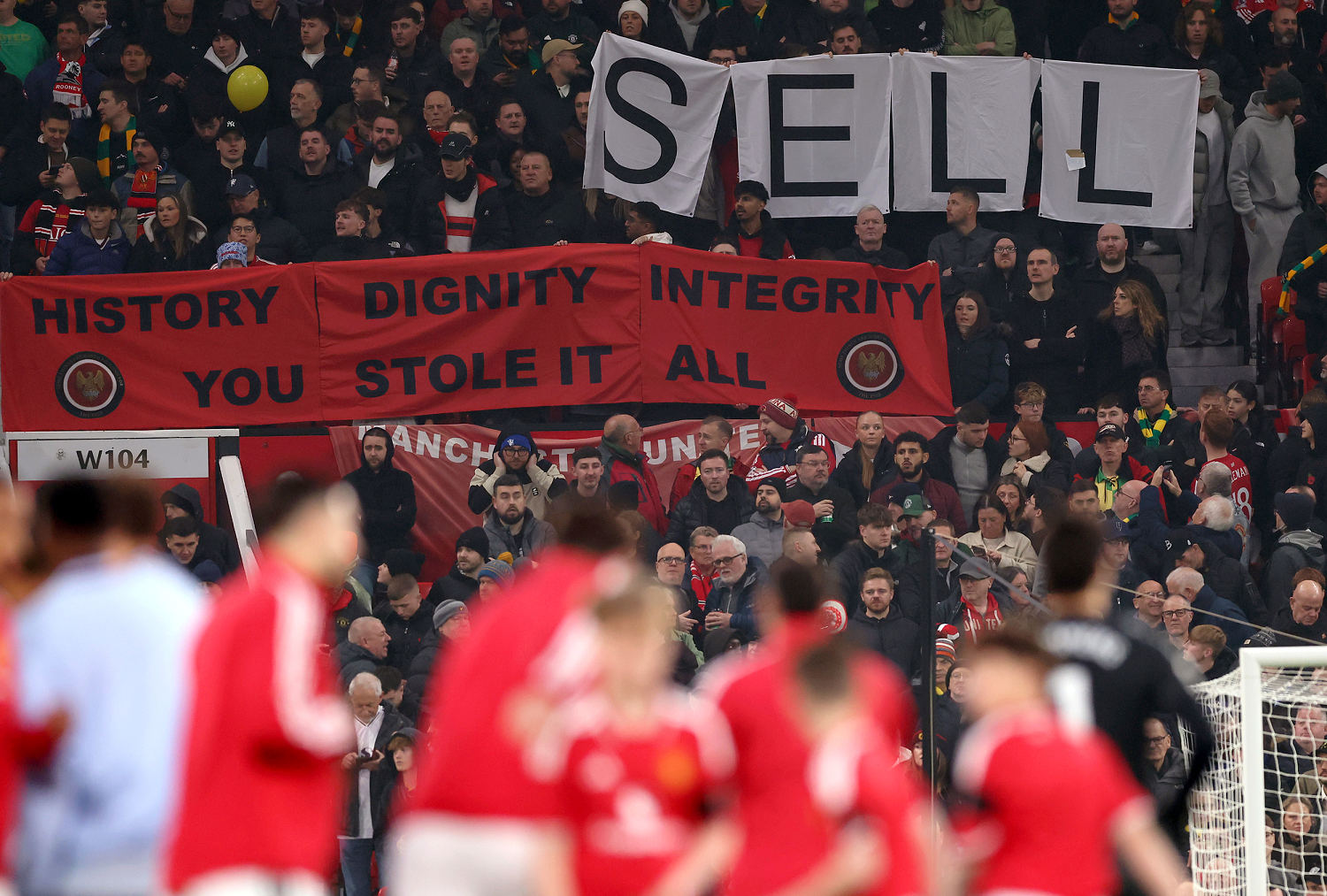
Rain in Manchester does not fall; it settles into the wool of your coat, turns the concrete of Sir Matt Busby Way into a dark mirror, and chills the marrow of seventy-four thousand people walking in silence.
Silence. Meanwhile, you can read other events here: What England’s Jacob Bethell Knee Setback Really Means for the South Africa Tour.
If you have never stood outside Old Trafford after a defeat that feels like an obituary, you cannot quite grasp the weight of that sound—or rather, the lack of it. Usually, the air around the Stretford End hums with the low, rhythmic vibration of tribal defiance, the smell of fried onions from the burger vans, and the sharp tang of cheap lager spilled on asphalt. But on a grey autumn afternoon following the club’s worst start to a season in four decades, the noise was different. It was not the roar of celebration. It was the low, guttural hum of a civic heart breaking in real time, followed by the sharp, metallic crack of anger aimed squarely at the VIP executive boxes high above the pitch.
Consider a hypothetical supporter—let us call him Arthur—who has sat in the same red plastic seat in the East Stand since the early nineteen-eighties. Arthur remembers the barren years before Sir Alex Ferguson arrived, back when Ron Atkinson was fighting off relegation ghosts and the league title felt like a myth told by old men in pubs. Arthur knows what bad football looks like. He survived the bleak autumn of 1986, the last time Manchester United stumbled out of the gates with such catastrophic lethargy. Yet as Arthur zipped his waterproof jacket against the drizzle, his fury was not really directed at the bewildered man standing in the technical area, soaking wet and staring at his shoes. To explore the full picture, check out the recent report by FOX Sports.
The manager is merely the latest sacrificial lamb. The rage belongs to the landlords.
The Anatomy of a Slow-Motion Collapse
To understand why a football club worth billions of dollars looks like a Sunday league side struggling to complete a five-yard pass, you have to look past the chalkboards and the press conferences. Sports media loves a simple villain. When a team loses, the cameras zoom in on the manager’s furrowed brow. Headlines scream about tactical naivety, lost dressing rooms, and imminent sackings. It is an easy story to sell because a coach is a single human face you can fire on a Monday morning to appease the mob.
Numbers, however, tell a colder truth.
Over the last decade, Manchester United has cycled through permanent and interim managers with the frantic desperation of a gambler doubling down on a losing hand. David Moyes, Louis van Gaal, José Mourinho, Ole Gunnar Solskjær, Ralf Rangnick, Erik ten Hag—each arrived with a shiny new philosophy, a fresh suitcase of buzzwords, and hundreds of millions of pounds in transfer funds. Each left behind a bloated squad of mismatched mercenaries, a fractured culture, and a hefty severance check.
When the current coach stood on the touchline watching his players trudge back to the center circle after another avoidable goal, he was not just losing a football match. He was drowning in twenty years of institutional rot. You cannot fix a crumbling foundation by repainting the front door every eighteen months.
Think of the club like a grand Victorian railway station that has been turned into a high-end shopping mall. From the outside, the brickwork still looks magnificent. The tourists still come from Seoul, Lagos, and New York to take selfies in front of the statues of Best, Law, and Charlton. The gift shop still sells millions of shirts. Inside, however, the roof leaks when it storms, the tracks are rusted, and the trains no longer run on time because the owners realized years ago that people will still pay for parking even if the locomotives never leave the platform.
The Invisible Ledger Behind the Touchline
Why are the fans screaming at American owners living thousands of miles away in Florida and New York? Because in Manchester, football is not a content vertical. It is inheritance.
When the Glazer family completed their leveraged buyout of Manchester United in 2005, they did not bring wealth to the club; they loaded the club with the debt used to buy it. It is a financial maneuver that sounds like dark magic to anyone who balances a normal household checkbook. Imagine someone buying your family home, taking out a massive mortgage in your name to pay for the purchase, and then using your weekly paycheck to pay off the interest while taking a slice of your grocery money every month as a management fee.
For nearly twenty years, that was the reality at Old Trafford. Over a billion pounds drained out of the club in interest payments, debt servicing, and dividends—money that rival clubs like Manchester City, Liverpool, and Arsenal poured into state-of-the-art training facilities, data analytics departments, and stadium renovations. Even with the partial minority investment and operational takeover by Sir Jim Ratcliffe’s INEOS group meant to steady the sporting ship, the structural damage runs deep. The debt remains. The split governance creates a strange, limbo-like atmosphere where accountability dissolves between boardrooms in London, Monaco, and Tampa Bay.
I have spoken to lifelong season-ticket holders who confess, with genuine shame in their voices, that they no longer feel anything when the ball hits the back of the net. That is the true horror of modern sports ownership. Anger is healthy; anger means you still care. Apathy is fatal. When you turn a community’s sacred Saturday ritual into a line item on a quarterly earnings call, you hollow out the very passion that made the brand valuable in the first place.
Inside the Dressing Room of Ghosts
Step down from the boardroom and walk through the tunnel into the dressing room, and the psychological weight becomes suffocating.
Imagine being a twenty-two-year-old winger signed for eighty million pounds. You did not set your own price tag. You simply kicked a ball well in Lisbon or Amsterdam, and suddenly you are thrust into the brightest spotlight in global sport, wearing a shirt heavy with the expectations of half a billion followers. You look around the dressing room and see three different cliques assembled by three different managers who no longer work there. You see older players running down massive contracts, young players terrified of making a mistake that will be clipped into a viral meme on social media within thirty seconds, and a coaching staff that looks like they are awaiting execution.
Confidence in elite sport is fragile. It is not a switch you flip; it is an ecosystem.
When a club lacks a coherent sporting identity from the top down, players stop trusting the system. A defender hesitates for half a second because he isn't sure if the midfielder will cover his space. A striker snatches at a half-chance from thirty yards because he doesn't believe the ball will ever reach him inside the box. Multiply those micro-hesitations across ninety minutes in the Premier League—the most ruthless, physically demanding athletic environment on earth—and you get the worst start to a season in forty years.
The coach bears responsibility, of course. Nobody forces a manager to pick a lopsided midfield or ignore obvious defensive vulnerabilities week after week. When a team looks disorganized on set pieces and clueless in transition, the man on the training ground has failed his primary exam. Fans are right to demand better tactical clarity, sharper fitness, and basic competitive pride. No amount of boardroom dysfunction excuses a professional athlete refusing to sprint back when he loses the ball.
Yet firing this coach tomorrow morning will produce the exact same sugar rush we have seen five times since 2013. A new face will walk into Carrington. He will speak about "standards," "heritage," and "attacking football." The players will run a little harder for six weeks to impress the new boss. They might string together four wins, prompting pundits to declare that "United are back." And then, inevitably, the first injury crisis will hit, the dressing room politics will resurface, the transfer window will reveal the same dysfunctional recruitment process, and another good man will find himself standing in the Manchester rain, waiting for the axe.
The Sound of the Stretford End
It is easy for outsiders to mock Manchester United fans. Rival supporters love to point out the club’s vast wealth, their years of dominance under Ferguson, and the sheer entitlement of complaining while spending fortunes every summer. "Welcome to the real world," fans of smaller clubs sneer, clubs that have known real financial ruin and relegation battles.
That mockery misses the point entirely.
What is happening at Old Trafford is a warning flare for every supporter of every historic club in world sport. It proves that history cannot protect you from bad stewardship. Glory is not a permanent endowment; it is a lease that has to be renewed every single day through competence, humility, and respect for the people in the stands.
During the final ten minutes of that dismal home defeat, thousands of red seats began to empty. People weren't just leaving to beat the traffic on the M60 motorway. They were walking out in quiet disgust. Those who stayed turned their backs on the pitch, directing their chants upward toward the directors' box, demanding the complete removal of the American owners who turned their theater of dreams into a monument to financial extraction.
It was a striking visual split: down on the grass, eleven exhausted players looked lost, and a beleaguered manager scribbled furiously into a notebook that looked more like a diary of a shipwreck than a tactical plan. Up in the concrete tiers, ordinary working people—teachers, plumbers, nurses, retirees who save all year to afford a season ticket—screamed into the wind, trying to reclaim ownership of something they legally do not own, yet spiritually built.
We often pretend that sports are just games, a trivial distraction from real life. Anyone who believes that has never watched a grandmother hold her grandson’s hand as they walk past the Munich clock on the south-east corner of Old Trafford, explaining why the hands are frozen at 3:04 PM. Memory lives in those bricks. Grief and triumph are mortar in those walls.
When you treat a place like that as a cash machine, eventually the machine breaks. And when the final whistle blows, all the television money in the world cannot buy back the sound of seventy-four thousand people believing in what they are watching.


