Cold tea tastes like copper when you have been waiting at a border crossing for fourteen hours.
Consider a hypothetical scene at the Torkham gate, the jagged throat of rock and dust connecting Pakistan’s Khyber Pakhtunkhwa province to Afghanistan’s Nangarhar. Picture a truck driver named Tariq. He is forty-two, his knuckles are permanently stained with diesel grease, and his cab is loaded with crates of Kinnow oranges destined for Kabul. Twenty years ago, Tariq’s father drove this exact route under the quiet, unmistakable shadow of Pakistani intelligence. Back then, Islamabad held the keys to Kabul’s front door. If you wanted to talk to the men with the rifles in Afghanistan, you flew to Rawalpindi first, drank sweet green tea with Pakistani generals, and asked for an introduction.
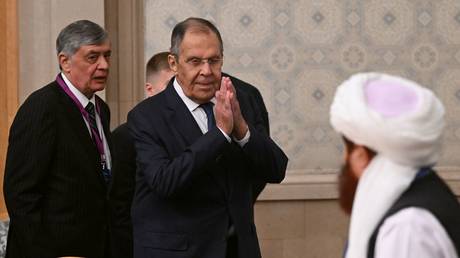
Today, Tariq watches a convoy of armored SUVs bypass the commercial queue, kicking up chalky dust that coats his windshield. Inside those vehicles are diplomats carrying Russian passports, heading straight toward Kabul without asking Islamabad for permission, a visa, or a blessing.
History has a habit of turning landlords into tenants.
For decades, Pakistan operated under a singular, comforting geopolitical doctrine known in military circles as "strategic depth." The concept sounds like dry textbook jargon, so let us strip it down to brass tacks. Imagine living in a narrow house with a hostile, much larger neighbor—India—pressing against your front wall. To survive a home invasion, you buy the empty lot behind your house so you have somewhere to retreat, regroup, and store your supplies. For Pakistan’s security establishment, Afghanistan was that backyard. When the Taliban swept back into Kabul in August 2021, champagne corks didn't pop in Islamabad—alcohol is banned, after all—but the celebratory mood among Pakistan’s elite was unmistakable. After twenty years of American intervention, their guys were back in charge.
Except the tenants changed the locks. And now, the Kremlin is sliding a spare key under the door.
The Architecture of a Broken Monopoly
To understand why Moscow’s warm embrace of the Taliban sends cold shivers down the spines of policymakers in Islamabad, you have to feel the sheer weight of Pakistan’s historical investment. This is not merely a diplomatic disagreement; it is a profound psychological betrayal.
Between 1979 and 1989, Pakistan served as the frontline staging ground for the CIA-funded Mujahideen fighting the Soviet Union. Millions of Afghan refugees poured across the Durand Line—the porous, 1,640-mile border that Kabul has never officially recognized. Pakistan absorbed the blowback: the Kalashnikov culture, the heroin epidemic, the radicalization of its borderlands, and tens of thousands of dead civilians and soldiers during the subsequent War on Terror. Islamabad endured international pariah status, crippling financial gray-listing, and relentless Western criticism for sheltering Taliban leaders in Quetta and Peshawar, all on one unspoken bet: when the dust settled, Kabul would be an obedient, grateful client state.
It didn't happen.
Instead of disarming Pakistan’s mortal enemies—specifically the Tehrik-i-Taliban Pakistan, or TTP—the Afghan Taliban gave them sanctuary. Cross-border militant attacks inside Pakistan surged by more than 70 percent in the years following the U.S. withdrawal. Pakistani border posts were overrun. Soldiers were ambushed in the mountains of Waziristan. When Islamabad demanded that Kabul hand over TTP commanders, the Taliban leadership effectively shrugged, citing Pashtun hospitality codes and reminding their former patrons that they were now a sovereign government, not a proxy militia.
Then came the economic squeeze. To force Kabul’s hand, Pakistan tightened border controls, slapped tariffs on Afghan transit trade, and launched a mass deportation campaign that sent hundreds of thousands of undocumented Afghans back across the border in the dead of winter. Islamabad assumed Kabul had nowhere else to turn. Afghanistan is landlocked. Historically, its lungs breathed through Pakistan’s ports in Karachi and Gwadar.
Islamabad forgot that geography is not destiny when a superpower needs a backdoor.
Moscow’s Cold-Eyed Calculation
Walk down the corridors of the Russian Foreign Ministry on Smolenskaya Square, and you will find little nostalgia for the 1980s. Russia does not do sentimentality; it does arithmetic.
In 2003, Russia’s Supreme Court officially designated the Taliban as a terrorist organization, outlawing any contact with the group. For twenty years, Moscow viewed the Taliban through the prism of Chechnya and Central Asian instability. Yet, by 2024 and 2025, Russian officials—including Foreign Minister Sergey Lavrov and President Vladimir Putin himself—were openly calling the Taliban "allies" in the fight against terrorism, moving systematically to scrub the group from Russia’s banned list and accrediting Taliban diplomats in Moscow.
Why would the Kremlin embrace the ideological descendants of the very fighters who bled the Red Army dry in the Panjshir Valley?
Three reasons converge in Moscow’s war room.
First, there is the enemy of my enemy. When four gunmen stormed the Crocus City Hall outside Moscow in March 2024, killing over 140 concertgoers, the attack was claimed by ISIS-Khorasan—the Islamic State’s brutal Afghan franchise. ISIS-K loathes Russia for its military intervention in Syria and its historical suppression of Muslims in the North Caucasus. Crucially, ISIS-K also views the Afghan Taliban as apostates and nationalists who sold out global jihad. In the brutal calculus of counterterrorism, the Taliban are the only boots on the ground actively hunting and killing ISIS-K cells inside Afghanistan. Moscow realized it could either fight ISIS-K alone or outsource the ground war to the men already running Kabul.
Second, Russia is locked in an existential economic war with the West over Ukraine. Sanctioned out of European markets, Moscow desperately needs new trade corridors to the Global South. Look at a map of Eurasia through Russian eyes: if you want to connect Russian rail networks to the warm waters of the Arabian Sea and the booming markets of South Asia, Afghanistan sits dead center in the path.
Third, and most painful for Islamabad, Moscow saw a vacuum created by Western abandonment and Pakistani overreach. While Washington froze billions in Afghan central bank reserves and Islamabad weaponized border crossings, Russia quietly shipped discounted wheat, flour, and liquefied petroleum gas to Kabul. Moscow invited Taliban delegations to the St. Petersburg International Economic Forum, rolling out red carpets while Pakistani diplomats were busy issuing angry demarches over border skirmishes.
The Nightmare of Being Bypassed
To appreciate the quiet panic inside Pakistan’s Ministry of Foreign Affairs, return to our hypothetical truck driver, Tariq, sitting in his idling rig at Torkham.
Tariq’s livelihood depends on a simple geographic monopoly: if goods want to enter or leave Afghanistan, they cross Pakistani soil, pay Pakistani customs duties, ride on Pakistani trucks, and pass through Pakistani ports. For decades, that choke point was Islamabad’s ultimate trump card. Whenever Kabul got too cozy with New Delhi, Pakistan simply slowed down the trucks at Torkham until fruit rotted in the sun and Kabul’s markets ran out of cooking oil.
Moscow’s outreach threatens to shatter that monopoly forever.
Russia, alongside Uzbekistan and Iran, has been aggressively pushing the Trans-Afghan Railway project—a proposed rail line stretching from Termez on the Uzbek-Afghan border, down through Mazar-i-Sharif and Kabul, and potentially linking either to Iran’s Chabahar Port or downward into Pakistan. Notice the subtle, devastating shift in leverage: if Afghanistan becomes integrated into a Russian-Central Asian-Iranian transit network, Kabul no longer needs Karachi.
Consider what happens next.
Once the Taliban realize their economic survival is underwritten by Russian fuel, Uzbek electricity, and Iranian ports, Islamabad’s leverage evaporates into thin air. You cannot threaten to starve a neighbor who has already found a bigger, wealthier grocery store down the street.
Even worse, from Islamabad’s perspective, is the diplomatic legitimacy Moscow is handing Kabul on a silver platter. Pakistan has spent the last several years trying to rally regional neighbors—China, Russia, Iran, and the Central Asian republics—to present a united front against the Taliban. Islamabad’s message to the region was straightforward: Do not recognize or reward Kabul until they rein in cross-border militant groups like the TTP.
By breaking ranks and moving toward formal normalization with the Taliban, Russia effectively blew up Pakistan’s regional containment strategy. Moscow’s message to Kabul was unmistakable: As long as you keep ISIS-K away from our Central Asian allies, we do not care what happens across the Durand Line into Pakistan.
It is a chilling realization for any strategist in Rawalpindi. For forty years, Pakistan used militant proxies to keep its neighbors off-balance. Now, Russia is treating Pakistan’s domestic insurgency problem as an irrelevant local nuisance while cutting bilateral deals with the very regime sheltering those insurgents.
The Echoes of Old Betrayals
I remember speaking years ago with a retired Pakistani diplomat in Islamabad over rain-streaked windows during a July monsoon. He traced a finger along an old map of the region, stopping at the narrow Wakhan Corridor—that bizarre, slender finger of Afghan territory stretching out to touch China, separating Tajikistan from Pakistan.
"We always think we are the chess players," he told me quietly, his voice heavy with the exhaustion of someone who had watched three Afghan wars unfold from the inside. "We forget that to Moscow and Washington, we are just one square on the board."
His words capture the deeper, unspoken trauma driving Pakistan’s anxiety today.
Throughout the Cold War, Pakistan was the West’s indispensable ally against the Soviet Union, while Moscow armed and backed India. In the decade following the 2014 annexation of Crimea, as Washington pivoted toward India to counter China, Islamabad tried to hedge its bets by courting Moscow. Pakistani leaders visited the Kremlin; Russian and Pakistani troops even held joint military exercises in the mountains of Khyber Pakhtunkhwa. Islamabad believed it had finally broken out of the old Cold War binary and forged a genuine strategic partnership with Russia.
Moscow’s pivot to Kabul feels like a cold reminder that in the brutal arithmetic of great-power politics, mid-sized powers are always expendable. Russia still sells advanced missile defense systems and fighter jets to India—Pakistan’s arch-rival. Now, Russia is simultaneously cultivating warm ties with an Afghan regime that refuses to recognize Pakistan’s western border.
Caught between a hostile India to the east, a defiant Taliban government to the west, a crippling domestic debt crisis, and an insurgency burning through its northwestern provinces, Pakistan finds itself facing a strategic encirclement it never saw coming. The "strategic depth" it spent four decades and tens of thousands of lives building has inverted. Instead of a compliant buffer state, Islamabad faces a confident, internationally legitimized Kabul backed by Moscow’s diplomatic shield—and potentially, one day, Indian investment flowing back into Afghanistan under the umbrella of Russian-led regional platforms like the Moscow Format.
When the Gatekeeper Loses the Key
There is a profound vulnerability in admitting that a grand strategy has failed, especially for institutions built on the myth of control. You can see it in the strained official statements coming out of Islamabad—carefully worded reminders that regional stability requires "collective responsibility," polite warnings that unilateral engagement with Kabul without addressing terrorism will backfire.
Nobody in Moscow is listening.
Russia is playing a long, cynical game in Eurasia, stitching together an anti-Western bloc out of sanctioned states, authoritarian strongmen, and isolated regimes. In that architecture, Afghanistan is not a humanitarian tragedy or a rogue emirate; it is a critical land bridge connecting Eurasia to the Indian Ocean. To secure that bridge, the Kremlin is willing to overlook the Taliban’s treatment of women, their medieval governance, and their harboring of anti-Pakistani militants.
Meanwhile, the human cost continues to mount quietly along the borderlands.
In the markets of Peshawar and Quetta, merchants feel the slow strangulation of stalled bilateral trade. In the barracks of North Waziristan, young Pakistani soldiers stand watch in the freezing dark, scanning rocky ridgelines for fighters armed with night-vision goggles left behind by the Americans and protected by a regime in Kabul that no longer fears Islamabad’s wrath.
Back at the Torkham crossing, the dust from the diplomatic convoy eventually settles onto the orange crates in the back of Tariq’s truck. He turns the key in the ignition, feeling the familiar, rattling vibration of the diesel engine through the soles of his worn boots. Ahead of him lies a steel gate manned by guards who used to take their orders from his capital, waving through guests from an empire that once bled to take this land, and has now bought it back without firing a single shot.


