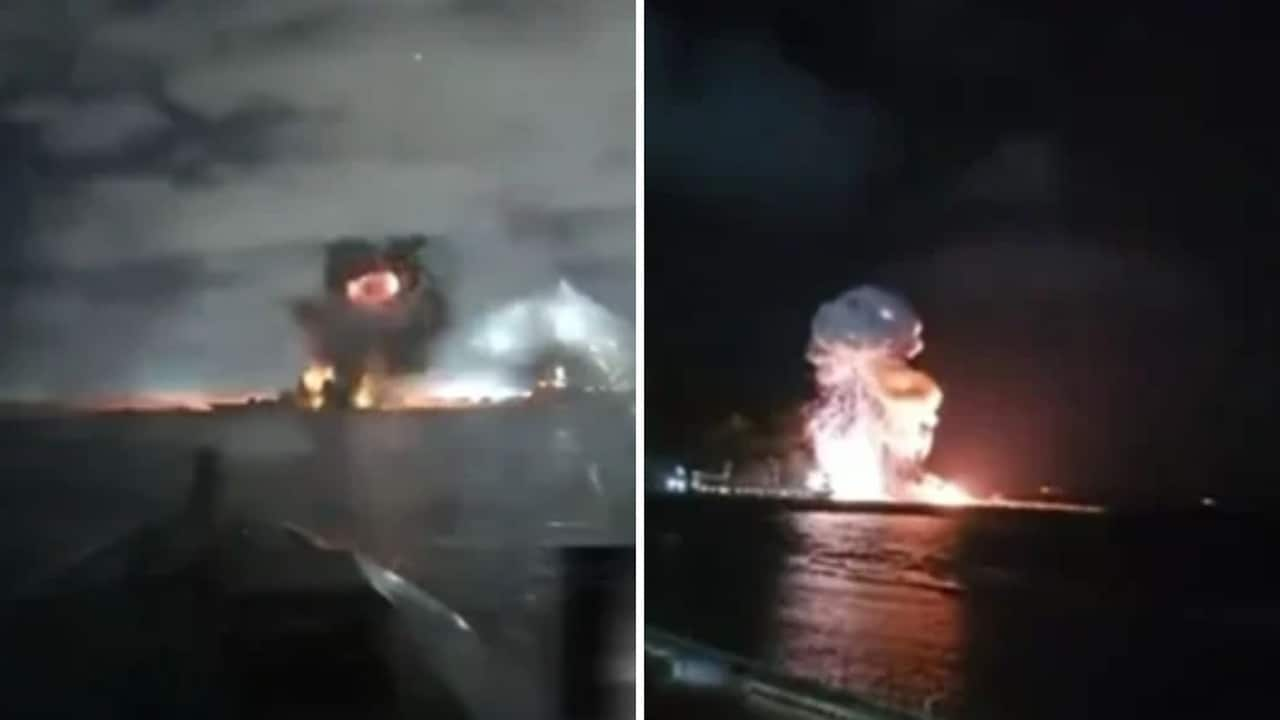
Two thousand kilometers away from the nearest trench, a young man in a gray hoodie adjusts his headset, takes a slow sip of lukewarm instant coffee, and prepares to sink a hundred-and-fifty-million-pound warship.
Silence.
That is the first thing you notice when you step inside the makeshift nerve centers of modern drone warfare—not the Hollywood roar of engines or the barked commands of braided admirals, but the dry, electrical hum of cooling fans and the soft, rhythmic clicking of a game controller. Outside the reinforced concrete walls of this undisclosed Ukrainian facility, rain sleets against boarded-up windows. Inside, bathed in the pale blue glow of three curved monitors, an operator we will call Oleh—a hypothetical composite drawn from the real testimonies of Ukraine’s unmanned maritime and aerial unit pilots—is staring at a grainy, low-resolution video feed bobbing violently over black water.
On the screen sits a steel titan. It is a Russian naval vessel valued at roughly £150 million, bristling with radar arrays, close-in weapon systems, and the quiet arrogance of an empire that believed geography itself was an impenetrable shield. The ship is anchored more than 1,300 miles from the active frontlines of the war in Ukraine. By every traditional textbook taught at Annapolis, Dartmouth, or Frunze, this ship is untouchable. It is resting in a sanctuary far beyond the range of conventional artillery, out of reach of standard tactical ballistic missiles, and insulated by layers of electronic warfare jamming designed to blind incoming threats.
Yet here is Oleh. And here is the screen, inching closer to the hull.
When the world first read the headlines about Ukraine striking a high-value Russian warship 1,300 miles from the front, most readers absorbed the numbers like box scores from a distant sporting event. One warship damaged or destroyed. £150 million in hardware reduced to twisted scrap. Thirteen hundred miles traversed. We nodded at the cleverness of the headline—motherships, artificial intelligence, remote pilots—and scrolled on to the next notification.
We missed the real story entirely.
To understand what actually happened in those freezing waters, you have to stop looking at the explosion and start looking at the architecture of impossibility that preceded it. You have to understand what it feels like to fight an enemy ten times your size when the rules of conventional warfare dictate that you are supposed to lose.
The Tyranny of Distance
For centuries, naval power rested on a simple, brutal equation: steel plus distance equals safety. If you built a ship thick enough, armed it heavily enough, and parked it far enough behind your own lines, your adversary could not touch it without risking an entire fleet of their own. Russia’s naval doctrine in the Black Sea and beyond was built on this exact assumption. Even after Ukrainian forces began picking off vessels closer to Crimea, Moscow simply pulled its remaining prized assets farther east, deeper into ports like Novorossiysk, or stationed them in waters so distant that any Ukrainian aircraft attempting the trip would run out of fuel long before spotting a mast on the horizon.
Distance was supposed to be a wall.
Think about what a 1,300-mile journey actually means. That is roughly the distance from London to Athens, or from New York City to Miami. To send a small, uncrewed craft across that expanse—whether skimming the waves as a naval drone or cutting through the clouds as a long-range aerial striker—is to invite a thousand different kinds of failure. Batteries die. Radio signals fade into static over the curvature of the earth. Saltwater corrodes exposed wiring. Crosswinds push lightweight airframes off course. And even if a lone drone miraculously survives the marathon, it still has to pierce a dome of electronic interference designed to sever the invisible tether between pilot and machine.
If you rely on a single remote pilot holding a joystick from start to finish, a 1,300-mile strike is a fantasy. The radio horizon alone kills the connection within a few dozen miles unless you have access to expensive, vulnerable satellite relays that an adversary can jam or spoof.
So how do you cross an ocean of electronic noise without losing your mind or your signal? You stop thinking like a navy, and you start thinking like a courier service.
The Architecture of the Mothership
Consider a metaphor that every commuter knows intuitively. You do not ride a city scooter across three mountain ranges to deliver a package to another country. You load that scooter into the back of a long-haul freight truck, drive it through the night until you are ten miles outside the destination, open the rear doors, and let the scooter weave through the narrow alleys that the truck could never enter.
That is the exact logic behind the mothership tactics deployed in this operation.
To bridge that staggering 1,300-mile gap, Ukrainian engineers and military planners stopped asking small attack drones to do the impossible job of long-distance endurance. Instead, they paired them with larger, long-range carrier platforms—uncrewed surface vessels and heavy, long-endurance aerial motherships built to carry fuel, satellite communication terminals, and a belly full of smaller, agile first-person-view (FPV) strike drones.
Picture the journey in the dark. For hours, the mothership pushes silently through contested space, sipping fuel, staying low beneath radar horizons, acting as a floating or flying mobile cell tower. Inside its hull or strapped beneath its wings, the smaller hunter-killer drones sit dormant, their batteries at one hundred percent, waiting.
When the mothership finally slips past the outer perimeter of Russian air and sea defenses—arriving within striking distance of the £150 million target—the dynamic flips instantly. The mothership wakes up its payload, launches the smaller strike craft, and uses its own high-gain antennas to bounce the live video feed and control signals all the way back to Oleh in his basement in Kyiv.
Suddenly, a drone with a natural range of only a few miles is operating 1,300 miles from home.
When the Signal Dies, the Machine Thinks
Even with a mothership hovering nearby, the final three miles are pure chaos.
Modern warships do not sit passively waiting to be hit. The moment Russian radar operators or watchstanders detect an incoming swarm, they flood the surrounding airwaves with high-powered electronic jamming. To a human pilot sitting behind a screen thousands of miles away, jamming looks like a sudden, terrifying snowstorm. The crisp image of the ship’s superstructure dissolves into purple and green static. The latency spikes. You push the stick left, and nothing happens for two agonizing seconds—an eternity when your craft is skimming waves at sixty knots or diving at over a hundred miles per hour.
In the early days of drone warfare, jamming was the ultimate trump card. Break the link, and the drone veered blindly into the sea.
Not anymore.
This is where artificial intelligence—specifically computer vision and terminal guidance algorithms—stepped in to close the final, fatal gap. Long before the strike ever launched, programmers fed thousands of images, 3D models, and thermal signatures of Russian warships into neural networks. They taught the software to recognize the silhouette of a radar mast, the heat plume of an exhaust stack, and the vulnerable waterline of a hull from every conceivable angle.
Let us return to our composite pilot, Oleh, in those final twenty seconds. As the drone closes to within a kilometer of the £150 million vessel, Russian jammers slam the frequency. On Oleh’s monitor in Kyiv, the image freezes, pixelates, and turns into a smear of digital noise. In 2022, Oleh would have cursed, slammed his fist on the desk, and watched a mission fail.
In this strike, Oleh simply presses a single button to lock the target box before the screen goes dark.
From that millisecond onward, the human is no longer flying the machine. The onboard processor—a piece of commercial-grade silicon no larger than a deck of playing cards—takes over. Without needing a single byte of data from Kyiv, without relying on GPS signals that can be easily spoofed, the camera reads the visual contrast of dark steel against grey water. It calculates wind drift. It adjusts its pitch and yaw dozens of times per second. Even as tracer rounds from the warship’s deck guns tear into the water beside it, the machine does not flinch, does not panic, and does not lose sight of the target it was told to embrace.
It is a sobering thing to contemplate. We tend to think of artificial intelligence in terms of chatbots writing emails or algorithms curating our playlists. Watching a sovereign nation wire that same visual recognition technology into a five-hundred-dollar circuit board to defeat a hundred-and-fifty-million-pound fortress strips away every comforting illusion we have about modern technology.
The Invisible Stakes Beneath the Waterline
To appreciate why this single strike sent tremors through naval ministries from Washington to Beijing, you have to step back and look at the economics of asymmetry.
War, stripped of its flags and speeches, is an unforgiving audit of resources. A warship like the one targeted by Ukraine takes years to design, thousands of tons of specialized steel to weld together, complex propulsion systems to install, and hundreds of trained sailors to crew. At £150 million, it represents a massive concentration of national wealth and industrial capacity. Once lost, it cannot be replaced before the war ends.
Contrast that with the weapons that broke it.
Even when you account for the sophisticated mothership carrier, the satellite relays, and the custom AI guidance modules, the entire strike package costs a tiny fraction of a single cruise missile—and less than one percent of the ship it destroyed.
I remember talking to a defense engineer in Eastern Europe two winters ago, sitting in a freezing workshop that smelled of soldering flux and wet wool. Around us were shelves stacked with carbon-fiber frames, off-the-shelf lithium batteries, and commercial cameras bought in bulk from civilian suppliers. He picked up a small circuit board, turned it over in his calloused fingers, and looked at me with a mixture of exhaustion and dark pride. "They have factories that build warships," he said quietly. "We have garages that build algorithms."
That sentence captures the terrifying vulnerability of our current era. For the first time in modern history, the barrier to projecting lethal strategic power across thousands of miles has collapsed. You no longer need an aircraft carrier strike group to threaten a coastline a thousand miles away. You need a small team of software engineers, a handful of patient operators, a clever delivery vehicle, and the willingness to improvise when traditional allies hesitate to send long-range weapons.
The Human Weight of Remote War
It is easy, when writing about motherships and neural networks, to fall into the trap of treating this like a clean, bloodless video game. The screens are bright. The terminology is sterile. Terminal guidance. Attrition rate. Asymmetric value.
We must resist that anesthesia.
Behind the grainy monochrome feed of a maritime drone are real human beings on both sides of the glass. On the Russian vessel, dozens of young sailors—many of them conscripts or junior specialists who believed their posting far from the frontlines meant they would survive the war—suddenly hear the piercing shriek of general quarters alarms in the middle of the night. They feel the deck shudder beneath their boots as heavy machine guns open fire blindly into the dark, followed seconds later by the deafening, concussive roar of hundreds of kilograms of high explosives tearing open the hull at the waterline. Cold seawater rushes into compartments. Lights flicker and die.
And thousands of miles away, in that quiet basement room, Oleh takes off his headset.
His hands are shaking slightly from the adrenaline dump. He has not smelled cordite. He has not felt the freezing spray of the sea or heard the screams of men trapped behind jammed watertight doors. Yet he has just altered the strategic map of a brutal war, knowing full well that every ship he helps sink might prevent a dozen cruise missiles from being launched at apartment blocks in Kharkiv, Odesa, or his own neighborhood in Kyiv.
That is the strange, disorienting moral geometry of twenty-first-century conflict. The distance between trigger and impact has stretched to 1,300 miles, yet the emotional weight remains stubbornly, crushingly intimate.
What Every Admiralty Is Quietly Rewriting Tonight
Look closely at what happened in the wake of that strike, and you begin to see why naval planners across the globe are losing sleep.
If a nation without a functioning conventional surface navy—a country whose own flagship was scuttled at the very start of the invasion—can reach out 1,300 miles and cripple a £150 million warship using autonomous motherships and AI-guided drones, then every assumption about maritime security is suddenly obsolete.
Think about the choke points of the global economy. The Strait of Hormuz. The Bab-el-Mandeb. The Taiwan Strait. For decades, stability in these waters relied on the deterrence of massive, multi-billion-dollar surface fleets. Today, any coastal force, state actor, or well-funded insurgent group studying the Ukrainian blueprint sees a terrifyingly accessible path to sea denial. You do not need to match your enemy’s shipyard output ton for ton. You just need enough intelligence to hide a mothership in commercial shipping lanes, enough code to defeat electronic jamming in the final mile, and enough patience to wait until the giant drops its guard.
The £150 million warship was not just a casualty of the war in Ukraine. It was a monument to an older century colliding head-on with a ruthless new reality.
Back in that basement room, the monitors are already resetting. Fresh telemetry lines begin scrolling across the dark glass. Outside, the sleet continues to fall on concrete walls, while twelve hundred miles away, across black water and silent skies, another steel giant sits at anchor, listening to the dark.