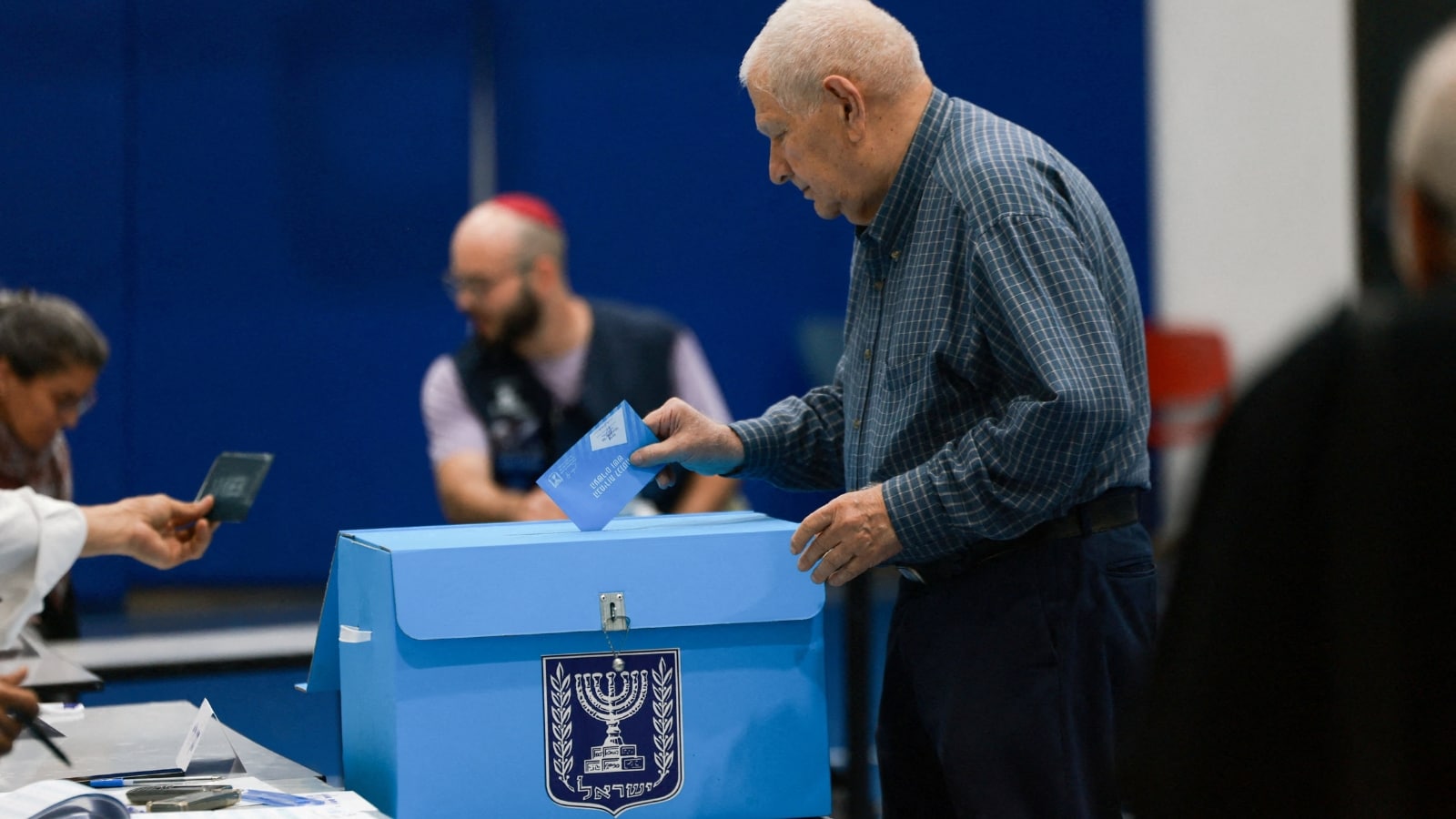
The curtains in a Tel Aviv elementary school classroom are thin blue plastic, the kind that flutter every time the air conditioner rattles to life. Behind one of them, a voter stands holding two small paper slips—one white, one blank—staring at the Hebrew letters printed on the front.
Silence.
Then, the soft rustle of an envelope sealing shut, a sound that carries the weight of three years of grief, fury, and an unanswered question that hangs over every kitchen table from the Lebanese border to the Negev desert.
When Israelis head to the polls to decide the political fate of Prime Minister Benjamin Netanyahu, the ballot paper lists party names and electoral letters. It does not list the date October 7, 2023. Yet according to political analysts, pollsters, and voters across the country, that single morning remains the invisible protagonist of the entire campaign—a presence that shapes every rally, every coalition calculation, and every private hesitation inside the voting booth.
The Morning Everything Broke
To understand why this election feels less like a routine parliamentary contest and more like a national reckoning, consider a hypothetical morning in the life of two neighbors in central Israel—let us call them Tamar, a high-tech project manager in Rishon LeZion, and Avi, a retired civil servant living two floors below her.
Before October 7, Tamar and Avi argued over judicial reform. They argued over the cost of cottage cheese, the draft exemptions for ultra-Orthodox yeshiva students, and whether Netanyahu—Israel’s longest-serving prime minister—was a master statesman or a divisive survivor clinging to power. Those arguments were loud, passionate, and familiar. They belonged to a recognizable political world.
Then came the morning of Simchat Torah.
At 6:29 a.m., thousands of Hamas-led militants breached the border fence from Gaza, overrunning military bases and kibbutzim, killing roughly 1,200 people—mostly civilians—and taking 251 hostages back into the Strip. For hours, families locked inside safe rooms texted loved ones and television studios, begging for soldiers who took agonizingly long to arrive.
In the aftermath, as documented by Israeli media and public opinion surveys from the Israel Democracy Institute, the foundational social contract between the Israeli citizen and the state—the unspoken promise that the government and military would always be there when the sirens sounded—fractured.
Tamar spent the next two years watching her younger brother rotate through hundreds of days of reserve duty, watching Hostages Square in Tel Aviv fill every Saturday night with yellow ribbons and photographs of the missing, and watching the multi-front war expand to Hezbollah in the north, the Houthis in Yemen, and direct missile exchanges with Iran. For Tamar, the election comes down to a single principle of accountability: the captain of the ship during the worst security failure in the nation's history cannot remain on the bridge.
Avi sees the same wreckage and draws the opposite conclusion.
Sitting at his dining table with the evening news murmuring in the background, Avi points to what followed the initial catastrophe. Supporters of Netanyahu and his Likud party argue that under immense international pressure, Israel dismantled Hamas’s military battalions, eliminated senior leaders of both Hamas and Hezbollah, weakened Iran’s regional axis, and navigated shifting diplomatic realities in Washington. To Avi, changing leadership while the region remains volatile—and while questions over Gaza's postwar governance and northern border security remain unresolved—is like swapping pilots mid-storm.
Same country. Same war. Two irreconcilable verdicts.
The Architecture of a Divided Electorate
Israeli elections do not reward a single winner-take-all victory. Instead, voters cast a ballot for a party list in a nationwide proportional representation system, competing for 120 seats in the Knesset. Any party that clears the 3.25 percent electoral threshold enters parliament, and whoever can assemble a coalition of at least 61 seats forms the government.
Think of it less like a boxing match and more like assembling a fragile mosaic out of jagged pieces that barely fit together.
Over the past decade, Israeli politics has largely sorted itself into two entrenched blocs: the pro-Netanyahu camp—anchored by Likud alongside ultra-Orthodox parties (Shas and United Torah Judaism) and religious nationalist factions—and an anti-Netanyahu opposition spanning center-right hawks, centrist pragmatists, left-wing democrats, and Arab parties.
According to pre-election polling tracked by major Israeli broadcasters such as Channel 12 and Kan News, the central question is not merely who wins the largest party, but whether either bloc can reach the magic number of 61 without relying on partners its own voters find intolerable.
The Unresolved Fault Lines
Three interlocking pressures sit directly beneath the surface of this campaign, turning what might otherwise be a straightforward referendum on October 7 into a high-stakes test of national identity.
- The Question of a State Commission of Inquiry: Families of October 7 victims, alongside opposition leaders, have demanded an independent state commission of inquiry—the highest-level investigative body under Israeli law, appointed by the president of the Supreme Court—to examine the political, intelligence, and military failures leading up to the attack. Netanyahu and members of his coalition have resisted establishing such a panel during wartime, arguing that a commission should only be formed once hostilities conclude and questioning the impartiality of the judicial establishment. For millions of voters, how the next government handles that investigation is a moral red line.
- The Ultra-Orthodox Draft Crisis: During a war that stretched the Israel Defense Forces to its limits and placed an unprecedented burden on secular and national-religious reservists, the long-standing exemption of ultra-Orthodox (Haredi) men from mandatory military service ceased to be a theoretical debate. Following a 2024 Supreme Court ruling that the state could no longer fund yeshivas whose students avoided the draft without a legal framework, the issue became political dynamite. Opposition figures accuse Netanyahu of prioritizing coalition survival with Haredi parties over equal burden-sharing, while Haredi leaders warn that forced conscription threatens their way of life.
- Security, Diplomacy, and the "Day After": Voters are weighing competing visions for Israel's long-term security. Netanyahu’s supporters emphasize military deterrence, skepticism toward Palestinian statehood, and close alignment with sympathetic allies in the United States. Critics—including former defense officials and opposition leaders—contend that military achievements without a clear diplomatic framework leave Israel trapped in open-ended attrition, straining ties with Western democracies and regional partners.
Living Inside the Uncertainty
Walk down Dizengoff Street in Tel Aviv or through Mahane Yehuda market in Jerusalem on the eve of the vote, and you can feel the exhaustion behind the bravado.
Elections in Israel used to carry a strange, festive electricity—election day is a national holiday, after all, when families pack the beaches and cafes after dropping their envelopes into the blue ballot boxes. Now, the mood is quieter, heavier, tempered by the awareness that nearly every family knows someone who fought, someone who mourned, or someone who spent months waiting for news from Gaza.
In the northern border towns, where tens of thousands of residents were displaced for over a year by Hezbollah rocket fire, voters speak less in ideological slogans and more in practical terms: Will my children sleep in their own beds without hearing interceptors overhead? Will the state rebuild what burned? In the communities of the Gaza envelope—places like Nir Oz, Be’eri, and Kfar Aza, where entire neighborhoods were devastated—the ballot box feels like the only instrument left to demand that the state look directly at what happened on its watch.
Meanwhile, among voters in working-class development towns and conservative strongholds, skepticism toward the political establishment runs in a different direction. Many tell pollsters and reporters that the failures of October 7 belonged first and foremost to the military and intelligence brass who misread Hamas’s intentions—and that ousting Netanyahu would hand power to an opposition coalition too divided to govern effectively.
The Arithmetic of Survival
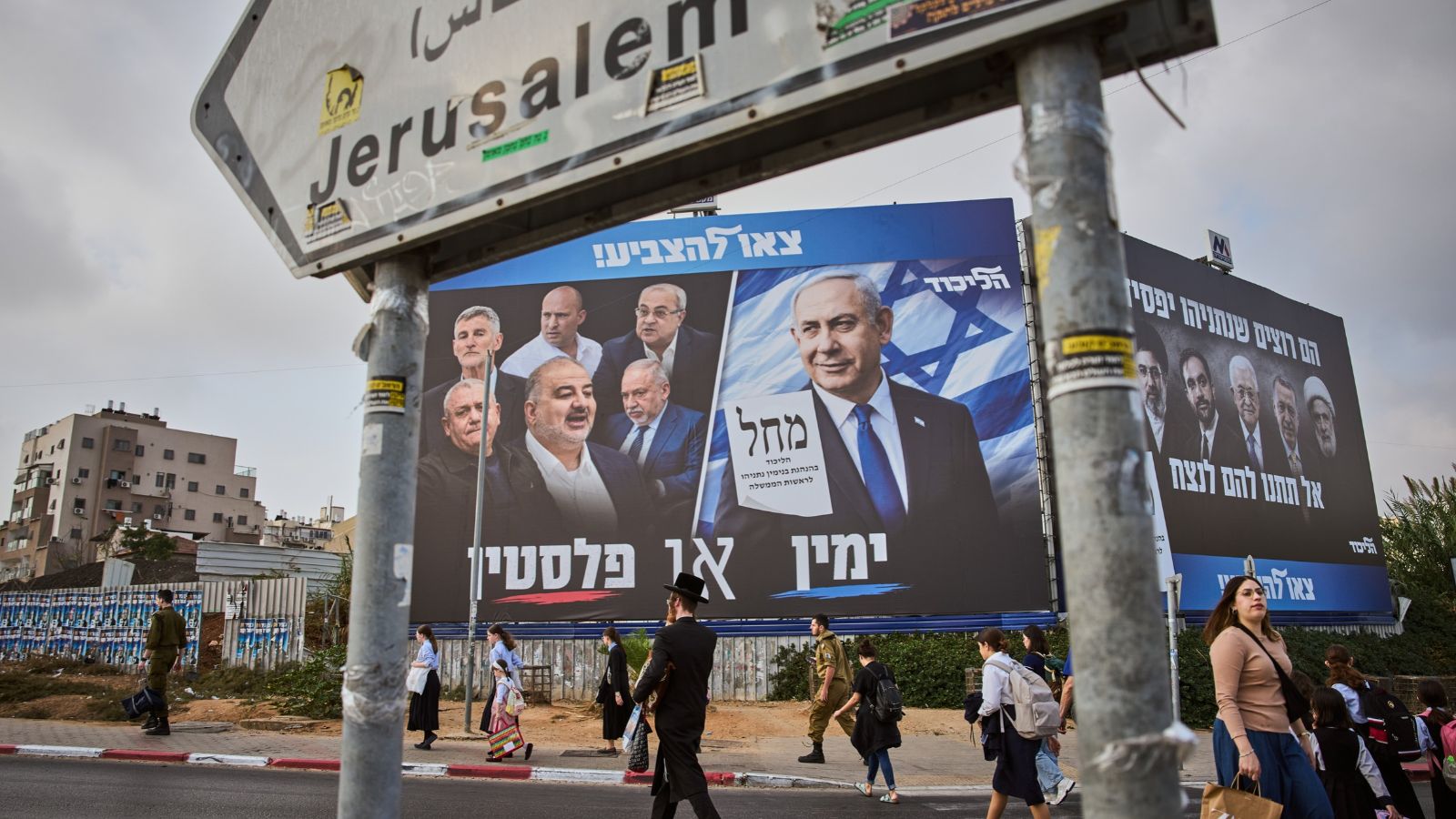
Political veterans in Jerusalem often point out that Benjamin Netanyahu has survived more political obituaries than any leader in modern Israeli history. First elected prime minister in 1996, he has mastered the art of turning elections into binary choices: stability versus chaos, strength versus concession, experience versus experimentation.
Yet even his closest allies acknowledge that this election operates under rules he did not write.
Before October 7, Netanyahu’s supporters could point to years of relative quiet, the Abraham Accords normalizing relations with four Arab nations, and a booming high-tech economy. The collapse of that sense of invulnerability stripped away the central pillar of his political brand—the image of "Mr. Security." His campaign has worked relentlessly to rebuild it by highlighting the military blows dealt to Hamas, Hezbollah, and Iran in the months that followed, framing the initial catastrophe as a tactical intelligence failure and the subsequent campaign as a strategic triumph.
Opposition leaders, by contrast, have struggled with a different structural problem: unity. While united in their insistence that Netanyahu must step down, the anti-Netanyahu camp stretches from former Likud ministers and right-wing nationalists to centrists and left-wing parties. Past anti-Netanyahu coalitions have proved fragile, collapsing under the weight of internal contradictions once the shared goal of removing him from office was achieved. Voters remember the rapid succession of five elections between 2019 and 2022—a period of political paralysis that left many cynical about whether any alternative government can last a full four-year term.
What the Ballot Actually Decides
Strip away the campaign posters, the television studio panels, and the late-night coalition leaks, and the choice facing Israeli voters comes down to two competing theories of history.
One theory holds that accountability is non-negotiable—that a democracy only heals from catastrophic failure when those at the top step aside, open the archives, and allow a new generation of leaders to rebuild trust from the ground up.
The other theory holds that survival precedes reckoning—that in a volatile neighborhood where enemies test every sign of internal weakness, continuity and proven toughness matter more than political catharsis.
Neither view is irrational. Both are rooted in real fear, real memory, and real love for a small, battered country trying to figure out what comes after the longest war in its modern history.
Outside the elementary school in Tel Aviv, the afternoon sun drops low behind the apartment blocks. A young man in faded olive-green reserve fatigues walks out of the polling station, folds his national identity card back into his wallet, and pauses on the sidewalk to check his phone before heading home. Inside the classroom behind him, the blue cardboard ballot box sits taped shut on a wooden desk, holding hundreds of thin white envelopes that will be counted long after midnight.