Silence.
In a concrete cell measuring roughly ten feet by twelve, where the summer heat of Rawalpindi bakes the walls until they radiate like an oven and the winter dampness settles deep into the marrow of the bones, silence is never just the absence of sound. It is a heavy, suffocating weight designed to remind a man that the world outside has moved on without him.
For decades, Imran Khan lived in the deafening roar of adulation. Whether he was charging down the bowling crease at Lord’s, lifting the 1992 Cricket World Cup beneath the floodlights of Melbourne, or standing atop a shipping container in Islamabad before a sea of hundreds of thousands of waving flags, noise was his oxygen. Millions chanted his name. Generals courted his favor. Politicians trembled at his rallies.
Now, there is only the scrape of a metal door and the scratch of a pen on paper.
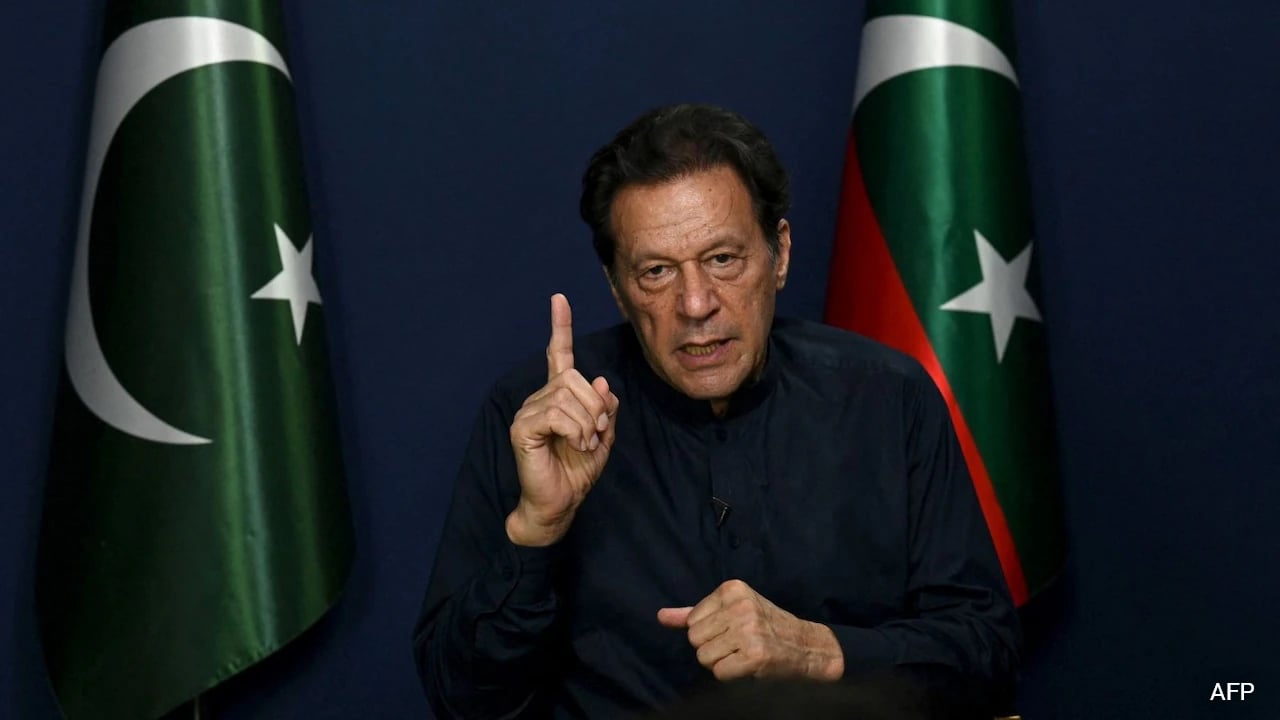
When word leaked out from behind the fortified walls of Adiala Jail that Pakistan’s former prime minister had smuggled out a stark, chilling warning—that he believed he might die inside his cell—the international press treated it like another routine dispatch from a chronically unstable region. They summarized the charges. They noted the denials from Islamabad. They filed it away under foreign affairs and moved on to the next news cycle.
They missed the point entirely.
To read Imran Khan’s letter from jail merely as a political ploy or a legal complaint is to misunderstand the volatile chemistry of South Asian politics. That letter is not a press release. It is a lit match held over a powder keg of 240 million people.
The Architecture of Erasure
To understand why a seventy-something former head of state believes his life is hanging by a thread, you have to understand how power operates in Pakistan when the establishment decides a man has become too big to control.
Picture a hypothetical observer—let us call him Tariq, a retired civil servant sitting on a veranda in Lahore, sipping lukewarm tea as the evening call to prayer echoes across the rooftops. Tariq has watched this exact script play out four times in his life. He saw it with Zulfikar Ali Bhutto in the late 1970s, a populist titan dragged from the prime minister’s residence to the gallows in Rawalpindi while the world looked away. He saw it with Benazir Bhutto, exiled, hounded by courts, and ultimately assassinated on a Rawalpindi street just miles from where Khan now sits. He saw it with Nawaz Sharif, deposed, imprisoned, and shipped off to London when his health deteriorated behind bars.
"In Pakistan," Tariq would tell you, tapping his spoon against the porcelain cup, "they do not just defeat you at the ballot box. First, they erase your name from the television screens. Then, they bury you in paper. Finally, they lock you in a room until your body gives out or your spirit breaks."
This is the invisible machinery that Khan is describing when he writes of his impending death. It is rarely a single dramatic event—a poison slipped into a cup of tea or a sudden, unexplained heart attack in the middle of the night, though both haunt the collective memory of Pakistani politics. More often, it is a slow, grinding attrition.
Since his ouster via a parliamentary vote of no confidence in April 2022, the campaign against Khan has been methodical. Over a hundred legal cases were filed against him, ranging from the absurd to the existential—allegations of leaking state secrets, unlawfully selling state gifts, even rulings challenging the validity of his marriage. He survived an assassination attempt in November 2022, taking bullets to his leg during a march on Islamabad, only to be dragged from a courthouse hallway by paramilitary rangers months later like a common fugitive.
Inside Adiala Jail, the isolation is calibrated. Khan has repeatedly alleged through his lawyers and family that he has been kept in solitary confinement, denied access to his personal physicians, stripped of basic communication with his sons in London, and subjected to psychological pressure meant to force a single outcome: surrender. Leave the country. Sign a deal. Disappear.
He refused. And in Pakistani politics, refusal carries a mortal price tag.
The Anatomy of a Warning
Why write the letter now? Why put the words I may die onto paper and risk looking vulnerable—a cardinal sin for a strongman whose entire political brand is built on fearless defiance?
Because vulnerability, when weaponized by a master communicator, becomes a shield.
Think of a chess player whose king is trapped in the corner of the board, surrounded by rooks and knights, with only a single pawn left to move. The player cannot escape the check, so he flips the table—not to end the game, but to make sure everyone in the room sees who is holding the knife.
By stating publicly that his health, his safety, and his very survival are in jeopardy inside state custody, Khan is doing two things simultaneously. First, he is issuing a pre-emptive indictment. If his heart fails tomorrow, if a sudden infection goes untreated, if a "medical emergency" occurs behind walls where independent doctors are barred from entering, nobody in Pakistan will believe the official autopsy. The state will own his death completely.
Second, he is speaking directly to the streets.
Consider what happens next if that worst-case scenario unfolds. Even after his party, the Pakistan Tehreek-e-Insaf (PTI), was systematically dismantled—its election symbol stripped away, its leaders arrested or forced to renounce their allegiance on live television, its rallies crushed with tear gas and batons—voters still turned out in massive numbers during the February 2024 general elections to back independent candidates loyal to him.
The rage simmering beneath the surface of Pakistan’s cities is not merely partisan loyalty. It is economic desperation fused with political disenfranchisement. Inflation has hollowed out the middle class. Electricity bills have driven families to burn furniture for warmth. Millions of young Pakistanis see no future in their own country, watching an entrenched elite trade power back and forth while the man they actually voted for rots in a cell.
If Imran Khan dies in Adiala Jail, that rage will not dissipate. It will detonate.
The Ghost at the Table
There is a profound irony sitting at the heart of this crisis, one that anyone who has followed Pakistan over the last decade recognizes with a bitter laugh.
Imran Khan did not arrive in power as an outsider smashing the system alone. In 2018, he rode into the prime minister’s office with the tacit blessing of the very military establishment that now holds the keys to his cell. Back then, he was their golden boy—incorruptible, charismatic, a convenient battering ram to break the dynastic hold of the Sharif and Bhutto families.
I remember watching the broadcasts from Islamabad during those early days of his premiership. There was a breathless certainty among his supporters that Pakistan had finally turned a corner, that the old rules of patronage and backroom deals were dead. Khan spoke of turning the Prime Minister’s House into a university, of recovering billions in stolen wealth, of building a welfare state modeled on the early days of Islam.
It was a intoxicating dream. It was also built on a fault line.
In Pakistan, a prime minister is allowed to govern only so long as he remembers who truly holds the levers of foreign policy, national security, and senior military appointments. The moment Khan began asserting genuine civilian authority—clashing with the military leadership over the appointment of the intelligence chief in late 2021, pursuing an independent foreign policy line on Russia and the United States—the marriage collapsed.
The men who helped elevate him turned the full weight of the state apparatus against him. And Khan, instead of retreating quietly to his hilltop estate in Bani Gala as previous prime ministers had done, did the unthinkable. He named names. He stood before roaring crowds and pointed his finger directly at the generals, accusing them of conspiring to topple his government and orchestrate his murder.
He broke the ultimate taboo. Once you shatter the mystique of the establishment in public, there is no path back to peaceful coexistence. Either they break you, or you break them.
What the World Misses When It Looks Away
Walk through the corridors of power in Washington, London, or Brussels today, and you will hear a polite, rehearsed indifference whenever Imran Khan’s name comes up.
Diplomats murmur about "internal legal processes." Spokespeople express vague hopes for "the rule of law and democratic norms." Behind closed doors, the calculation is brutally pragmatic: Pakistan is a nuclear-armed nation of nearly a quarter-billion people sitting on the border of Afghanistan, Iran, and India. Western capitals prefer dealing with the predictable continuity of Pakistan’s military leadership rather than an unpredictable, fiercely nationalist populist who once accused Washington of orchestrating his removal.
It is an understandable calculation. It is also catastrophically shortsighted.
History has a habit of punishing foreign powers that mistake silence for stability. In 1979, when General Zia-ul-Haq ignored international pleas for clemency and hanged Zulfikar Ali Bhutto in the dead of night, the execution did not bring peace to Pakistan. It poisoned the country’s political bloodstream for forty years, birthing cycles of vengeance, dynastic martyrdom, and institutional paralysis that persist to this very afternoon.
A dead populist is infinitely more dangerous to an authoritarian system than a living prisoner.
Alive in Adiala Jail, Imran Khan is an aging politician constrained by concrete walls, dependent on lawyers to carry his words to the outside world, subject to the slow erosion of time. Dead in Adiala Jail, he becomes an immortal myth—a martyr whose image will hang in every shop from Peshawar to Karachi, whose death will permanently delegitimize every institution that presided over his imprisonment.
The Weight of a Single Page
Try to picture the physical reality of that letter leaving the prison.
Every visitor to Adiala Jail is screened. Every conversation is monitored. Every piece of paper passing between Khan and his legal team is scrutinized by prison authorities who answer to superiors far above the jail superintendent’s pay grade. For a message carrying such explosive personal testimony to reach the outside world, it had to navigate a maze of surveillance, loyalty, and fear.
Think about what it takes for a man who spent his entire adult life projecting invincibility to sit at a small wooden table under harsh fluorescent light and write down the words that confirm his own mortality.
Khan is seventy-four years old. His body carries the wear of two decades of fast bowling—a grueling, violent athletic discipline that destroys spines and knees—alongside the lingering trauma of bullet wounds from Wazirabad and the toll of prolonged incarceration. Whether his fear of dying in prison stems from deliberate medical neglect, the psychological strain of isolation, or a genuine belief that his jailers intend to let his health collapse until it is too late, the human reality remains the same.
He is an old man locked in a box, shouting through the keyhole because he knows that if the door never opens again, nobody on the inside will tell the truth about how it happened.
And outside those walls, millions of people are listening with their ears pressed against the stone.
In the crowded bazaars of Lahore, young men trade screenshots of his words on encrypted messaging apps because mainstream television channels are forbidden from uttering his name or showing his face. In modest living rooms across Islamabad, mothers who never cared about politics until the price of flour doubled talk about him in hushed, angry tones. In the diaspora communities of Manchester, New Jersey, and Toronto, doctors and taxi drivers organize protests outside embassies, refusing to let the story fade into the back pages.
They do not see a flawless statesman. Many of them acknowledge his missteps in office, his stubbornness, his initial alliance with the very forces now crushing him. What they see is something far simpler and far more potent: a man who refused to kneel.
In a country where power has spent seventy-seven years teaching citizens that resistance is futile and compromise is the only way to survive, that stubbornness has become contagious.
The concrete walls of Adiala Jail were built to contain bodies, to separate the dangerous from the compliant, to impose order through confinement. Yet as night falls over Rawalpindi and the searchlights sweep across the perimeter wire, the irony hangs thick in the humid air. The state holds Imran Khan under lock and key, controlling every bite he eats, every visitor he sees, every breath he takes—and yet, with a single sheet of paper, the prisoner has put the entire country on trial.