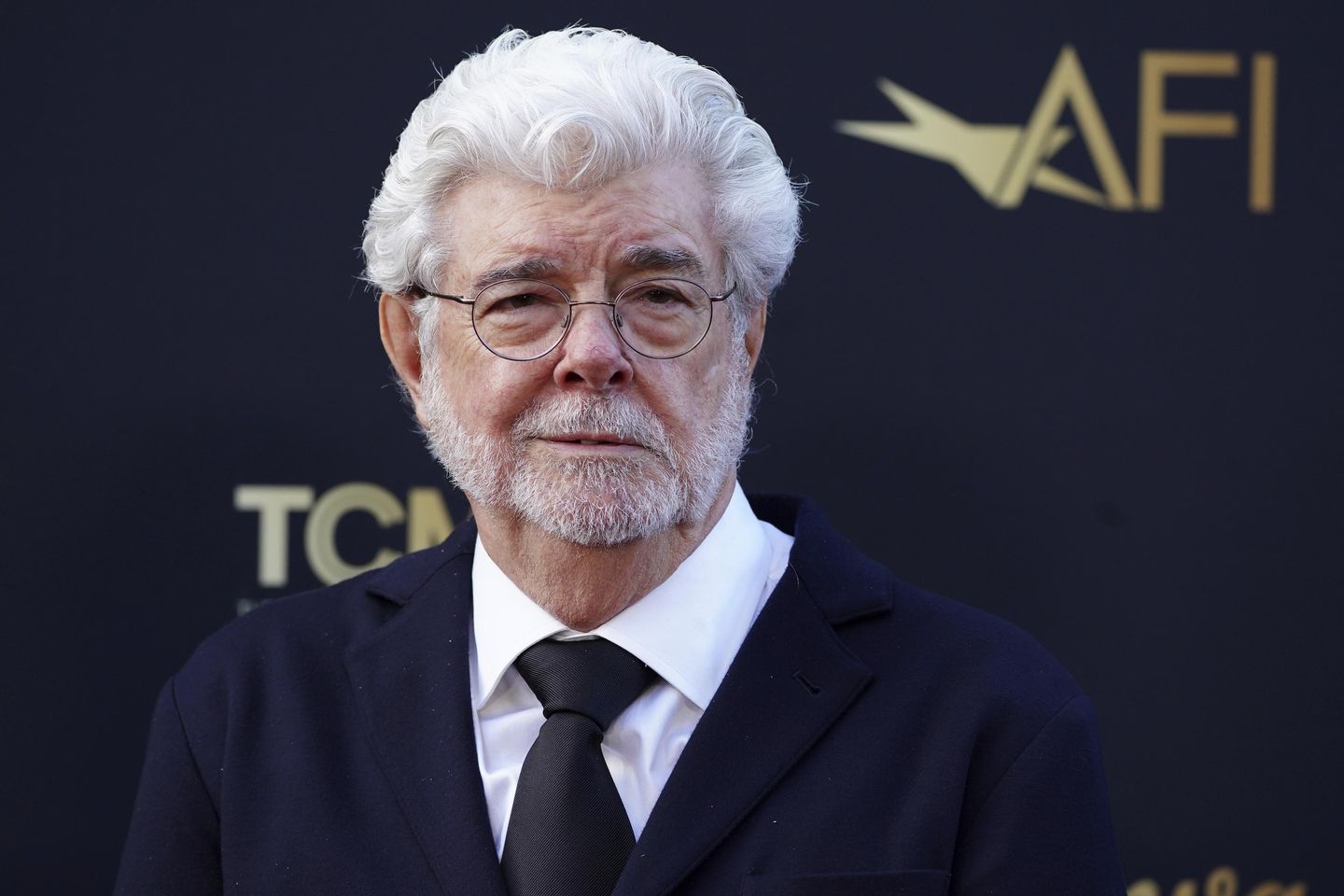
The internet loves a ghost story. Every few months, the rumor mill grinds into gear, dragging up the mythical outline of George Lucas’s discarded sequel trilogy treatments like a holy relic buried in a backyard. Fans weep into their keyboards. Commentators wring their hands. The narrative is as lazy as it is pervasive: Disney bought the galaxy, threw away the maestro's grand blueprint, and handed the keys to corporate committee hacks who drove the franchise into a ditch.
It is a comforting bedtime story for people allergic to reality. It is also complete nonsense.
I have watched studios implode from the inside, and I have seen creators destroy their own legacies because nobody in the room had the spine to hand them a red pen. The romantic notion that Lucas’s alternate episodes seven, eight, and nine would have been immaculate cinematic scripture ignores every single warning sign blinking from his late-career filmography. George Lucas did not need three more movies. He needed a forced retirement, a long vacation, and someone to take his editing software away.
Let us dismantle the nostalgia industrial complex piece by piece.
The Myth of the Lost Masterpiece
Fandom treats unproduced scripts like pristine masterpieces precisely because they can never be tested against reality. You can project whatever utopian fan-fiction you want onto a blank page. But let us look at the actual data of what Lucas was doing when he still had total, unchecked creative autonomy.
Look at the prequel trilogy. Go back and watch Attack of the Clones without the rose-tinted glasses of childhood memory. Listen to the wooden dialogue about sand. Watch the dead-eyed digital actors standing in front of endless green screens, talking in monotone about trade federations and bureaucratic senate subcommittees. This was a billionaire auteur who had fired every single person willing to tell him no.
When Lucas walked away in two thousand and twelve, he was not a triumphant visionary at the peak of his powers. He was a deeply exhausted, creatively insulated filmmaker who had spent a decade alienating his core audience and defending digital midichlorians. The idea that he suddenly would have pivoted to writing tight, emotionally resonant, character-driven scripts for a new trilogy defies every known pattern of his career.
Imagine a scenario where Disney rolled out the red carpet, handed him four billion dollars, and let him execute his exact treatments without notes. What would we have gotten? We would have gotten microscopic explorations of the Whills, endless exposition about microscopic cellular organisms, and digital vistas that looked like a video game cutscene from two thousand and six. Fans claim they wanted Lucas's vision. What they actually wanted was the feeling they had when they were nine years old watching the original nineteen seventy-seven film, completely forgetting that Lucas was only one part of that original lightning-in-a-bottle alchemy.
Why Lucas Was Out of Gas
To understand why Lucas had to step down, you have to look at how creative exhaustion manifests in an absolute monarch. By the time he completed Revenge of the Sith, he was done. He said it himself in countless interviews: making movies was no longer fun; it was a war of attrition against critics and fans who hurled abuse at him for daring to change things.
When a creator stops loving the medium and starts treating it as an engineering challenge to solve with new digital cameras and CGI software, the soul drains out of the frame. Lucas was obsessed with technology. He wanted to pioneer digital projection, digital sets, and performance capture. There is nothing inherently wrong with that, but cinema is an empathy machine, not a tech demo.
The prequels failed not because the ideas were bad on paper, but because the execution was sterile. The human element was swallowed whole by pixels. If Lucas had stayed on for three more movies, the technical reliance would have intensified. We would have seen actors performing entirely in motion-capture suits against blue voids for three consecutive films, stripped of any tactile connection to physical reality.
I have seen companies blow millions on vanity projects because founders surrounded themselves with yes-men who nodded at every half-baked brainstorm. Lucas became a victim of his own success. He built Industrial Light and Magic, he funded everything out of his own pocket, and in doing so, he built an impenetrable fortress where dissent was impossible. When you build a fortress like that, good ideas go to die.
The Creative Paralysis of Absolute Monarchy
There is a profound difference between a director and an emperor.
In nineteen seventy-seven, George Lucas was a brilliant director fighting against the studio system. He was stressed, he was over budget, and Fox executives were breathing down his neck. That friction produced greatness. Constraints breed creativity. When you have no budget limits, no studio interference, and no one allowed to question your edits, you lose the grit that makes storytelling compelling.
By the time the prequels rolled around, nobody dared question the man who signed the paychecks. Editors nodded when scenes dragged on for ten minutes of exposition in a sterile room. Writers did not push back against clunky phrasing.
Handing him three more films would have perpetuated this absolute monarchy. Cinema thrives on dialogue, pushback, and collaborative tension. When one man holds all the cards, all the money, and all the veto power, the work ceases to be art and becomes an ego project. The franchise needed a shock to the system. It needed new voices, different directors, and conflicting viewpoints to drag it out of the digital tarpits.
Nostalgia is a Rotten Screenwriter
We need to confront the cultural sickness that plagues modern entertainment: the belief that the past was inherently superior and that original creators can never be outgrown.
When people complain about the direction Disney took, they are mourning an idealized past that never existed. They forget that the original trilogy was saved in the editing room by Marcia Lucas and a team of brilliant cutters who chopped up George’s meandering first cut of the nineteen seventy-seven film into a lean, propulsive adventure. They forget that Return of the Jedi featured Ewoks designed specifically to sell plush toys, a creative compromise that purists whined about for decades until time softened their outrage.
Nostalgia rewrites history. It takes the messy, flawed reality of past creative eras and polishes them into golden standards, while holding modern iterations to an impossible standard of perfection.
If Disney had produced Lucas’s treatments, the exact same fan base screaming about ruined childhoods today would be screaming about how Lucas ruined his own legacy by fumbling the ending. You cannot win with a fandom addicted to its own grievance. The studio system took the blame so Lucas could ride off into the sunset with billions of dollars and his reputation largely intact, preserved as a misunderstood genius rather than a director who stayed at the party three hours too long.
The Real Failure Was Never the Sale
The core issue with modern franchise discourse is not who owns the intellectual property. It is the childish expectation that a single universe should pander to the exact psychological profile of aging adults who refuse to let go of their childhood toys.
Star Wars was originally a Saturday serial matinee for twelve-year-olds. George Lucas said it repeatedly. The moment it became a sacred global religion guarded by high-priest fanboys, it was doomed to disappoint everyone.
Disney's sin was not rejecting Lucas's treatments. Disney's sin was a lack of a cohesive narrative spine, corporate panic in the boardroom, and a cowardly retreat into safe nostalgia when bold swings backfired. They tried to please everyone, which means they pleased no one. But blaming that entirely on the absence of Lucas's script notes is a lazy dodge of the structural realities of modern blockbuster filmmaking.
Lucas made the right call. He cashed out, walked away, and left the sandbox to new players. Whether those players knew what to do with it is a different debate entirely. But keeping an exhausted auteur chained to a franchise he had grown tired of would have been an act of cruelty, not preservation.
Let the ghost stories die. The treatments you imagine in your head were never going to beat the fantasy you built when you were ten years old. Stop wishing for the past. The galaxy moved on, and it is time you did too.


