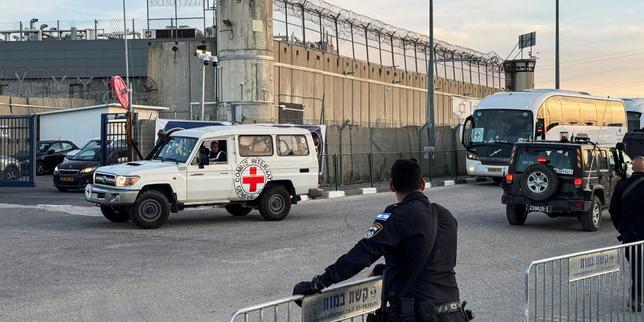
The Israeli Supreme Court's decision to invalidate the government's ban on International Committee of the Red Cross (ICRC) prison visits represents a critical intersection of national security autonomy, constitutional law, and international treaty compliance. This ruling highlights a systemic friction point: the tension between immediate tactical control over detained populations and the long-term strategic value of maintaining institutional legitimacy within the international legal framework.
When a state restricts access by third-party humanitarian observers during an active conflict, it alters its international risk profile. While the executive branch often views such restrictions as necessary to preserve operational security and prevent external communication channels, high courts frequently evaluate these measures through the lens of constitutional boundaries and international obligations. This analysis deconstructs the legal mechanisms, state motivations, and structural consequences of this judicial intervention.
The Tri-Border Framework of State Detention Legitimacy
Evaluating state behavior regarding wartime detention requires analyzing three distinct but interacting operational pillars:
                  ┌──────────────────────────────┐
                  │                              │
                  │   Constitutional Mandates    │
                  │                              │
                  └──────────────┬───────────────┘
                                 │
                                 │
        ┌────────────────────────┴────────────────────────┐
        │                                                 │
┌───────▼──────────────────────┐           ┌──────────────▼───────────────┐
│                              │           │                              │
│ International Treaty Regimes │◄─────────►│ Operational Security Imperatives
│                              │           │                              │
└──────────────────────────────┘           └──────────────────────────────┘
International Treaty Regimes
The Third and Fourth Geneva Conventions establish the baseline obligations for the treatment of detainees and prisoners of war. Under these treaties, the ICRC holds a specific mandate to monitor detention conditions. When a signatory state suspends this access, it creates an immediate legal friction point with external bodies, treaty partners, and international courts. The long-term cost of this friction includes the potential erosion of reciprocal protections for the state's own captured personnel.
Constitutional Mandates
Domestic high courts function as the regulators of executive overreach, even during periods of declared military emergency. The judiciary evaluates executive decrees against constitutional principles, such as due process and the prohibition of arbitrary or inhumane treatment. When the Israeli Supreme Court intervened, it asserted that state security measures remain subject to domestic legal oversight, defining a clear boundary where administrative necessity cannot bypass established law.
Operational Security Imperatives
From the perspective of military and intelligence apparatuses, open communication channels within detention facilities present distinct operational risks. Intelligence agencies frequently argue that external visits can be compromised to transmit tactical data, maintain command-and-control structures outside the prison walls, or fuel external propaganda campaigns. Balancing this perceived risk against legal obligations is the core challenge of wartime administrative law.
The Strategic Cost Function of Eliminating External Oversight
Suspending third-party oversight creates a predictable sequence of escalations that impacts a state's geopolitical standing. While the short-term objective may be to control information or maximize interrogation leverage, the broader strategic cost function typically outweighs these tactical utility metrics.
┌──────────────────────────────┐     ┌──────────────────────────────┐
│  Suspension of Third-Party   ├────►│ Decreased Data Verifiability │
│          Oversight           │     │   & Increased Speculation    │
└──────────────────────────────┘     └──────────────┬───────────────┘
                                                    │
                                                    ▼
┌──────────────────────────────┐     ┌──────────────────────────────┐
│  Erosion of Inter-State      │◄────┤  Acceleration of External    │
│    Strategic Alliances       │     │     Legal Interventions      │
└──────────────────────────────┘     └──────────────────────────────┘
The first consequence is a shift from verified monitoring to unverified speculation. In the absence of an accredited, neutral intermediary like the ICRC, the international community relies on unstructured data, unilateral allegations, and leaked information. This information vacuum escalates reputational pressure far beyond what a standardized, confidential ICRC report typically generates.
The second outcome is the acceleration of external legal interventions. When domestic courts fail to provide a venue for accountability, international bodies—such as the International Criminal Court (ICC) or the International Court of Justice (ICJ)—gain greater jurisdiction and political momentum to step in. A functional domestic judiciary that actively checks executive overreach serves as a legal shield, demonstrating that the state possesses a working system of accountability and rendering external interventions unnecessary under the principle of complementarity.
This dynamic ultimately damages inter-state alliances. Democratic allies rely on the shared premise of the rule of law to justify diplomatic cover, intelligence sharing, and military aid. When a state's detention framework isolates itself from both domestic judicial review and international treaty compliance, it increases the political cost for external partners attempting to maintain strategic alignment.
Legal Mechanics of the Supreme Court Invalidation
The Israeli Supreme Court's ruling rests on specific administrative and constitutional mechanisms rather than purely humanitarian concerns. The judiciary focused on the scope of executive authority during emergencies, evaluating whether the emergency regulations invoked to bar the ICRC met the threshold of proportionality.
A central concept in this legal assessment is the principle of proportionality, which requires that any restriction on rights must possess a rational connection to a legitimate objective, use the least restrictive means possible, and maintain a balance between the benefit gained and the harm caused. The court determined that a blanket, indefinite ban on ICRC visits failed the least-restrictive-means test. The state could not demonstrate that less severe measures—such as modified scheduling, heightened physical screening, or temporary restrictions based on specific, individualized security threats—were insufficient to protect operational security.
Furthermore, the ruling reinforces the non-derogable nature of certain fundamental rights. While specific privileges can be suspended during wartime, the core minimum standards of detention conditions and the prohibition of incommunicado detention are absolute under both domestic constitutional principles and international customary law. By invalidating the executive ban, the court re-established that emergency powers are modifications of normal legal procedures, not their complete elimination.
Operationalizing the Court's Directive: Tactical Adjustments
Enforcing the court's decision requires the defense and correctional apparatus to shift from a strategy of total exclusion to one of controlled compliance. This transition demands specific operational changes to balance security imperatives with legal mandates.
- Tiered Access Frameworks: Implementing stratified scheduling where visits are conducted under distinct security protocols based on the classification of the detainee population, replacing blanket bans with targeted restrictions.
- Monitored Neutrality Zones: Designing dedicated physical spaces within detention complexes specifically optimized for external inspections, ensuring compliance with humanitarian mandates while preventing access to sensitive operational areas of the facility.
- Information Interception Protocols: Deploying enhanced, legally compliant screening mechanisms for any physical documentation or materials transitioning through the intermediary, neutralizing the risk of command-and-control data transmission without disrupting the observation process.
Long-Term Structural Projections
The tension between judicial review and executive military execution will continue to reshape the domestic legal landscape. This ruling establishes a precedent that limits the state's capacity to use emergency declarations as a blanket exemption from international oversight.
The immediate consequence will likely be a legislative push to draft explicit statutory frameworks designed to circumvent judicial restrictions. Elements within the political infrastructure will seek to codify detention parameters that limit the Supreme Court’s scope of review regarding non-citizens captured during hostilities. This creates a potential constitutional friction point between the legislative branch's statutory authority and the judiciary’s role as the guardian of fundamental constitutional principles.
Globally, this judicial intervention provides a clear case study for how domestic legal institutions can manage state actions during protracted conflicts. If the executive branch complies with the ruling, it strengthens the state’s defense against international legal tribunals by demonstrating robust domestic judicial independence. Conversely, if the executive or legislative branches find ways to bypass the ruling, it will signal to international observers that the domestic legal system cannot effectively regulate its own military apparatus, accelerating external legal proceedings and increasing diplomatic isolation.
The optimal strategy for the state's defense apparatus is to integrate the ICRC oversight mechanism into its broader security architecture rather than viewing it as purely adversarial. Utilizing structured, confidential reporting from a recognized international body allows the state to systematically refute unsubstantiated allegations of systemic abuse, manage its international legal exposure, and maintain the institutional legitimacy required to sustain long-term military readiness and strategic partnerships.


