China’s strategic recalibration toward Central Asia is not a preference but a structural requirement dictated by the diminishing returns of its Middle Eastern engagements. The traditional dependency on the Strait of Hormuz and the Malacca Trap presents a dual-threat bottleneck that the People’s Republic of China (PRC) can no longer ignore. As regional instability in the Levant and the Red Sea increases the "risk premium" on energy transit, Beijing is shifting its capital and diplomatic weight toward the "Heartland"—Kazakhstan, Uzbekistan, Turkmenistan, Kyrgyzstan, and Tajikistan—to secure a contiguous, overland resource corridor that remains immune to maritime interdiction.
The Triad of Maritime Vulnerability
China’s energy security is currently tethered to a maritime architecture that it does not control. This vulnerability is defined by three distinct pressure points:
- The Kinetic Risk of the Persian Gulf: The escalation of proxy conflicts and direct state-on-state friction in the Middle East creates a high-variance environment for energy pricing and supply consistency.
- The Malacca Chokepoint: Approximately 80% of China’s oil imports pass through the Malacca Strait. In a hypothetical conflict scenario, this serves as a structural "kill switch" for the Chinese economy.
- Insurance and Freight Escalation: Beyond physical kinetic threats, the rising cost of maritime insurance in volatile waters creates an invisible tax on Chinese industrial output, eroding the competitive advantage of its manufacturing sector.
By contrast, Central Asia offers a terrestrial alternative that eliminates the Malacca Trap entirely. Pipelines such as the Central Asia–China gas pipeline (Lines A, B, and C, with Line D in development) represent fixed-asset investments that provide a deterministic supply of energy. Unlike a tanker that can be diverted or seized, a buried pipeline creates a permanent geopolitical bond between the supplier and the consumer.
The Cost Function of Energy Diversification
The transition to Central Asia is governed by a rigorous cost-benefit analysis where the "cost of security" is now outweighing the "cost of production." While extraction in the Arabian Peninsula remains cheaper on a per-barrel basis, the cumulative cost—including security escorting, insurance, and the risk of total supply cessation—makes Central Asian hydrocarbons increasingly attractive.
The Hydrocarbon Mix
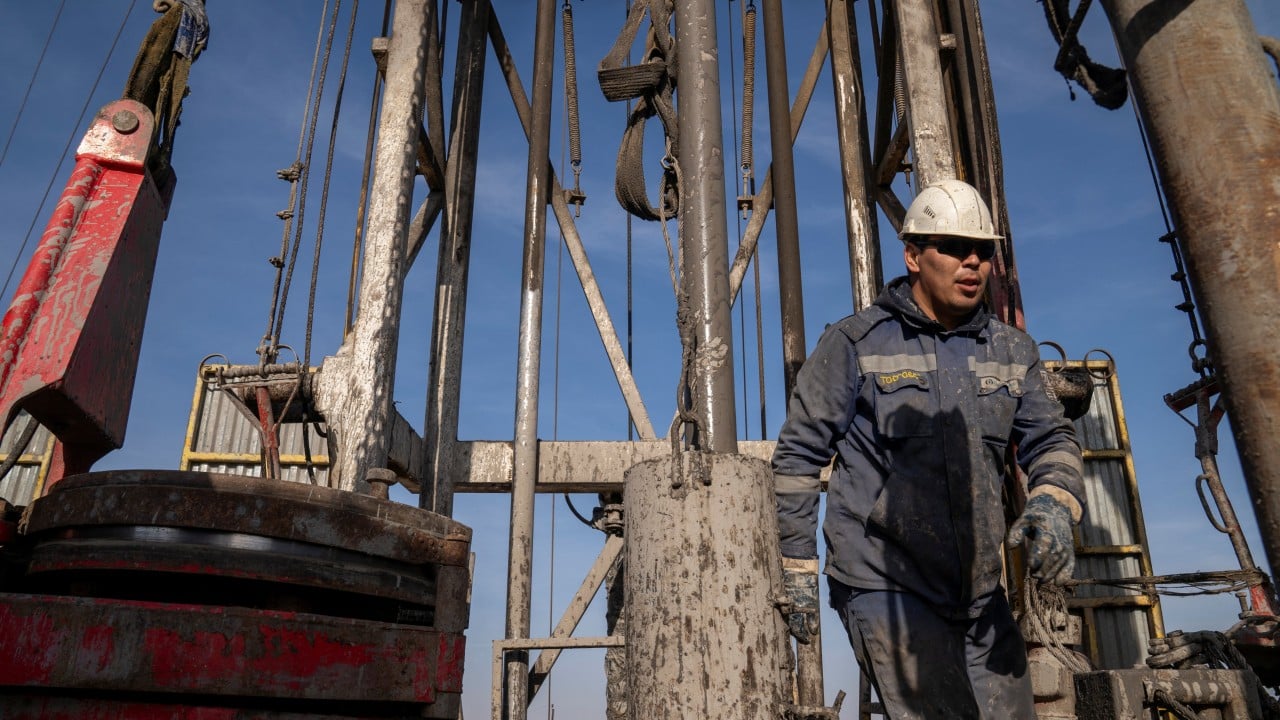
- Turkmenistan: Acts as the primary anchor for natural gas. The country possesses the world's fourth-largest gas reserves. For Beijing, Turkmenistan is a captive market; with limited pipeline infrastructure heading west, China maintains significant monopsony power.
- Kazakhstan: Serves as the diversified energy hub, providing both crude oil and uranium. As China scales its domestic nuclear power capacity to meet decarbonization targets, Kazakhstan’s role as the world’s leading uranium producer becomes a matter of national security.
- Uzbekistan: Functions as both a transit state and a growing industrial partner, moving up the value chain from raw resource extraction to early-stage processing.
The C5+1 Diplomatic Architecture
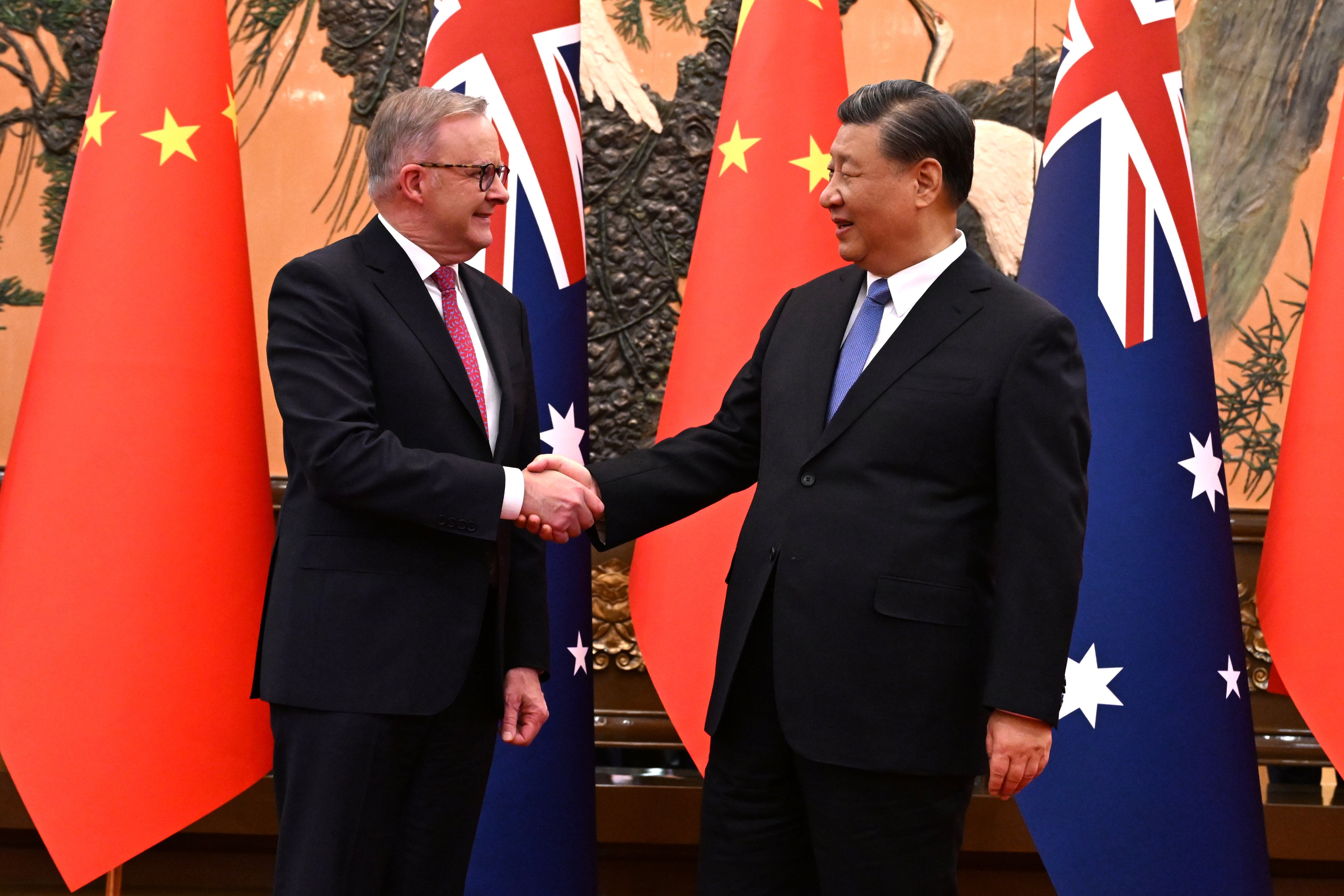
Beijing’s engagement strategy has evolved from bilateral deal-making to a multilateral "C5+1" framework. This shift signals a move toward regional standard-setting. By institutionalizing these relationships, China creates a regulatory environment that favors its own technological and industrial standards.
This architectural shift is visible in the transition from the "Belt and Road Initiative" (BRI) 1.0—characterized by massive, often inefficient infrastructure projects—to BRI 2.0. This new phase prioritizes "small yet beautiful" projects: digital infrastructure, telecommunications (5G), and renewable energy technology. By embedding Huawei and ZTE into the digital backbone of Central Asian states, China ensures long-term path dependency. Once a nation’s digital and administrative systems are built on a specific technological stack, the switching costs become prohibitively high, effectively locking these nations into the Chinese sphere of influence for decades.
Security Externalities and the Taliban Variable
The withdrawal of Western forces from Afghanistan in 2021 removed a buffer but also an irritant. China now views Central Asia as a "buffer zone" against the spillover of extremism into its western provinces. The security logic here is circular: economic development leads to stability, and stability protects the infrastructure required for economic development.
China employs a "Security-Development Nexus" where it provides surveillance technology and paramilitary training to Central Asian states under the guise of the Shanghai Cooperation Organization (SCO). Unlike Western security aid, which often comes with human rights conditionalities, Chinese security cooperation is transactional and focused on "regime stability." This creates a symbiotic relationship with Central Asian autocracies that value internal control above all else.
The Infrastructure Bottleneck and the Middle Corridor
The most significant hurdle to this pivot is the physical capacity of current transit routes. The Trans-Caspian International Transport Route (the "Middle Corridor") is the primary alternative to the Northern Corridor (which passes through Russia).
Current limitations of the Middle Corridor include:
- Multimodal Friction: The requirement to move goods from rail to ship (across the Caspian Sea) and back to rail increases transit times and logistics costs.
- Regulatory Fragmentation: Each border crossing introduces bureaucratic delays and varying tariff structures.
- Throughput Constraints: Existing rail gauges and port capacities in Kazakhstan and Azerbaijan are currently insufficient to handle the volume of trade China eventually intends to divert from maritime routes.
To resolve these, China is investing heavily in the China-Kyrgyzstan-Uzbekistan (CKU) railway. This project is a masterpiece of strategic engineering; it bypasses Russia, reducing Beijing’s reliance on a Moscow that is increasingly bogged down by Western sanctions and kinetic conflict.
Quantitative Divergence: Comparing Middle East vs. Central Asia Risks
| Risk Factor | Middle East (Maritime) | Central Asia (Terrestrial) |
|---|---|---|
| Geopolitical Alignment | Fragmented, US-influenced | Consolidating, PRC-influenced |
| Transit Vulnerability | High (Chokepoints/Blockades) | Low (Sovereign terrestrial borders) |
| Infrastructure Type | Flexible (Tankers) | Rigid (Pipelines/Rail) |
| Investment Profile | OpEx heavy (Insurance/Security) | CapEx heavy (Construction/Loans) |
| Political Stability | Low (Cyclical conflict) | Medium (Authoritarian stability) |
The Russian Complication
One cannot analyze China’s move into Central Asia without addressing the "Russian Backyard" theory. Historically, Russia was the security guarantor of Central Asia, while China was the banker. That division of labor is collapsing. As Russia’s military and economic bandwidth is consumed by the war in Ukraine, China is moving into the vacuum.
However, this is not a hostile takeover. It is a managed transition. China requires a stable, non-hostile Russia to protect its northern flank. Therefore, Beijing’s strategy is to integrate Central Asia so deeply into the Chinese economic orbit that Russia’s "security guarantee" becomes irrelevant. If the rails, the electricity, the 5G networks, and the currency swaps are all denominated in Yuan and built by Sinohydro, the region is effectively integrated into the PRC’s "Greater Peripheral Diplomacy" regardless of where Russian troops are stationed.
The Strategic Play: Digital and Green Integration
The final stage of this pivot is the export of the "Green Silk Road." Central Asia possesses massive untapped potential for wind and solar energy. China, as the world's dominant producer of photovoltaic cells and wind turbines, sees the region not just as a source of fossil fuels, but as a future battery.
By building massive renewable energy parks in the Kazakh steppe, China can eventually import "green electricity" via high-voltage direct current (HVDC) lines. This achieves two goals: it helps China meet its internal climate targets by offshoring carbon-intensive energy production, and it creates a new form of energy dependency that is even more technically complex to untangle than oil and gas pipelines.
The operational reality is that the Middle East will remain a major source of crude for the foreseeable future, but its status as the primary strategic focus is over. Central Asia is being transformed into a high-security, high-tech hinterland for the Chinese economy. To maintain a competitive edge, global observers must track the CKU railway's completion and the adoption rates of the Digital Yuan in Tashkent and Astana. These are the metrics of the new silk hegemony.
The logical conclusion of this migration is the creation of a closed-loop economic system in Eurasia. China is building a "Fortress Eurasia" where the essential inputs of modern civilization—energy, data, and food—can be moved across borders without ever touching international waters or entering the jurisdiction of a Western-aligned navy. This is the ultimate hedge against the volatility of the 21st-century maritime order.