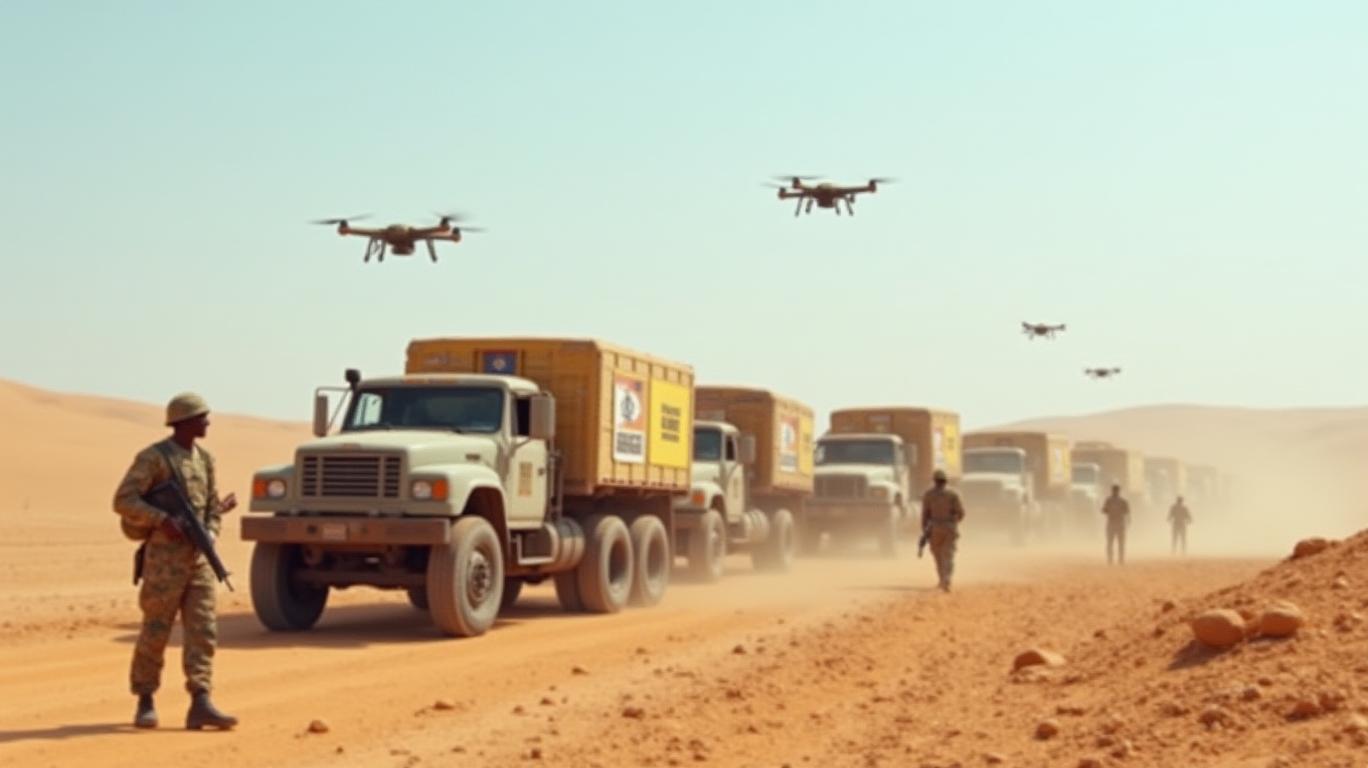
The repatriation of 312 Indian fishermen from Iran via Armenia represents a failure of traditional maritime diplomacy and a triumph of unconventional multi-modal logistics. When a significant labor force becomes "stranded"—a term that masks the complex intersection of territorial disputes, expired documentation, and economic insolvency—the solution rarely lies in simple bilateral negotiation. Instead, it requires the activation of a "triangulation protocol," utilizing a third-party neutral corridor to bypass the geopolitical bottlenecks that prevented a direct return.
The Structural Drivers of Maritime Incarceration
Maritime stranding is not a random occurrence; it is the output of a specific systemic friction. In the Persian Gulf and the Arabian Sea, this friction is generated by three primary variables:
- Territorial Fluidity: Fishing vessels frequently cross undefined or poorly signaled maritime boundaries. This triggers immediate legal seizure by sovereign coast guards, converting a commercial endeavor into a criminal proceeding.
- Asset Forfeiture vs. Human Capital: Often, the vessel is seized as the primary collateral. Without the boat, the crew loses both their livelihood and their primary mode of transport, leaving them in a state of "legal suspension" where they are neither prisoners nor free agents.
- The Consular Gap: Large-scale strandings overwhelm local consular resources. When hundreds of individuals require simultaneous processing—including exit visas, health clearances, and identity verification—the bureaucratic throughput of a single embassy reaches its breaking point.
The 312 fishermen in Iran were caught in this precise gridlock. Their presence became a liability for the host nation and a humanitarian priority for the home nation, yet direct transit options remained restricted by regional aviation limitations or diplomatic sensitivities.
The Armenia Corridor as a Strategic Workaround
The decision to route the return through Armenia suggests a tactical shift in Indian foreign policy. Under normal conditions, air bridges between Iran and India are the standard operating procedure. However, when direct routes are compromised or insufficient for a mass movement of over 300 individuals, a "relay logistics" model is deployed.
Armenia serves as the pivot point in this three-tier architecture:
- Tier 1: Ground-to-Air Extraction: Moving the cohort from the coastal regions of Iran to a centralized transit hub.
- Tier 2: The Neutral Bridge: Utilizing Armenia’s airspace and ground infrastructure. As a nation with strengthening strategic ties to India, Armenia provides a low-friction environment for the staging of large groups without the baggage of Middle Eastern geopolitical tensions.
- Tier 3: Final Mile Repatriation: The long-haul flight from Yerevan to Indian hubs, effectively decoupling the repatriation from the initial point of conflict.
This "Triangulated Repatriation" serves a dual purpose. It clears the Iranian backlog immediately while signaling a deepening of the India-Armenia-Iran "International North-South Transport Corridor" (INSTC) logic, applying a freight logistics framework to a humanitarian crisis.
Quantifying the Repatriation Cost Function
The mobilization of 312 individuals is an expensive undertaking. The fiscal burden of such an operation is calculated through a composite cost function:
$$C_{total} = C_{leg} + C_{log} + C_{opp}$$
Where:
- $C_{leg}$ represents the legal fees, exit fines, and documentation costs required to "unstick" the individuals from the host country’s judicial system.
- $C_{log}$ represents the physical transport costs: fuel, charter fees, and the provisioning of food and medical care during transit.
- $C_{opp}$ (Opportunity Cost) represents the diplomatic capital spent to secure the cooperation of third-party nations like Armenia.
By analyzing the scale of the 312-person extraction, we see that the Indian Ministry of External Affairs (MEA) is prioritizing the "Social Contract Stability" variable. The government must demonstrate a high "Protection Coefficient" for its expatriate labor force to maintain the flow of remittances and domestic political support.
The Bottleneck of Identity Verification
A primary reason strandings persist for months is the "Verification Lag." Most fishermen lose their documentation during the seizure of their vessels. To prevent security breaches, the MEA must conduct a multi-factor verification:
- Biometric Cross-Referencing: Matching fingerprints or iris scans against the Aadhaar database.
- Locality Confirmation: Contacting local police stations in home states (predominantly Tamil Nadu, Gujarat, and Kerala) to verify the identities of the claimed dependents.
- Emergency Certificate Issuance: Creating one-way travel documents that satisfy international aviation standards.
The successful return of 312 people indicates that these verification hurdles were cleared in a batch-processing mode rather than sequentially. This suggests a high level of inter-departmental synchronization between the Ministry of Home Affairs and the MEA.
The Geopolitical Signaling of the Move
Beyond the humanitarian aspect, this operation serves as a stress test for the India-Iran-Armenia trilateral axis. By utilizing Armenia as a transit point, India is normalizing the use of the Caucasus as a gateway for more than just energy and goods. It establishes a precedent for "Diplomatic Flexibility," where India demonstrates it can operate outside of Western-aligned or traditional Gulf corridors to secure its interests.
This move also places subtle pressure on regional actors. It shows that India has the logistical capability to bypass traditional hubs if they become too difficult to navigate. The "Armenia Route" is now a proven contingency plan, reducing India’s dependence on any single regional partner for the safety of its citizens.
Long-term Mitigation of Maritime Stranding
While the repatriation is a tactical victory, it does not address the structural causes of stranding. To reduce the frequency of these events, the maritime strategy must evolve from reactive extraction to proactive prevention.
The implementation of "Smart Maritime Borders" is the necessary next step. This involves:
- Transponder Mandates: Equipping even small-scale traditional fishing vessels with AIS (Automatic Identification System) technology that triggers an onboard alarm when the vessel approaches an international maritime boundary.
- Bilateral Fishing Zones: Negotiating "Gray Zone" agreements where fishing is permitted within a specific buffer of the maritime border without the risk of vessel seizure, replacing criminal arrest with a simple "push-back" or fine system.
- Compulsory Expat Insurance: Integrating a mandatory insurance premium into the licensing of fishermen working in foreign waters. This fund would explicitly cover the $C_{total}$ of repatriation, removing the fiscal burden from the state and placing it onto a sustainable, risk-pooled model.
The current model of state-funded, diplomatically-intensive extraction is a high-cost solution to a repeatable problem. While the MEA’s success in bringing home 312 citizens is a testament to its operational reach, the long-term objective must be the "Hardening" of the maritime border through technology and pre-negotiated legal frameworks.
Governments must now transition from treating these events as isolated humanitarian crises to viewing them as predictable externalities of the global labor market. The Armenian bridge has proven effective, but the goal should be to ensure that such a bridge is never needed again. The focus shifts now to the "Digital Fence"—the integration of GPS-linked geo-fencing into the low-tech fishing fleets of the subcontinent.