The targeted killing of Iran’s Supreme Leader, Ali Khamenei, in a coordinated strike attributed to U.S. and Israeli forces has effectively dismantled the established rules of engagement in the Middle East. For decades, the "gray zone" of conflict allowed for proxy wars, maritime sabotage, and cyber warfare, all while maintaining a thin veil of deniability that prevented a total regional collapse. That veil is gone. By removing the ultimate authority of the Islamic Republic, the alliance has pushed the world into an era where the sovereign immunity of ideological figureheads no longer functions as a shield.
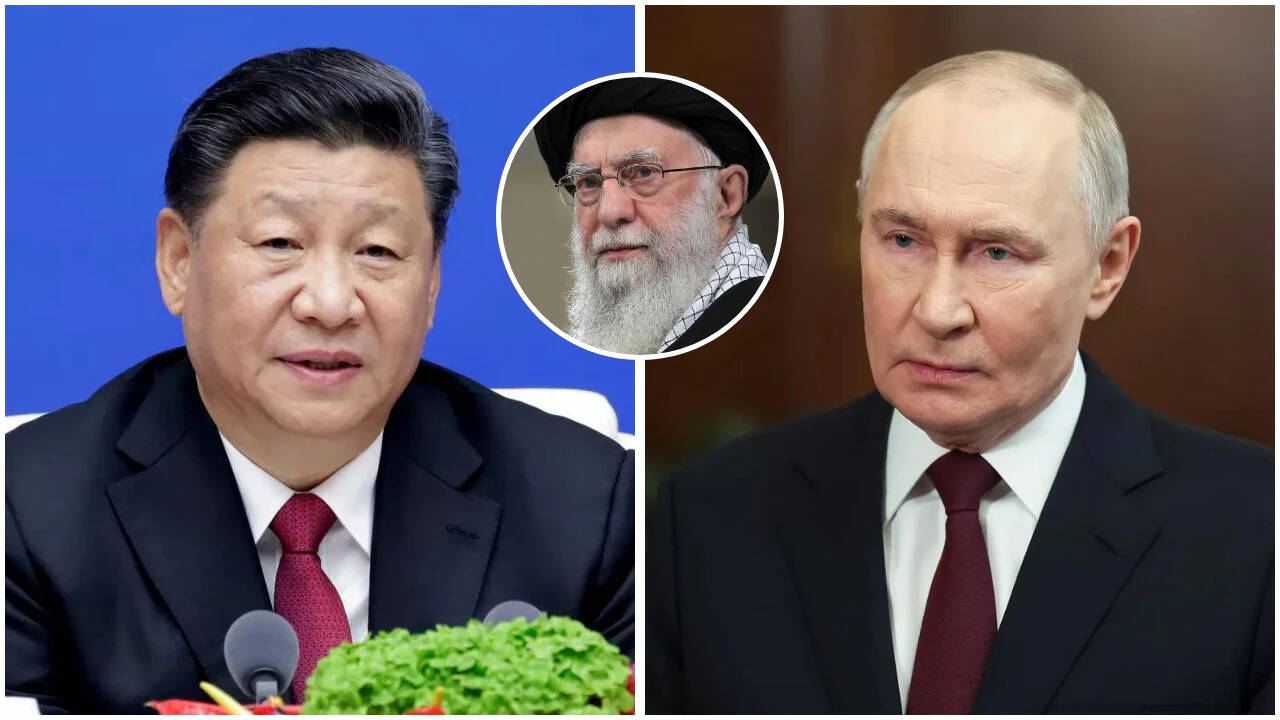
Russia and China have moved with calculated speed to frame this event as a terminal blow to international law. Their condemnation is not rooted in a sudden affection for the Iranian theocracy, but in a deep-seated fear of the precedent this sets for autocratic stability. If a head of state can be liquidated via a precision drone strike or a coordinated intelligence operation, the West has effectively signaled that no border or bunker is sacrosanct. This isn't just about Tehran; it’s about the shifting mechanics of global power and the death of the Westphalian system. Recently making news in related news: The Kinetic Deficit Dynamics of Pakistan Afghanistan Cross Border Conflict.
The Calculated Silence and the Loud Protest
In the immediate aftermath, Moscow described the action as a "cynical violation of law," a phrase that rings hollow to those watching the ongoing war in Ukraine, yet carries weight in the Global South. The Kremlin’s strategy is clear. They are positioning themselves as the last defenders of a structured, predictable world order where leaders—no matter how repressive—are off-limits. This rhetoric serves to alienate Washington from non-aligned nations that fear they might be next on a target list if they fall out of favor with the West.
Beijing’s reaction was more tempered but equally firm. The Chinese Foreign Ministry focused on "regional stability," a euphemism for the protection of their energy interests. Iran is a critical node in the Belt and Road Initiative. With the Supreme Leader dead, the multi-billion dollar infrastructure projects and oil supply chains that China relies on are now subject to the whims of an unpredictable succession crisis. China doesn't care about the morality of the strike. They care about the math of the fallout. Further information into this topic are explored by USA Today.
The Vacuum of Power inside the IRGC
The most immediate danger is not a conventional war, but the frantic, violent internal struggle for control within Iran. The Islamic Revolutionary Guard Corps (IRGC) is not a monolithic entity. It is a sprawling conglomerate of military power and business interests. With Khamenei gone, the various factions—the hardliners, the pragmatists, and the ultra-radical Qods Force commanders—are now competing to fill a void that was never meant to be empty.
Succession in a theocracy is rarely a clean process. The Assembly of Experts is tasked with choosing a new leader, but the real power lies with those who hold the guns and the keys to the ballistic missile silos. We are likely to see a period of "performative retaliation." To maintain domestic legitimacy, the IRGC must strike back, but doing so too aggressively invites total destruction of their remaining assets. It is a lethal balancing act.
- Proxies in Disarray: Groups like Hezbollah and the Houthis have lost their ultimate patron. Without a clear directive from the top in Tehran, these groups may become more autonomous and, consequently, more erratic.
- The Nuclear Question: There is a high probability that the surviving elements of the Iranian leadership will view a nuclear breakout as their only remaining survival strategy. If the conventional leadership structure is vulnerable, the "ultimate deterrent" becomes the only logical path.
The Intelligence Failure or the Intelligence Feat
The sheer audacity of the operation suggests a catastrophic breach within the Iranian security apparatus. To reach the Supreme Leader requires more than just satellite imagery; it requires high-level human intelligence. For years, the Mossad and the CIA have been accused of infiltrating the highest levels of the Iranian government. This strike confirms that the infiltration is absolute.
The paranoia now gripping Tehran is perhaps more effective than the bombs themselves. When a regime cannot trust its own inner circle, its ability to govern and command effectively evaporates. Every commander is now looking at his subordinates with suspicion. Orders are questioned. Communications are restricted. The machine of state begins to grind to a halt under the weight of its own internal terror.
Why International Law is the First Casualty
The legal arguments will continue for years. The U.S. will likely cite "anticipatory self-defense," arguing that Khamenei was the architect of imminent attacks against Western interests. Israel will point to the existential threat posed by the "Ring of Fire" strategy orchestrated by Tehran. However, the legal nuances matter less than the physical reality.
When the U.S. killed Qasem Soleimani in 2020, it was a strike against a military commander. Killing the Supreme Leader is a strike against the state's soul. This move effectively tells the world that the "red lines" of the past twenty years have been erased. We are now operating in a landscape where the cost of entry for regional dominance is the willingness to decapitate the opposition.
The Economic Ripples through the Strait of Hormuz
Markets hate uncertainty, and the removal of a primary regional actor is the definition of a "black swan" event. While oil prices initially spiked, the long-term concern is the security of the Strait of Hormuz. Iran has long threatened to close this chokepoint, through which a third of the world's liquified natural gas and 20% of its oil passes.
If the IRGC feels backed into a corner, they may choose to "set the neighborhood on fire." This isn't a military strategy; it’s an economic one. By disrupting global energy supplies, they hope to force the international community to restrain the U.S. and Israel. It is a desperate move, but desperation is the defining characteristic of the current Iranian regime.
The New Alliance of the Grievanced
We are witnessing the birth of a more formal military and intelligence sharing agreement between Russia, China, and the remnants of the Iranian state. This "Axis of Resistance" is no longer a loose collection of interests. It is becoming a hard defensive bloc. Russia provides the electronic warfare capabilities, China provides the economic lifelines, and Iran provides the asymmetric ground force.
This strike has accelerated a process that was already underway. The world is splitting into two distinct camps. On one side is a coalition that prioritizes "liberal interventionism" and the proactive removal of threats. On the other is a bloc that prioritizes "sovereign inviolability," regardless of the nature of the regime in question.
The Myth of the "Clean Strike"
The proponents of the strike argue that it was a surgical removal of a cancer. This view ignores the reality of political biology. When you remove a central node, the system doesn't just die; it mutates. The "New Iran" that emerges from this chaos may not be a democratic uprising, as some in Washington hope. It is more likely to be a military junta, unburdened by the religious constraints of the past and driven by a singular desire for revenge and survival.
The streets of Tehran are currently quiet, but it is the silence of a held breath. The coming weeks will reveal if this was a masterstroke that brought a rogue nation to its knees or a blunder that ignited a fire no one can extinguish. The historical precedent for such actions is grim. From the assassination of Archduke Franz Ferdinand to more modern decapitation strikes, the result is rarely the "stability" promised by the architects of the mission.
The geopolitical board has been kicked over. The pieces are scattered, and the old rules no longer apply. While the U.S. and Israel may celebrate a tactical victory of unprecedented proportions, the strategic consequences are only beginning to manifest. The world is watching to see who blinks first in the shadow of the smoking ruins of the Iranian leadership.
The era of managed conflict is over. We have entered the era of the absolute. In this new reality, the only law that matters is the one written in the aftermath of the explosion. If you are a world leader today, you are looking at your security detail with a new, colder perspective. The ceiling has fallen in, and the sky is full of drones.