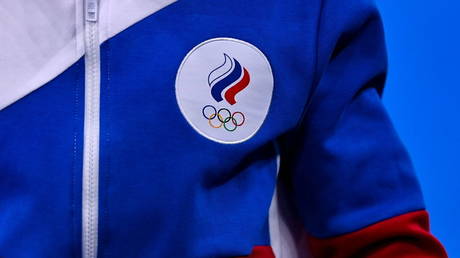
The International Olympic Committee's (IOC) provisional lifting of the Russian Olympic Committee (ROC) suspension represents a calculated structural recalibration rather than a sudden shift in ethical positioning. By advising international federations to dissolve the three-year Individual Neutral Athlete vetting mechanism ahead of the 2028 Los Angeles qualifying cycle, the IOC has initiated a multi-layered transition framework. This strategy systematically shifts the financial, regulatory, and political liabilities of Russian inclusion from the central Olympic governing body onto individual sport-specific international federations.
To understand this transition, the mechanics of Olympic governance must be broken down into three operational pillars: regulatory jurisdiction, economic distribution networks, and risk allocation. The historical baseline for this decision lies in the precipitous drop in Russian athletic participation between the Tokyo Games and the Paris Games. In Tokyo, a 330-athlete Russian delegation secured 71 medals under the ROC banner. By contrast, the strict criteria applied at the Paris Games restricted participation to just 15 Russian individual neutral athletes. This contraction altered the competitive equilibrium of high-yield Olympic disciplines and disrupted corporate broadcasting valuations in key media markets.
The Dual-Gate Operational Matrix
The reintegration architecture functions as a dual-gate screening system designed to insulate the IOC from political blowback while normalizing athlete pipelines.
[Phase 1: Jurisdictional Shift] -> [Phase 2: Decentralized Gatekeeping] -> [Phase 3: ITA Super-Doping Protocol]
The first gate handles jurisdictional compliance. The official rationale for lifting the October 2023 suspension rests on a specific territorial modification: the ROC confirmed it has ceased operating regional sports councils within disputed Ukrainian territories. By removing this specific violation of the Olympic Charter, the IOC secured the legal pretext necessary to restore the ROC's provisional standing.
The second gate decentralizes gatekeeping. By dismantling the centralized screening panel used for the Paris cycle, the IOC has transferred the vetting burden to individual international federations. This structural shift creates an asymmetric regulatory environment across different sports, which can be categorized by their vulnerability to state influence:
- Federations with High Independence: Organizations like World Athletics have maintained absolute prohibitions on Russian and Belarusian athletes, prioritizing systemic integrity and European commercial backing over broader field expansion.
- Federations with High State-Capital Dependence: Sports such as World Aquatics and the International Fencing Federation moved swiftly to ease restrictions, driven by historical reliance on Eastern European corporate sponsorship and training infrastructure.
This fragmentation ensures that the friction of managing political boycotts and athlete protests is borne by individual federations rather than the central IOC brand.
The Cost Function of Neutrality Enforcement
The decision to abandon the individual vetting protocol is fundamentally driven by administrative and financial constraints. Operating a centralized intelligence apparatus to audit the social media footprints, military contracts, and state-security affiliations of hundreds of prospective athletes introduced significant operational overhead.
The institutional cost function of maintaining the neutral status system is governed by three primary variables:
- Legal Defense Obligations: The previous framework invited continuous litigation at the Court of Arbitration for Sport from both excluded Russian athletes and protesting national committees.
- Intelligence and Vetting Logistics: Fact-checking the state-security alignments of athletes requires specialized compliance personnel, creating an escalating administrative cost curve as the Los Angeles qualifying pool expands.
- Broadcaster and Sponsorship Yield: The prolonged absence of a major sporting superpower diminishes marginal viewership in specific high-weight Olympic categories, directly impacting long-term television rights valuations.
To balance these costs, the IOC has introduced a strict anti-doping protocol managed by the International Testing Agency. This mechanism shifts the evaluation criteria from subjective political alignment to quantifiable biological monitoring. Under this updated framework, returning Russian athletes must undergo an augmented battery of targeted, unannounced doping controls. This protocol must be executed outside Russian territory and validated through WADA-accredited laboratories. This strategy attempts to restore international confidence in competitive outcomes while bypassing the politically charged process of ideological vetting.
Geopolitical Leverage Points and Future Projections
The timing of this provisional reinstatement aligns precisely with the start of the quadriennium qualification window for the Los Angeles Games. Denying athletes access to early-stage qualifying events would create an institutional bottleneck, effectively ensuring their absence from the 2028 Games regardless of any future policy shifts.
The strategic trajectory towards the Los Angeles Games will unfold across distinct operational phases. The immediate phase will see highly fragmented fields across international competitions, with combat and aquatic sports featuring full Russian cohorts while athletics and gymnastics remain heavily restricted. The secondary phase, projected for the fourth quarter of 2026, will center on the definitive decision regarding national signifiers: the display of flags, state colors, and the performance of the national anthem.
The IOC retains significant institutional leverage by withholding a final decision on national identity markers until the political landscape stabilizes. The organization continues its ban on hosting official Olympic events within Russian territory and maintains a strict prohibition on accrediting state officials. This allows the IOC to test public, corporate, and state reaction in the United States without fully committing to a total restoration of Russian state prestige on American soil.
The long-term stability of this framework depends entirely on how effectively individual sports federations handle the incoming wave of Russian athletes. National governing bodies opposed to this reintegration will likely shift their strategies away from broad event boycotts. Instead, they are poised to focus on targeted legal challenges concerning visa access and local hosting protocols, moving the conflict from Olympic sports law to national immigration policy.