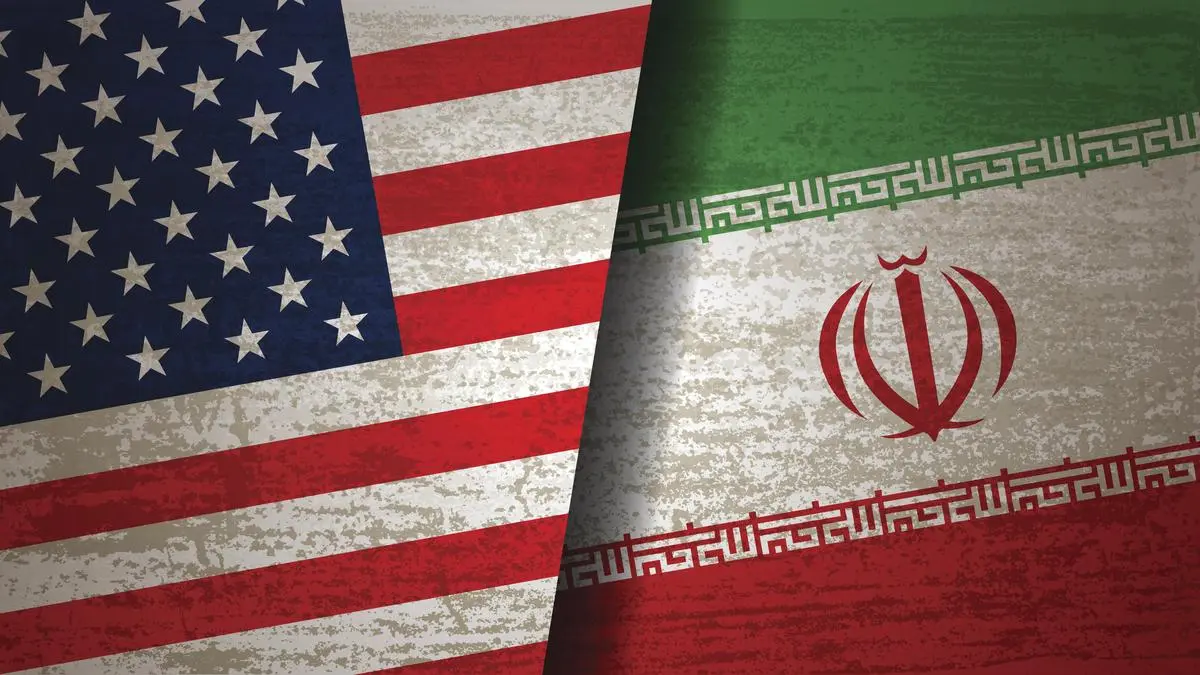
Pakistan’s recent diplomatic intervention between Iran and the United States represents a calculated attempt to mitigate a multi-front security crisis that threatens the viability of its western borders. The failure of recent negotiations to secure a formal ceasefire creates a high-friction vacuum where non-state actors and regional proxy forces operate with increasing autonomy. This stalemate is not merely a diplomatic breakdown; it is the manifestation of a structural misalignment between Tehran’s regional expansionist goals, Washington’s containment strategy, and Islamabad’s desperate need for domestic stability.
The Triangulation of Contained Conflict
Pakistan’s role as an intermediary is driven by the Three Pillars of Border Contiguity. When Iran and the United States engage in kinetic or shadow warfare, the ripple effects degrade Pakistan's internal security through specific, measurable channels:
- The Refugee Pressure Valve: Any escalation in Iranian-US tensions often destabilizes the Sistan and Baluchestan province. This triggers a westward migration flow that Pakistan’s economy, already under IMF-mandated austerity, cannot absorb.
- The Militancy Feedback Loop: Groups like Jaish al-Adl and the Balochistan Liberation Army (BLA) exploit the lack of a coordinated security framework between Tehran and Islamabad. When Iran is preoccupied with US naval assets in the Persian Gulf, its border vigilance drops, allowing cross-border insurgencies to surge.
- Energy Infrastructure Paralysis: The stalled Iran-Pakistan (IP) gas pipeline serves as a permanent economic casualty of this deadlock. US sanctions on Tehran force Islamabad to choose between energy security and international financial isolation.
The absence of an agreement signals that both the US and Iran have determined the cost of continued low-level friction is lower than the political cost of concessions. This "stability through attrition" is a high-risk gamble for Pakistan, which lacks the fiscal depth to manage a protracted regional shadow war.
Structural Bottlenecks in the Negotiation Framework
The failure to reach an agreement stems from a fundamental divergence in Strategic Time Horizons. Washington operates on an electoral and tactical cycle, seeking immediate de-escalation to secure maritime trade routes. Tehran operates on a decades-long ideological horizon, viewing regional friction as a necessary tool to force a total US withdrawal from the Middle East.
The Asymmetric Escalation Trap
In conventional warfare, escalation is often linear. In the Iran-US-Pakistan triangle, escalation is asymmetric and non-reciprocal. When the US applies "Maximum Pressure" via sanctions, Iran responds not by targeting the US mainland, but by activating "Grey Zone" operations in the Levant or along the Pakistani border. This creates a Negative Externality for Islamabad. Pakistan is forced to spend a disproportionate amount of its defense budget—roughly 3.7% of its GDP—on border fencing and patrolling to prevent spillover from a conflict it did not initiate.
The negotiation failure highlights the Zero-Sum Security Dilemma:
- If Pakistan aligns too closely with US counter-terrorism objectives, it risks Iranian retaliation through proxy support for sectarian elements within Pakistan.
- If Pakistan facilitates Iranian trade or security interests, it risks losing the military aid and diplomatic cover provided by Washington.
The Cost Function of Neutrality
Pakistan’s "calls for restraint" are often dismissed as rhetorical, but they represent an attempt to manage a specific Cost Function of Neutrality. For Islamabad, the price of an unmanaged Iran-US conflict is calculated through the volatility of the Pakistani Rupee (PKR) and the internal security index.
Operational Variables Impacting the Border State:
- Trade Volume Attrition: Formal trade between Iran and Pakistan remains negligible compared to the informal, illicit economy. A ceasefire would allow for the formalization of these markets, providing a taxable revenue stream for the Pakistani state.
- Intelligence Overload: The Pakistani Inter-Services Intelligence (ISI) is currently forced to monitor TTP (Tehrik-i-Taliban Pakistan) on the northern border while simultaneously tracking IRGC (Islamic Revolutionary Guard Corps) movements and US drone activity on the western flank. This creates an intelligence-sharing deficit, as data provided by one party often compromises relationships with the other.
The Mechanism of Failed Deterrence
The reason talks ended without agreement lies in the Devaluation of Diplomacy. Both the US and Iran have realized that the other's "Red Lines" are porous. When Iran-backed groups target US assets, the US response is often calibrated to avoid a total war, which Tehran interprets as a signal that the status quo is sustainable.
This environment creates a Security Vacuum for Non-State Actors. Groups like the Islamic State Khorasan (IS-K) thrive in the friction between Iran and Pakistan. These organizations recognize that as long as Tehran and Washington are at odds, there will be no unified regional effort to eradicate their operational bases. Pakistan’s call for a ceasefire is, in reality, a plea for a unified security architecture that would allow for a concentrated crackdown on these third-party disruptors.
The Geoeconomic Pivot and its Failures
Pakistan’s strategy has recently shifted toward "Geoeconomics"—the idea that regional connectivity can override ideological conflict. However, this theory collapses when confronted with the Sanctions Barrier.
The IP Pipeline is a case study in this failure. Pakistan faces potential multi-billion dollar penalties for not completing its portion of the pipeline, yet completing it would trigger US sanctions under the Countering America's Adversaries Through Sanctions Act (CAATSA). The negotiation deadlock ensures that Pakistan remains trapped in this legal and economic limbo. The "neutral" stance is no longer a strategic choice but a forced stasis caused by conflicting external pressures.
The Balochistan Component
The Sistan-Balochistan region serves as the kinetic epicenter of this geopolitical friction. The BLA and other separatist entities utilize the "Ungoverned Spaces" created by the lack of Iran-Pakistan security cooperation.
- Sanctuary Paradox: Insurgents attacking Pakistani targets often find refuge on the Iranian side of the border, while those attacking Iranian targets flee into Pakistan.
- Lack of Hot Pursuit Agreements: Unlike the northern border where there has been sporadic coordination with Afghan authorities, the western border lacks a robust "Hot Pursuit" protocol.
- Economic Deprivation: The lack of a formal Iran-US agreement prevents the development of the Makran coast, leaving the local population dependent on smuggling, which in turn fuels the very militancy Pakistan seeks to suppress.
The Intelligence Dilemma
The second limitation of Pakistan’s mediation efforts is the Transparency Deficit. Neither Tehran nor Washington fully trusts Islamabad’s motives. Washington views Pakistan as a conduit for Chinese interests, while Tehran views Pakistan’s close military ties with Riyadh as a permanent threat. This creates a bottleneck where Pakistan’s diplomatic offers are treated as tactical maneuvers rather than genuine peace-building efforts.
This lack of trust results in Information Siloing. When Pakistan warns of a pending escalation, it is often ignored or viewed as an attempt to extract financial concessions. The failure of the recent talks proves that the "Honest Broker" role is currently unoccupied in the region. Without a credible third-party guarantor—perhaps Beijing—the Iran-US-Pakistan triangle will remain in a state of controlled instability.
Strategic Realignment Requirements
The current trajectory suggests that Pakistan will be forced to move beyond verbal calls for restraint and toward a Hardened Border Strategy. This involves three specific tactical shifts:
- Physical Decoupling: Accelerating the completion of the 900km border fence with Iran, regardless of the diplomatic optics. This reduces the "contagion risk" of Iranian internal unrest.
- Diversified Dependency: Reducing reliance on the US-Iran diplomatic channel by deepening security ties with Turkey and Qatar, who maintain functional relationships with both parties.
- Internal Counter-Insurgency (COIN) Focus: Decoupling the Balochistan insurgency from the wider Iran-US conflict. By treating the BLA as a purely domestic policing issue rather than a geopolitical pawn, Pakistan can mitigate the impact of external diplomatic failures.
The impasse between the US and Iran is a structural feature of the 21st-century Middle East, not a temporary bug. Pakistan’s strategy must evolve from "Mediator" to "Insulator." The goal is no longer to bring peace between Washington and Tehran—an objective currently beyond Islamabad’s power—but to build a security and economic bulkhead that prevents the inevitable frictions of that relationship from compromising Pakistani sovereignty.
The immediate requirement for the Pakistani military and diplomatic corps is the establishment of a Bilateral Military Coordination Cell with Iran that operates independently of the US-Iran diplomatic track. This "De-confliction Channel" must focus exclusively on tactical border management and intelligence sharing regarding IS-K and BLA movements. By narrowing the scope of cooperation to immediate, shared threats, Pakistan can bypass the broader ideological and nuclear disputes that have paralyzed high-level negotiations. Failure to execute this tactical pivot will leave Pakistan’s western frontier vulnerable to the next inevitable spike in Iran-US hostilities.