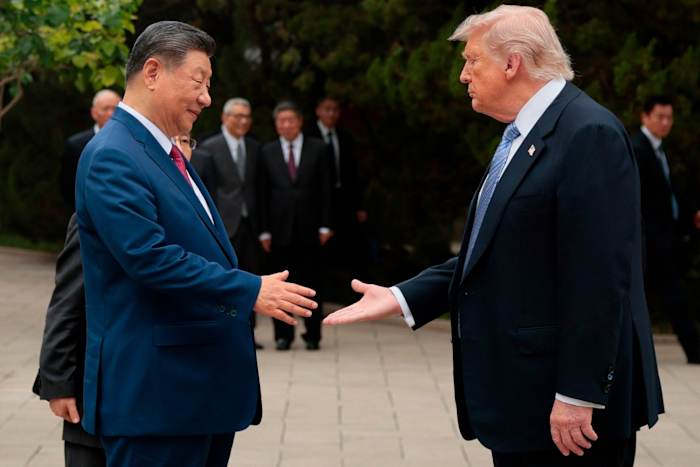
Excluding the world’s second-largest economy from elite multilateral summits introduces systemic friction into global economic governance. When G7 leaders convene to address supply chain vulnerabilities, currency stability, and decarbonization without Chinese representation, they are not isolating an adversary; they are mispricing global risk. Western diplomatic strategy often confuses the moral clarity of an aligned coalition with the operational efficacy of a global regulatory framework. True economic stabilization requires the participation of the entity that controls the physical capacity under discussion. A G7-only architecture creates structural blind spots in trade enforcement, debt restructuring, and climate capital allocation, turning a forum meant for global coordination into an incomplete, Western-centric echo chamber.
The Trilemma of Global Governance
Global governance operates under a structural trilemma, wherein a system can achieve only two of three objectives simultaneously: deep economic integration, national sovereignty, and democratic legitimacy.
By limiting the summit to G7 members, Western leadership attempts to preserve both national sovereignty and a shared democratic framework. However, this choice severely degrades the capacity to manage deep economic integration.
The G7 accounts for roughly 30% of global GDP based on purchasing power parity, a steep decline from its nearly 70% share in the late 20th century. China alone contributes approximately 18% of global output and commands over 14% of global exports. Attempting to regulate international trade, set macroeconomic standards, or construct industrial policies without the primary manufacturing hub of the planet breaks the basic feedback loops required for effective policy transmission.
When the G7 implements policies such as coordinated supply chain decoupling or joint carbon border adjustment mechanisms, these directives enter a global market where China acts as the ultimate sink and source for industrial commodities. Without a direct mechanism to negotiate structural overcapacity or exchange rate alignments at the highest political level, G7 mandates trigger retaliatory trade distortions rather than systemic stabilization.
Supply Chain Bifurcation and the Illusion of Nearshoring
The primary economic objective of recent G7 summits has been the reduction of strategic dependencies on Chinese manufacturing, framed under the concepts of "de-risking" or "friend-shoring." This strategy operates on a flawed understanding of modern supply chain topology. Global value chains are not linear; they are dense, interconnected webs with high node dependency.
G7 efforts to reroute supply chains to nations like Vietnam, India, or Mexico do not eliminate Chinese economic inputs. They merely obscure them. Linear trade data shows an increase in U.S. and European imports from secondary emerging markets, but input-output tables reveal that these intermediary nations have significantly increased their imports of Chinese industrial components and raw materials.
[G7 Nations] <-- (Finished Goods) -- [Intermediary Nations] <-- (Components/Raw Materials) -- [China]
This creates a multi-tiered supply chain bottleneck. The G7 incurs the capital expenditure of building new assembly plants in secondary markets while remaining fundamentally reliant on the Chinese upstream industrial base for basic inputs, specialized chemicals, and intermediate machinery.
Excluding China from the summit table prevents direct negotiations regarding the transparent decoupling of non-critical sectors. Instead, it incentivizes Beijing to weaponize its dominance over upstream nodes, particularly critical mineral processing. China processes approximately 60% of the world's lithium, 70% of its cobalt, and 90% of its rare earth elements. A G7 strategy formulated in a vacuum ignores the cost function of industrial transition: every unit of distance forced between Western buyers and Chinese processors increases the capital expenditure of the green energy transition by an order of magnitude.
Sovereign Debt Restructuring and Capital Flight Risks
The macroeconomic fallout of an exclusive G7 framework extends directly into international finance and sovereign debt management. Emerging markets across Sub-Saharan Africa, Latin America, and South Asia face severe debt distress driven by high dollar interest rates and external shocks. Historically, the Paris Club—a group composed primarily of G7 nations—managed sovereign debt restructuring under a standardized, transparent framework.
That model is obsolete. China is now the world’s largest bilateral creditor, having disbursed over $1 trillion in development loans through the Belt and Road Initiative and state-directed commercial banks.
A structural disconnect occurs when the G7 meets to design debt-relief packages or establish sustainability frameworks through the IMF and World Bank. Because China is not a Paris Club member and is excluded from G7 ministerial coordination, debt negotiations stall. Western nations refuse to grant haircuts on sovereign debt if those concessions effectively subsidize repayments to Chinese state-directed banks. Conversely, Beijing resists standardized Western restructuring terms, preferring bilateral, opaque roll-overs that secure physical collateral or strategic geopolitical alignment.
This operational deadlock leaves distressed developing nations unable to access capital markets, driving them toward predatory financing or structural default. The resulting financial instability spills back into the global economy, threatening the balance sheets of Western commercial banks and destabilizing critical trade corridors. The G7 cannot engineer global financial stability while ignoring the entity holding the largest portfolio of developing-world liabilities.
The Fragmentation of Global Technical Standards
Excluding China from top-tier strategic consultations accelerates the fragmentation of the global technology stack. Historically, western dominance within international standard-setting bodies (such as the ITU, ISO, and IEEE) ensured that global telecommunications, computing, and industrial automation conformed to a single, interoperable paradigm.
This unified architecture is splitting into parallel, incompatible ecosystems. Denied a seat in Western-led strategic forums and facing aggressive export controls on semiconductors, China is actively exporting its own technical standards across the Global South. This includes alternative frameworks for:
- 5G/6G Telecommunications Infrastructure: Deploying Huawei and ZTE equipment across regions that prioritize cost efficiency over Western security compliance.
- Cross-Border Payment Systems: Expanding the Cross-Border Interbank Payment System (CIPS) as a direct alternative to SWIFT, reducing vulnerability to Western financial sanctions.
- Central Bank Digital Currencies (CBDCs): Utilizing the digital yuan (e-CNY) to settle bilateral trade invoicing outside the U.S. dollar clearing system.
When G7 leaders coordinate technology policy exclusively among themselves, they validate their own security assumptions but lose the ability to influence the regulatory architecture governing the rest of the world. The long-term risk is not that China will be locked out of Western technology, but that Western enterprises will be locked out of emerging markets that have adopted Chinese foundational standards.
Strategic Capital Allocation and Carbon Leakage
The G7’s unilateral approach to climate governance provides a clear example of the limitations of exclusive multilateralism. The group’s primary mechanism for enforcing climate standards on non-members is the implementation of carbon border taxes. These measures levy tariffs on carbon-intensive imports to prevent "carbon leakage"—the relocation of manufacturing to jurisdictions with lax environmental laws.
Without structural coordination with China, the world's largest emitter and largest manufacturer of renewable energy technology, this policy creates a profound economic contradiction. China produces over 80% of the world’s solar panels, dominates the global wind turbine supply chain, and manufactures the vast majority of electric vehicle batteries.
Imposing punitive trade barriers or excluding China from international climate capital discussions forces a choice between two suboptimal outcomes:
| Policy Choice | Economic Consequence | Environmental Impact |
|---|---|---|
| Strict Tariffs on Chinese Cleantech | Drives up the cost of solar, wind, and battery deployment in Western economies. | Delays decarbonization timelines due to high capital costs. |
| Exemptions for Chinese Cleantech | Undermines the domestic industrial policy and manufacturing subsidies (e.g., the U.S. Inflation Reduction Act). | Subsidizes the industrial base of a geopolitical competitor. |
By failing to establish a permanent, high-level economic council that includes China, the G7 cannot negotiate a grand bargain that links Chinese carbon reduction commitments with Western market access. The result is a fractured regulatory environment where capital is misallocated, and global emissions continue to rise despite localized Western reductions.
Operational Game Theory: The Dangerous Incentive of the Counter-Coalition
From a strategic perspective, the continued exclusion of China from core global governance structures alters the incentive matrix for Beijing. When an economic superpower is locked out of established institutions, its rational response is to degrade those institutions and build parallel, competing structures.
This dynamics manifests in the rapid expansion of the BRICS bloc and the Shanghai Cooperation Organisation (SCO). By positioning itself as the vanguard of the Global South against a G7 "rich man's club," China leverages institutional exclusion to build an alternative coalition. This counter-coalition is not bound by Western norms regarding human rights, intellectual property protection, or democratic governance.
The geopolitical cost function of this alignment is severe. The expansion of an alternative, China-led institutional framework diminishes the efficacy of Western economic sanctions, creates parallel diplomatic channels that bypass the United Nations, and dilutes the normative power of Western international law. The G7's insistence on exclusive alignment directly subsidizes the creation of a multipolar world order that is structurally hostile to Western interests.
Reconfiguring the Geopolitical Architecture
The current G7 format is an analog mechanism attempting to manage a digital, multipolar global economy. To mitigate the structural risks of total decoupling and institutional fragmentation, Western leadership must pivot from a strategy of exclusion to one of conditional, structured integration.
The G7 should maintain its core format as an internal caucus for democratic alignment, but structurally link its conclusions to a mandatory, secondary summit framework: the G7+1, permanently embedding China into the macroeconomic and security architecture. This framework must be transactional rather than ceremonial, organized around three discrete operational pillars.
First, establish a joint Supply Chain Transparency Council. Instead of pursuing the impossible goal of absolute decoupling, this body must map global input-output tables to define clear boundaries between dual-use, national security-critical technologies and commercial industrial sectors. This will allow for verifiable, targeted restrictions while ensuring the free flow of non-strategic goods, stabilizing global inflation and reducing market uncertainty.
Second, integrate China into a unified Sovereign Debt Restructuring Mechanism that merges Paris Club protocols with Chinese state-directed banking practices. This requires a compromise: Western nations must accept non-traditional amortization schedules in exchange for absolute transparency regarding loan terms and collateral requirements from Beijing. This is the only viable pathway to resolve the emerging market debt crisis and protect the global financial system from cascading sovereign defaults.
Third, execute a Cleantech Interoperability Agreement. The G7 must trade market access for verified carbon accounting. If Chinese green technology manufacturers meet strict, auditable emissions standards in their production processes, their products must be integrated into Western subsidy frameworks. This preserves the economic viability of the global energy transition while maintaining a level playing field for domestic Western manufacturers.
Continuing to run global economic governance through an exclusive G7 framework guarantees diminishing returns. The complexity of modern supply chains, the scale of global capital shifts, and the physical realities of decarbonization require engagement with the world's primary industrial actor. True strategic dominance is not demonstrated by ignoring an adversary; it is achieved by binding that adversary to an institutional framework from which they cannot afford to defect.