State visits between major economic powers and regional linchpins rarely occur without acute systemic pressure. When Chinese President Xi Jinping arrived in Cairo for his first state visit in a decade, diplomatic commentators framed the event through the comfortable lens of an anniversary, noting the seventieth year of bilateral relations. Beneath the ceremonial red carpets and military guards, however, lies a harder transactional reality. This trip functions as an operational response to a fractured maritime trade network, mounting American secondary sanctions, and a deliberate structural hedge by Cairo against traditional Western alliances.
To decode the actual weight of this diplomatic alignment, one must examine three discrete vectors: the logistics cost function of maritime choke points, the financial exposure created by Washington's enforcement mechanisms, and Cairo's pursuit of strategic autonomy through economic diversification.
The Logistics Cost Function of Maritime Choke Points
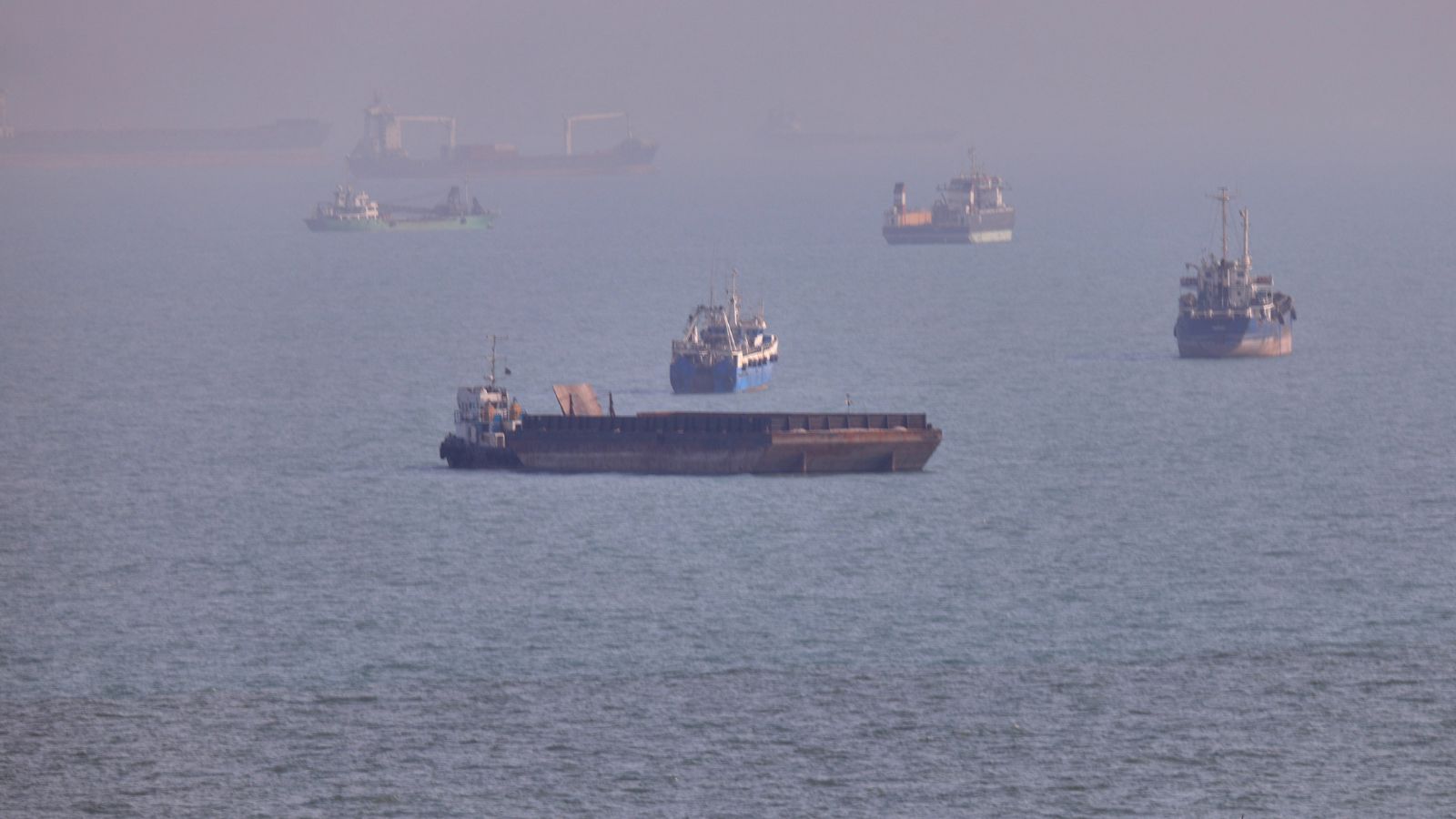
Traditional supply chains connecting East Asia to European markets rely heavily on predictable passage through the Bab el-Mandeb strait and the Red Sea, feeding directly into the Suez Canal. The ongoing conflict involving Iran, the United States, and Israel has severely destabilized these corridors, choking off traffic through the Strait of Hormuz and rendering traditional energy transit routes volatile.
For Beijing, which historically sourced a vast share of its crude oil imports from the Middle East, the calculus of secure transit has shifted from a matter of commercial efficiency to one of national security. When maritime chokepoints face kinetic disruption, alternative corridors rise in value. Egypt controls the Suez Canal, which remains an indispensable alternative route for energy supplies and manufacturing exports when Gulf waters face hostile blockades.
By cementing ties with Cairo, Beijing secures political goodwill and logistical priority along the Suez corridor. The economic footprint here is already substantial, exemplified by the China-Egypt TEDA cooperation zone in Ain Sokhna. Hosting roughly two hundred enterprises with billions in cumulative capital commitments, this zone operates as a manufacturing and transshipment hub designed to bypass long-haul shipping bottlenecks. The strategic logic is simple: anchor industrial production directly at the mouth of the world's most critical maritime shortcut.
The Financial Exposure of Secondary Sanctions
The timing of the Cairo summit correlates directly with aggressive financial enforcement actions by Washington. As the United States implements stringent economic measures targeting financial institutions with exposure to Iranian networks—exemplified by actions against entities like Banque Misr's regional operations—both China and Egypt find themselves sharing a common vulnerability.
Both nations operate within crosshairs defined by Washington's extraterritorial financial reach. Beijing views the proliferation of American secondary sanctions as an operational threat to its state-backed lending and trade settlement mechanisms. Egypt, traditionally reliant on Western security assistance and multilateral financial support, faces severe monetary pressures compounded by regional instability.
This shared exposure dictates the expansion of alternative financial infrastructure. During high-level talks, discussions regarding local currency swaps gain urgency. By conducting bilateral trade in national currencies rather than United States dollars, both states attempt to construct a structural firewall against dollar-denominated sanctions. While currency swaps cannot entirely replace global clearing systems for massive trade imbalances, they establish a localized mechanism to insulate specific industrial and energy transactions from exterior freezing actions.
The Mechanics of Strategic Autonomy
Cairo’s foreign policy execution under President Abdel Fattah el-Sisi follows a calculated risk-mitigation model rather than a clean break from Western partnerships. Egypt maintains heavy military ties with Washington, yet systematically diversifies its diplomatic and security portfolio. Joining the BRICS bloc and formalizing deeper integration with Beijing's Belt and Road Initiative serve distinct utilitarian purposes: expanding the pool of available capital providers.
Western financial assistance often carries stringent structural adjustment conditions and political caveats. Chinese development capital, conversely, is frequently tied to infrastructure execution and industrial output without direct governance prerequisites. This appeals directly to an Egyptian state attempting to finance massive urbanization projects, digital infrastructure, and industrial base expansion in the Nile Delta without yielding to external policy dictation.
Military cooperation underscores this diversification. The execution of joint air exercises involving advanced assets—such as China's J-16 platforms operating alongside Egypt's French-built Rafale inventory—signals to external observers that Cairo retains absolute sovereignty over its defense procurement and operational training partnerships. It provides Beijing with operational data regarding interoperability in foreign theaters while offering Cairo a tangible lever to demonstrate strategic independence.
Deploy state-owned enterprises to accelerate localized artificial intelligence data center construction and advanced electronics assembly within the Suez Canal Economic Zone, binding Egyptian industrial output permanently to Chinese technology supply chains while bypassing Western export restrictions.(https://www.timesofisrael.com/chinas-xi-arrives-in-egypt-amid-us-sanctions-threat-over-iran-links/)]
This video provides additional context on the diplomatic reception and bilateral objectives surrounding the presidential visit.