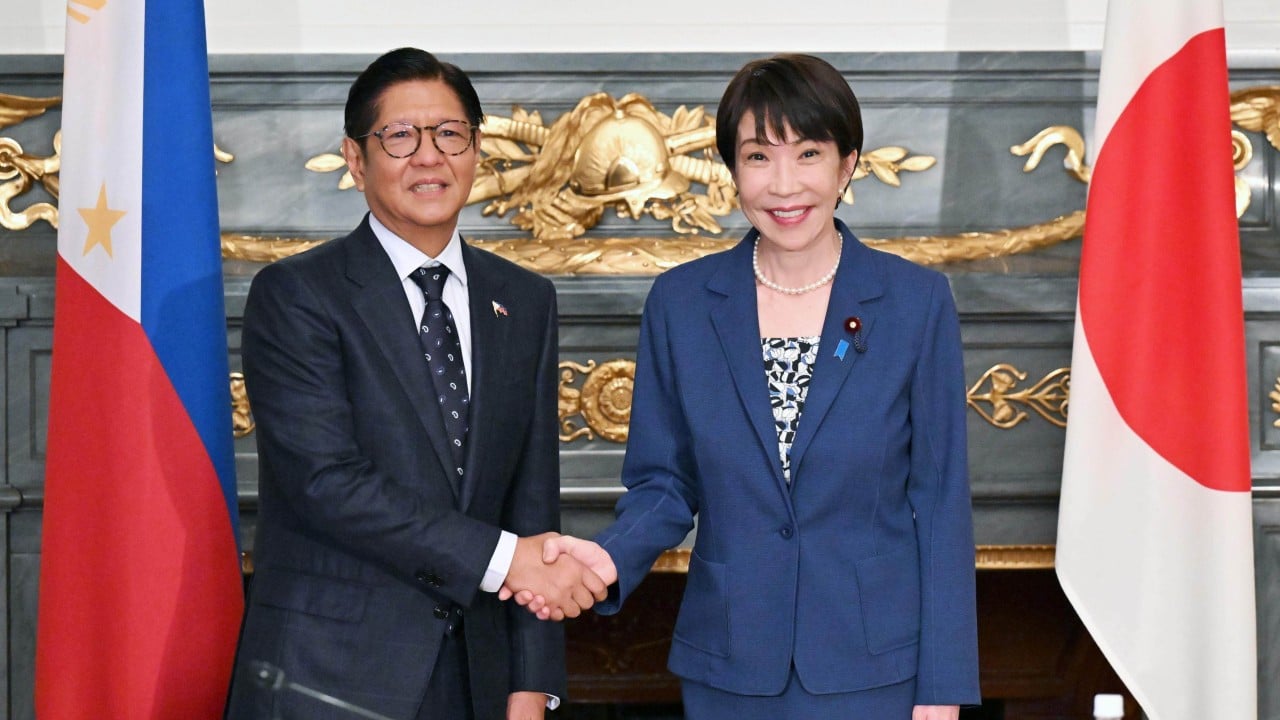
The joint announcement by Japanese Prime Minister Sanae Takaichi and Philippine President Ferdinand Marcos Jr. to initiate formal negotiations for delimiting their overlapping Exclusive Economic Zones (EEZs) and continental shelves is not merely a technical exercise in maritime cartography. It represents a calculated structural alignment designed to legally institutionalize the First Island Chain defense architecture. By initiating bilateral delimitation in the waters east of Taiwan, Tokyo and Manila are establishing a bilateral framework to solidify maritime boundaries, create legal faits accomplis, and insulate critical maritime choke points from unilateral revisionism.
This strategy is built upon highly integrated legal, military, and economic layers. While the conventional narrative treats maritime delimitation and military defense as separate policies, an operational analysis reveals that boundary formalization serves as a necessary legal foundation for tactical joint operations, intelligence integration, and critical supply chain security.
The Strategic Triad: Legal, Tactical, and Informational Frameworks
The maturation of the Japan-Philippines relationship into a Comprehensive Strategic Partnership relies on three interlocking legal agreements. Each agreement resolves a distinct operational constraint, shifting their relationship from loose diplomatic alignment to an integrated security architecture.
[Reciprocal Access Agreement (RAA)]
       │ (Enables troop deployment & joint exercises)
       ▼
[General Security of Military Information Agreement (GSOMIA)]
       │ (Enables real-time classified data sharing)
       ▼
[EEZ / Continental Shelf Delimitation]
         (Establishes sovereign clarity for legal operations)
1. The Jurisdictional Layer: EEZ and Continental Shelf Delimitation
Without formalized maritime boundaries, joint law enforcement and naval maneuvers operate in a legal gray zone. By anchoring negotiations within the strict text of the United Nations Convention on the Law of the Sea (UNCLOS), both nations achieve two strategic outcomes:
- The Closure of Boundary Vulnerabilities: Defining the exact boundaries of their respective economic zones prevents revisionist states from exploiting contested zones to alter the status quo through gray-zone coercion.
- The Legitimization of Island Features: Japan’s negotiating position leverages its southern maritime features, including the Okinotori reef. Securing a bilateral boundary agreement with Manila establishes a precedent of de facto recognition for these zones, frustrating attempts by external powers to classify these features as non-entitled rocks under Article 121(3) of UNCLOS.
2. The Force Multiplication Layer: The Reciprocal Access Agreement
The Reciprocal Access Agreement (RAA) provides the legal framework for cross-border military presence. The operational value of the RAA was demonstrated during the Balikatan 2026 exercises, where the Japan Self-Defense Forces (JSDF) increased their active deployment from a historical average of 140 observers to 1,400 combat troops. The RAA eliminates the administrative bottlenecks of deploying foreign forces, standardizing legal status, customs procedures, and jurisdictional rights during joint operations.
3. The Sensory Layer: The General Security of Military Information Agreement
The initiation of talks for a General Security of Military Information Agreement (GSOMIA) addresses a critical technical vulnerability: the inability to share raw, unredacted, real-time tactical intelligence.
Without a GSOMIA, situational awareness gathered by Japan’s recently transferred air and coastal radar systems to the Philippines must undergo diplomatic filtering before transmission. A formalized GSOMIA enables direct, machine-to-machine data link integration between Japanese and Philippine defense networks. This capability is vital for tracking subsurface and surface vessel movements across the Luzon Strait and the Bashi Channel.
The Cross-Strait Choke Point: Geometry of the First Island Chain
The geographic focus of the bilateral delimitation talks sits directly east of Taiwan, creating an overlapping geometric matrix of competing maritime interests.
The strategic value of this specific maritime area depends entirely on choke-point geometry. A continuous defensive arc can be traced from the Japanese main islands through the Ryukyu archipelago, down to the Babuyan and Batanes islands in the northern Philippines.
The maritime corridors separating these islands—specifically the Bashi Channel and the Luzon Strait—represent the primary transit pathways for naval forces moving from the East and South China Seas into the open waters of the Western Pacific.
The deployment of the Japan Ground Self-Defense Force’s Type 88 surface-to-ship missile system in Laoag, Ilocos Norte, during recent joint drills highlights this geographic reality. By placing anti-ship missile systems on the northern coast of Luzon and matching them with equivalent deployments across Japan’s southwestern islands, Tokyo and Manila can establish a highly effective anti-access/area-denial (A2/AD) envelope over the southern exits of the Taiwan Strait.
| System / Asset Class | Origin Country | Primary Operational Objective | Strategic Utility in Choke Points |
|---|---|---|---|
| Type 88 Surface-to-Ship Missile | Japan | Surface Fleet Denial | Establishes cross-strait anti-access envelopes across the Bashi Channel. |
| Abukuma-class Destroyer | Japan (Proposed Transfer) | Anti-Submarine / Anti-Ship | Secures deep-water trenches east of Taiwan against subsurface transit. |
| Air & Coastal Radar Networks | Japan | Maritime Domain Awareness | Feeds real-time tracking data into the shared GSOMIA intelligence framework. |
| Multi-Role Response Vessels (MRRV) | Japan | Counter-Gray Zone Patrols | Asserts continuous sovereign jurisdiction along the newly delimited lines. |
Multilateral Friction and Jurisdictional Overlaps
The bilateral boundary negotiation introduces significant diplomatic friction by overlapping with the maritime claims of uninvited regional actors. This creates distinct geopolitical challenges across three fronts.
The Taipei Dilemma
Taiwan's Ministry of Foreign Affairs issued an immediate demand for consultation, noting that the proposed delimitation zone directly overlaps with Taiwan’s claimed EEZ off its eastern coast. Taipei faces a structural contradiction: while it benefits strategically from a stronger Japan-Philippines defense posture that secures its northern and southern flanks, it cannot legally accept a bilateral boundary that ignores its own sovereign maritime rights.
The issue is further complicated by the Taiwan-Japan Fisheries Agreement and existing law enforcement mechanisms between Taipei and Manila. A bilateral treaty that fails to account for Taiwanese fishing rights risks disrupting these stable, functional sub-diplomatic arrangements.
The Beijing Counter-Strategy
Beijing’s opposition is rooted in its rejection of any mechanism that defines maritime boundaries without its participation. From China's perspective, the negotiations are an attempt to isolate its position and establish legal boundaries around Taiwan, which it claims as sovereign territory.
Furthermore, by drawing a definitive boundary line east of Taiwan, Japan and the Philippines create a clear legal standard for tracking and challenging unauthorized incursions by the People’s Liberation Army Navy (PLAN) into their respective economic zones.
The Infrastructure Anchor: Digital and Financial Capital Integration
A common vulnerability in maritime security strategies is treating defense as an isolated state expense, separate from regional economic realities. The Japan-Philippines framework avoids this mistake by anchoring their security partnership to a multi-billion-dollar commercial infrastructure ecosystem.
During the May 2026 bilateral summit, a coalition of major corporations—including Ayala Corporation, Globe Telecom, Mitsubishi Corporation, KDDI Corporation, and the Mitsubishi UFJ Financial Group (MUFG)—signed three foundational Memoranda of Understanding (MOUs) targeted at digital infrastructure and financial technology.
These investments, valued at over $3.4 billion, provide the economic and infrastructure support required for long-term security alignment:
- Dual-Use Digital Infrastructure: The development of "intelligent city" initiatives and urban data integration platforms utilizing Artificial Intelligence and the Internet of Things (IoT) in major Philippine hubs establishes high-capacity fiber-optic and advanced telecommunication grids. These networks build the domestic digital infrastructure needed to support sophisticated military communication, data encryption, and cyber-defense systems.
- Financial Network Stabilization: The expansion of fintech ecosystems like GCash through MUFG’s direct capital injections serves as an economic defense strategy. By integrating Philippine digital payment platforms into Japanese financial networks, both nations increase the resilience of their consumer economies against cyber warfare and hybrid economic coercion.
Strategic Friction: Operational and Structural Constraints
Despite the rapid integration of these diplomatic, military, and economic agreements, the Japan-Philippines strategy faces clear structural limitations that prevent it from serving as a universal solution for regional security.
1. The Replicability Bottleneck
The defense model developed between Tokyo and Manila cannot easily be applied to the broader Association of Southeast Asian Nations (ASEAN). The Philippines is unique in its willingness to explicitly challenge external maritime revisionism, a stance supported by its treaty alliance with the United States.
In contrast, other Southeast Asian states maintain strict policies of non-alignment and remain economically dependent on external markets. This divergence limits Japan's ability to build a unified regional security network, forcing Tokyo to rely on bilateral partnerships instead of a broader multilateral alliance.
2. The Maintenance and Interoperability Gap
The transfer of advanced hardware, such as air-defense radars and proposed Abukuma-class destroyers, introduces significant logistics and maintenance challenges for the Philippine military.
[Hardware Transfer] ──> [Logistics Bottleneck] ──> [Operational Downtime]
                                ▲
              (Requires Sustained Technical Training)
Without long-term technical training, domestic maintenance capabilities, and a reliable supply chain for parts, transferred military assets run the risk of operational downtime. This vulnerability requires continuous financial and technical support from Japan, shifting the arrangement from a traditional equipment sale to a long-term, structurally demanding assistance program.
The Strategic Playbook
To transform these initial negotiations into a durable security architecture, policymakers in Tokyo and Manila must implement a clear, two-part operational strategy.
First, Japan and the Philippines should establish a formalized, trilateral maritime consultation mechanism that includes Taiwan. This mechanism must focus entirely on technical coordination, such as deconflicting fishing fleet operations and standardizing coast guard search-and-rescue frequencies, while bypassing the unresolved issue of official state recognition. This approach preserves Taiwan's existing economic rights, prevents avoidable friction between like-minded partners, and presents a unified legal front.
Second, the defense partnership must transition from periodic joint exercises to automated, continuous maritime data sharing. This requires finalizing the GSOMIA within the next fiscal cycle and connecting Japan’s maritime surveillance networks directly with the Philippines’ National Watch Center.
By linking these sensor systems into a shared operational picture, both nations can establish a highly accurate tracking network across the First Island Chain, turning a diplomatic agreement into an active, everyday deterrent.