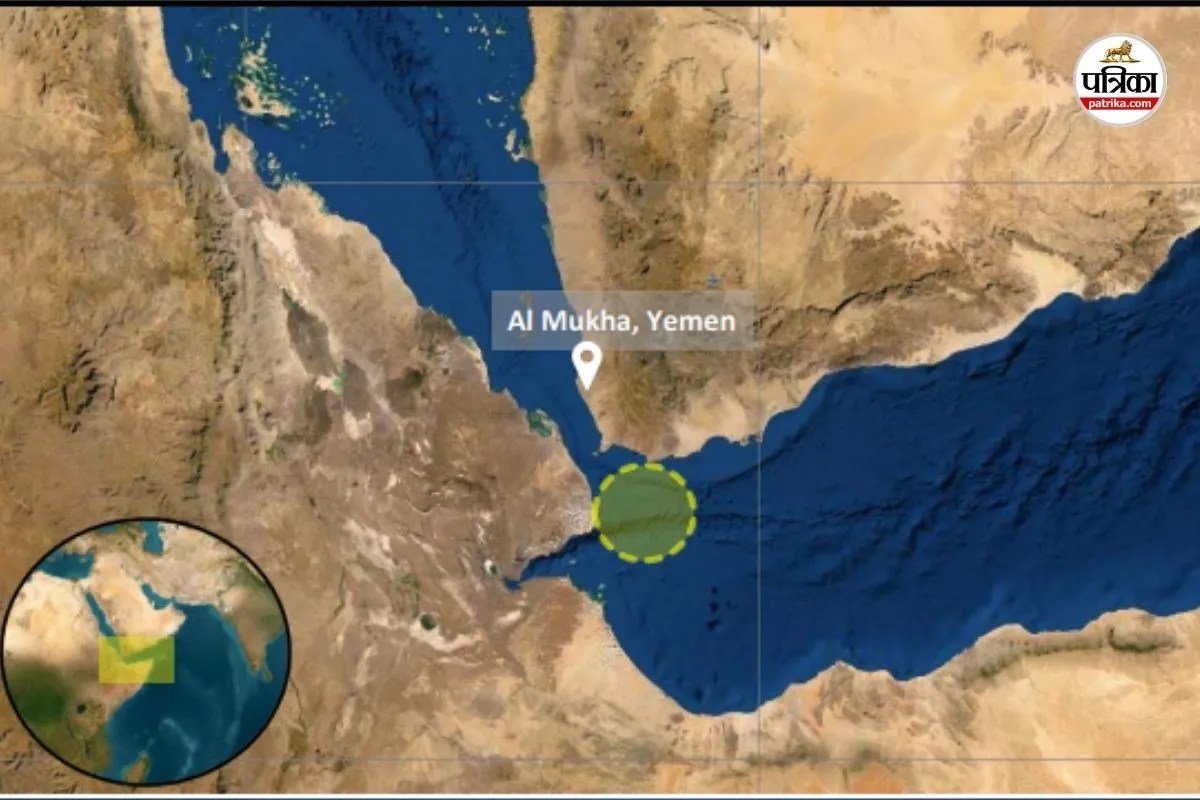
Global energy transit architectures depend on physical geography that concentrates high-volume trade into narrow maritime bottlenecks. When security breakdowns occur near critical nodes such as Al Mukha and the Bab el Mandeb Strait, the disruption ripples through international supply chains with predictable economic velocity. Analyzing these incidents requires stripping away emotional commentary to examine the structural mechanics of maritime risk, insurance pricing models, and cargo routing efficiencies.
The Geography of Structural Exposure
The Bab el Mandeb Strait measures approximately eighteen miles across at its narrowest point, separating the Arabian Peninsula from the Horn of Africa. This geographic constriction forces all north-south maritime traffic transiting between the Indian Ocean and the Red Sea into a tightly defined navigation corridor.
When security incidents are reported by agencies such as the United Kingdom Maritime Trade Operations near coastal zones like Al Mukha, commercial vessels face a distinct operational dilemma. The spatial layout introduces three distinct compounding risks:
- Maneuverability Constraints: Large crude carriers and container ships possess restricted turning radiuses, limiting evasive actions when asymmetric threats materialize.
- Sensor Horizons: Complex coastline geometries and heavy regional traffic create high radar clutter, reducing the reaction time for bridge crews to identify incoming projectiles or uncrewed surface craft.
- Escalation Asymmetry: Land-based actors holding elevated terrain near the coast maintain tactical advantages over transiting vessels that must adhere to established traffic separation schemes.
Economic Transmission Mechanisms
Security advisories do not merely warn individual captains; they trigger an immediate recalculation of risk profiles across global shipping networks. The economic impact operates through three primary transmission channels:
Insurance underwriters respond to reported explosions and near-misses by adjusting War Risk Surcharges. For a standard very large crude carrier, an incremental increase in premium rates translates into hundreds of thousands of dollars per voyage.
Simultaneously, vessel operators evaluate the cost-benefit ratio of entering the southern Red Sea versus diverting around the Cape of Good Hope. The diversion adds thousands of nautical miles and roughly ten to fourteen days of transit time depending on vessel speed and destination ports. This physical displacement absorbs global fleet capacity, driving up charter rates across the broader bulk and tanker markets.
Supply chain managers must factor in schedule unreliability. Jettisoning the Suez-Red Sea shortcut forces a reorganization of bunker fuel consumption, crew rotation schedules, and inventory buffer stocks across destination terminals.
Tactical Response Frameworks for Fleet Operators
Navigating high-risk corridors requires a shift from reactive compliance to structured risk mitigation. Fleet management teams evaluate threats using a standardized operational hierarchy:
Vessels entering designated high-risk areas must implement hardened security postures, including continuous radar monitoring, dedicated visual watch teams, and the restriction of non-essential deck operations.
Operators establish direct communication protocols with regional naval coordination centers to receive real-time threat intelligence updates rather than relying solely on generalized advisory broadcasts.
Contingency route planning must be automated into voyage optimization software, allowing masters to alter courses instantly if advisory thresholds are breached.
Reconfigure voyage optimization algorithms to continuously model the fuel and time delta between standard chokepoint transits and alternative circumnavigation routes based on live threat intelligence feeds.


