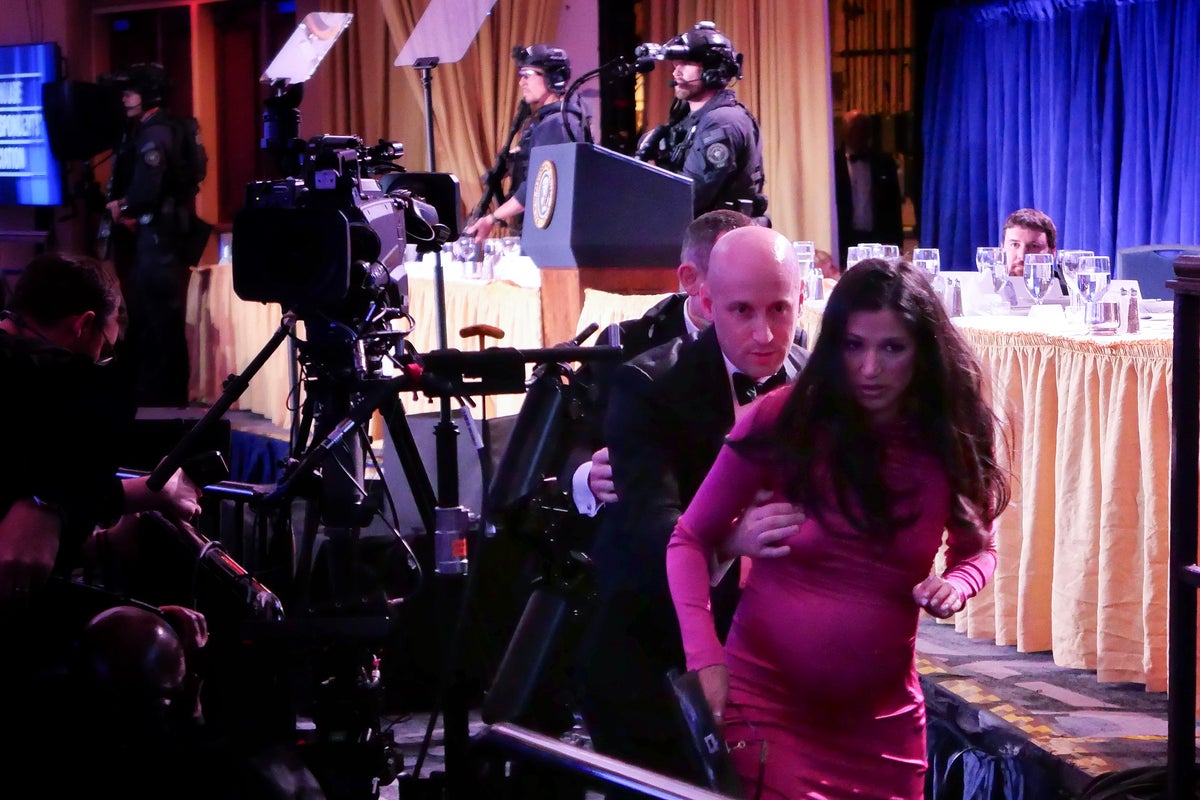
The political machinery in Washington D.C. has a long-standing habit of finding a scapegoat before the police tape is even cleared. When shots rang out in the nation’s capital earlier this week, the immediate descent into partisan finger-pointing followed a script so predictable it felt rehearsed. Katie Miller, the former Trump administration official and seasoned Republican strategist, wasted no time linking the violence to what she described as the failed progressive ideology exported by California Governor Gavin Newsom.
Newsom, never one to let a slight pass—especially one that frames his state as a blueprint for societal collapse—fired back with a precision that suggests he is already running for a job that isn’t officially open yet. The exchange is more than just a social media spat. It is a calculated opening salvo in the 2026 midterms and the 2028 presidential cycle, showcasing how local tragedies are now instantly nationalized to serve broader ideological narratives. Building on this idea, you can also read: Diplomatic Friction and Tactical Stasis The Structural Impact of US Leadership Turnover in Kyiv.
The Geography of Blame
Miller’s core argument rests on a tenuous but rhetorically effective premise. By blaming Newsom for a shooting thousands of miles from the California border, she is attempting to solidify the "California-ization" of crime as a central GOP talking point. The logic is simple. If California’s soft-on-crime policies and liberal prosecution standards have led to an exodus of residents, then the broader Democratic platform must be held responsible for the instability in the heart of the District.
This strategy relies on a specific type of cognitive shorthand. It asks the American voter to ignore local D.C. governance and instead focus on Newsom as the personification of modern progressivism. It is a branding exercise. By tethering Newsom to a specific violent incident in D.C., Miller and her cohorts aim to poison his national profile before he can fully transition from a state executive to a national contender. Experts at The Guardian have shared their thoughts on this trend.
The Newsom Counter-Strike
Newsom’s response was not a defensive retreat. It was an aggressive pivot toward gun control and the "failed leadership" of the Republican party regarding public safety. He argued that the weapons used in these incidents often originate from states with the very deregulated environments Miller and her allies champion.
The Governor knows his numbers. California’s gun death rate is significantly lower than that of many red states, a fact he frequently wields like a blunt instrument. His rebuttal aimed to flip the script, suggesting that the "chaos" Miller describes is actually a byproduct of the GOP’s refusal to engage in federal legislative reform. Newsom isn't just defending his record. He is auditioning as the primary fighter for the Democratic base, proving he can take a punch and hit back harder.
The Institutional Disconnect
While the political class bickers over who owns the optics of a shooting, the structural failures that lead to urban violence remain largely unaddressed. D.C. has its own complex web of local leadership, federal oversight, and police department funding that has nothing to do with Sacramento.
The tragedy of the "clap back" culture is that it flattens complex sociological issues into digestible soundbites. When Miller blames Newsom, she ignores the localized systemic issues in the District. When Newsom focuses on the GOP's national platform, he sidesteps the valid concerns citizens have regarding visible urban decay in his own backyard. Both sides are playing to their galleries, and the galleries are increasingly uninterested in the nuance of the actual crime data.
Money and Momentum
There is a financial undercurrent to this dispute that cannot be ignored. Every time Newsom engages in a high-profile national argument, his fundraising numbers spike. He has mastered the art of the "nationalized governor," using his position in California to weigh in on Florida, Texas, and D.C. politics. This keeps his donor base energized and his name in the headlines without him having to announce a formal run for higher office.
Miller, too, benefits from this friction. As a prominent voice in the Republican media ecosystem, her ability to bait high-profile Democrats into public confrontations cements her value to the party's communications apparatus. This is the business of modern politics. Conflict is the currency, and a shooting in D.C. is simply the latest backdrop for a transaction that has been years in the making.
The Empty Rhetoric of Safety
The reality is that neither Newsom’s gun-control rhetoric nor Miller’s "law and order" posturing offers an immediate solution to the violence that prompted the exchange. The public is left watching a high-stakes debate between two people who are essentially arguing over who has the better brand of failure.
Data from the last three years indicates that crime is not a monolith. While certain categories of theft have risen in California, violent crime rates in several major Republican-led cities have also seen historic spikes. The attempt to paint one specific governor as the architect of national instability is a reach that only works in the echo chambers of social media.
The D.C. shooting will eventually fade from the news cycle, replaced by the next incident and the next round of accusations. But the template is now set. Newsom has signaled that he will no longer play the role of the quiet administrator. He is a national protagonist now. Miller has shown that the GOP intends to use California as a ghost story to frighten voters in every other state.
The argument isn't about the shooting. It’s about who gets to define the American "vibe" heading into the next election.
Newsom’s team understands that being the villain in a Republican narrative is often more valuable than being a hero in a Democratic one. It ensures he is the center of the conversation. As long as he is the one Miller is attacking, he is the one the Democratic party must eventually rally behind. This is the calculated risk of the clap back. It elevates the opponent as much as it defends the self.
The cycle of outrage remains the only thing in Washington that actually works on schedule.