The global order isn't just shifting. It's fracturing right before our eyes.
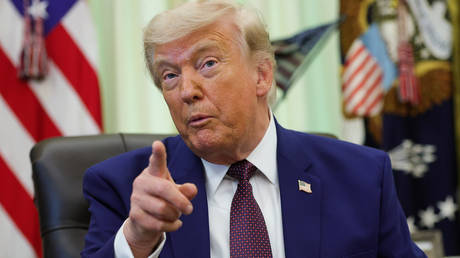
As world leaders gather in the French resort town of Évian-les-Bains for the annual Group of Seven summit, the traditional script of Western unity has been completely tossed out. Donald Trump arrives in France fresh off his 80th birthday, and the mood among the other six nations isn't one of celebration. It's pure anxiety.
For decades, the G7 operated under a comfortable assumption. The United States was the ultimate guarantor of Western security and economic stability. Today, that assumption is dead. From Paris to Tokyo, America's closest allies are actively rewriting their playbooks to treat Washington not as a reliable partner, but as a volatile risk that needs to be managed and contained.
The Illusion of the United States as an Ally
Let's look at the numbers because they reveal a harsh reality. A new poll from the European Council on Foreign Relations dropped just before the summit. It shows that a mere 11% of respondents across more than a dozen European countries view the current Trump administration as an ally. That's a catastrophic collapse in public trust.
This isn't an academic debate. It's the direct result of unilateral actions that have blindsided foreign capitals. When the U.S. and Israel launched military actions against Iran earlier this year over its nuclear program, European allies weren't consulted. Yet, they were the ones left dealing with the immediate economic fallout. Iran's subsequent closure of the Strait of Hormuz choked off vital oil and gas shipments, sending energy prices soaring and rattling global financial markets.
Instead of offering stability, Trump publicly lashed out at European nations for failing to send military support to open the waterway, even reviving his frequent threat to pull the U.S. out of NATO. The message to the rest of the G7 was crystal clear. You're on your own, and if you don't fall in line, the security umbrella vanishes.
Trade War Aggression Hits Home
The economic relationship has turned equally toxic. Long gone are the days of smooth transatlantic trade cooperation. The aggressive tariff campaigns launched by Washington haven't just targeted strategic rivals like China. They have smashed directly into America's closest economic partners.
When Trump slapped brutal duties on European steel, aluminum, and an expanded list of consumer goods, it signaled an era of pure economic transactionalism. French President Emmanuel Macron and other leaders learned the hard way that personal rapport means nothing when the U.S. shifts to an "America First" posture. During a previous encounter, Macron had to physically touch Trump's arm to correct his claim that Europe would recover the funds sent to Ukraine, bluntly stating, "We provided real money."
The data proves that relying on the U.S. consumer market is now a strategic vulnerability. G7 members are quietly but aggressively diversifying their supply chains, setting up bilateral trade pacts that bypass Washington entirely, and building walls to protect their own industries from sudden tariff spikes.
The Strategy of the Split G7
So how do you handle a superpower that refuses to play by the rules? You change the structure of the game.
Host nation France is attempting a delicate diplomatic balancing act. Macron knows he can't force consensus on the big stuff like climate change, digital regulations, or unconditional support for Ukraine. Trump simply doesn't care about the traditional multilateral consensus. If forced into a corner, he will leave early, just like he did at the Kananaskis summit in Canada.
To prevent a total collapse of the forum, the non-U.S. members are adopting a "G6 plus one" strategy. They are dividing the summit into two distinct operations.
- The Narrow Consensus Zone: They are keeping the formal agenda tightly focused on hyper-specific areas where Trump's interests align with theirs. Think critical mineral supply chains, commercial artificial intelligence development, and counter-terrorism.
- The Shadow Agenda: The real work is happening in the corridors and during side sessions. Macron has invited leaders from India, Brazil, South Korea, Saudi Arabia, and the UAE to create a wider network of partnerships.
By broadening the guest list, the remaining G7 members are building a counterweight. They're establishing a framework to coordinate global policy even if the U.S. decides to completely opt out.
Building Strategic Autonomy Because There Is No Choice
The biggest shift is happening in defense spending and strategic autonomy. For years, American presidents complained about European free-riding on defense. Trump's volatile rhetoric finally forced their hand, but not in the way Washington intended.
Europe is no longer just buying American weapons to keep the peace. They are building an independent European model of defense and deterrence. The realization has set in that if a crisis hits Eastern Europe or the Taiwan Strait, a U.S. administration might simply decide it's not America's problem.
The presence of Ukrainian President Volodymyr Zelenskyy at Évian-les-Bains underscores this massive rift. While the U.S. administration signals a desire to cut off funding and force an immediate, potentially unfavorable peace deal, European capitals view the conflict as an existential threat to their own borders. They are rapidly scaling up domestic military production because they know a sudden shift in Washington's political winds could leave them entirely exposed.
How to Protect Your Organization From Geopolitical Volatility
The fracturing of the G7 isn't just a headache for politicians. It's a massive threat to global businesses, supply chains, and investment strategies. If nation-states are busy decoupling from U.S. dependency, your organization should be doing the same.
First, stress-test your supply chains against sudden, aggressive tariff hikes. Assume that any trade route touching the U.S. or relying on unilateral U.S. trade policy could be disrupted overnight. Map out alternative suppliers in regions that are actively signing bilateral agreements with Europe and the Global South.
Second, re-evaluate your energy exposure. The vulnerability of the Strait of Hormuz showed how quickly geopolitical flashpoints can spike operational costs. Shift investments toward localized, resilient energy sources and secure long-term contracts that aren't tied to the volatile spot markets influenced by Middle Eastern tensions.
Third, stop relying entirely on American tech infrastructure and data ecosystems. With growing divergence over digital sovereignty and artificial intelligence regulation between the U.S. and the EU, operating on a single, U.S.-centric tech stack leaves you exposed to regulatory crossfire. Invest in localized data compliance and regional tech partnerships to ensure business continuity when the digital iron curtain drops.