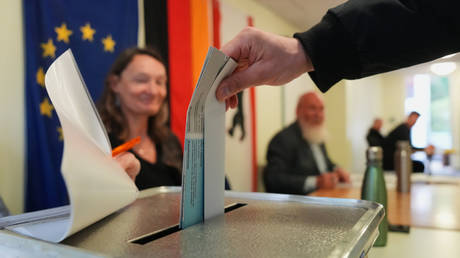
German politics rarely moves slowly, but the current meltdown in Berlin feels entirely unprecedented. When Chancellor Friedrich Merz took office, he promised a sweeping economic turnaround and a sturdy firewall against the political extremes. Sixteen months later, that grand vision is colliding with harsh reality at the ballot box. Recent regional elections haven't just bruised his Christian Democratic Union; they've triggered an existential leadership crisis that threatens to cut his chancellorship short.
If you want to understand why German federal stability is currently on life support, you have to look past the capital and into the states.
The State Elections That Shook the Chancellorship
The political shockwaves started building with key regional contests, culminating in brutal losses for the center-right in places like Saxony-Anhalt, Mecklenburg-Vorpommern, and Berlin. In Mecklenburg-Vorpommern, support for Merz's CDU plummeted to 4.9 percent, locking the party out of the state parliament entirely for the first time since reunification. Meanwhile, the far-right Alternative für Deutschland captured roughly 38 percent of the vote in that same state, surging past traditional parties and proving their momentum isn't slowing down.
In Berlin, the story was equally grim for the establishment. The far-left Die Linke claimed victory with about 25 percent of the vote, leaving the CDU trailing behind and virtually certain to lose control of city hall.
These aren't just local squabbles over potholes or regional school budgets. They are a referendum on federal leadership. Voters are sending a loud, furious message about stagnant economic reforms, rising living costs, and an establishment that feels entirely out of touch.
Why Merz's Economic Agenda Hit a Wall
Merz entered office pitching an ambitious legislative package aimed at reviving Germany's sluggish industrial base. He wanted aggressive structural overhauls, pension restructuring, and strict budget controls. But voters and even members of his own shaky coalition partner, the Social Democrats, quickly pushed back.
When hundreds of thousands of people took to the streets under slogans rejecting government pension and labor reforms, it became clear that the public appetite for austerity and hard-nosed restructuring is razor-thin. Merz insisted he has no intention of becoming the nation's darling, doubling down on unpopular mandates. That stubbornness might look like strength on paper, but in practice, it's alienating the very electorate that brought him to power.
The Internal Party Pressure and the Threat of a Successor
Leadership survival in German politics is a game of shifting margins and quiet phone calls. Behind closed doors, lawmakers from the Union bloc are openly discussing whether Merz is a liability. The phrase Kanzlertausch—a chancellor swap—stopped being taboo the moment the Mecklenburg-Vorpommern results cleared.
Merz has scrambled to contain the fallout. He canceled high-profile international trips, including a scheduled visit to the United Nations General Assembly in New York, choosing instead to manage frantic party board meetings in Berlin. Yet, despite open grumbling from the youth wing of the CDU and restless coalition partners, Merz remains defiant. His argument is simple: abandoning tough reforms now guarantees democratic erosion later.
The problem is that political survival requires more than sheer willpower. As regional parties fracture and voters continue migrating toward the political fringes, the window for Merz to deliver a tangible economic win is closing fast. Whether he can weather the internal rebellions through the end of the year will define not just his political career, but the immediate future of German democracy.
Could two state elections end Friedrich Merz's chancellorship?
This video provides an in-depth breakdown of the high-stakes regional elections in Berlin and Mecklenburg-Western Pomerania that plunged Chancellor Friedrich Merz into a severe political crisis.

