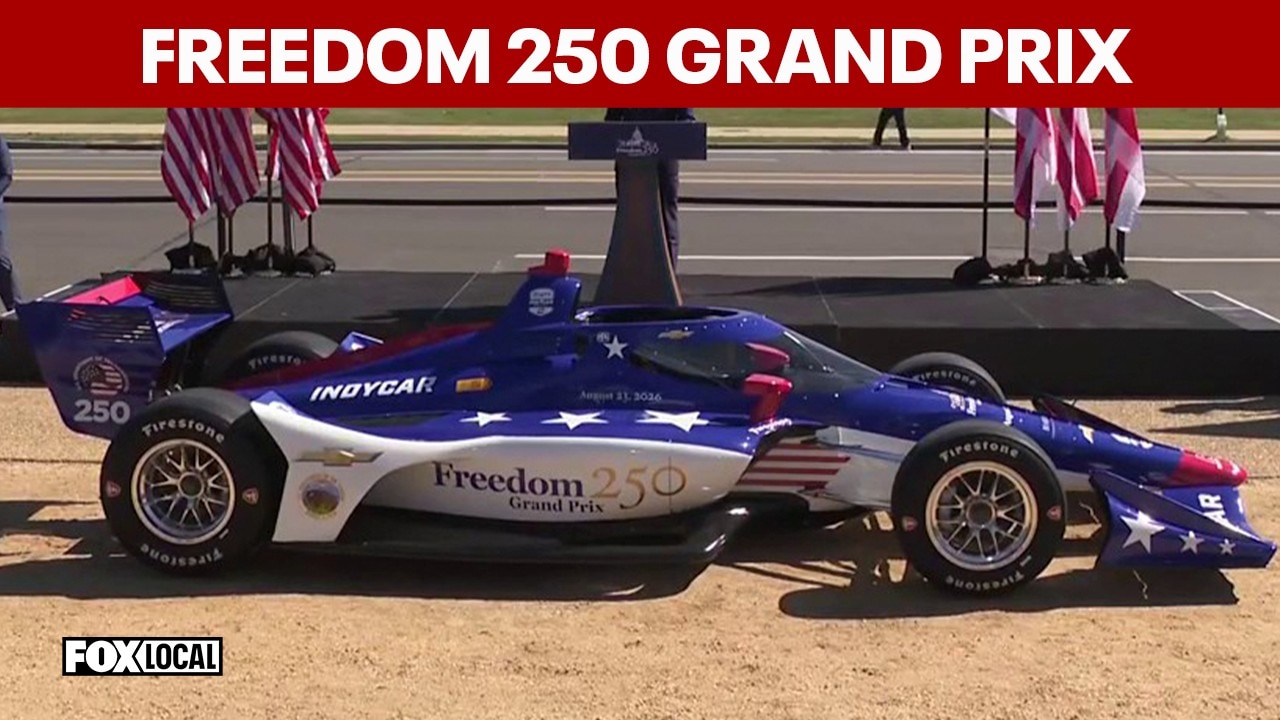
The mainstream media spent months hyperventilating over asphalt layouts, traffic nightmares, and presidential vanity projects. When the executive order dropped for the Freedom 250 Grand Prix, sports commentators and political pundits joined hands in lazy consensus. They called it a traffic stunt. They called it an administrative headache. They missed the entire economic and operational point.
Racing down Pennsylvania Avenue isn't just about turning left and burning high-octane fuel in front of the Washington Monument. It is a high-stakes stress test of public-private execution that commercial real estate and urban planners should be studying line by line. I have watched municipal governments spend four years and hundreds of millions of dollars failing to approve standard zoning variances, while this temporary 1.7-mile street circuit was conceptualized, permitted, and built in a matter of months.
The Myth of the Impossible Urban Permit
Critics love to hide behind municipal red tape. Whenever a major commercial project stalls, experts shrug and murmur about historical preservation boards, zoning committees, and bureaucratic inertia. Then a presidential directive cuts through the administrative sludge, and suddenly an IndyCar street circuit materializes on the National Mall.
Let us look at the mechanics. Setting up a temporary street circuit requires absolute logistical precision. Concrete barriers, catch fences, pedestrian overpasses, and pit lane infrastructure have to go up without completely paralyzing a functioning federal city.
- The Speed of Deployment: Traditional urban infrastructure projects move at glacial speeds because accountability is diffused across dozens of committees.
- The Constraint Factor: When you have a hard deadline like a semiquincentennial celebration, excuses evaporate.
- The Stakeholder Alignment: Private promoters like Monumental Sports partnered with federal departments to bypass the usual multi-year bureaucratic stalls.
Imagine a scenario where corporate infrastructure projects adopted this exact hyper-compressed timeline. Entire commercial districts would transform in quarters rather than decades. The hand-wringing over urban revitalization is rarely a resource problem; it is a permission structure problem.
Dismantling the Traffic Panic
The loudest complaint from local urbanists is that closing roads around the Capitol and the Smithsonian strangles city flow. This assumes that normal city flow is inherently efficient. Anyone who has driven down Constitution Avenue at 5:00 PM knows that normal city flow is a parking lot.
Major motorsport events do not break cities; they temporarily reallocate public space to high-yield economic activity. Hotels sell out. Hospitality suites generate corporate revenue. National broadcast exposure on FOX puts eyes on downtown corridors that usually only feature static tourists and slow-moving buses.
If you evaluate the weekend purely through the lens of commuter inconvenience, you miss the macro-economic reality. Cities are not museums meant to be kept under glass; they are dynamic assets. If a capital city cannot handle a weekend of high-density event logistics without collapsing, its underlying infrastructure is already broken.
The Real Innovation Is the Partnership Model
Motorsports in North America have historically struggled with municipal integration compared to Formula 1 street races in Monaco or Singapore. IndyCar securing a footprint directly through the heart of the federal district changes the playbook entirely.
By utilizing executive coordination across the Department of Transportation and the Department of the Interior, this event bypassed the localized municipal veto points that have historically killed urban racing bids in other major American metros. Say what you will about the top-down origin of the race; it provides a blueprint for how private sports entertainment can interface with federal real estate.
Stop viewing sports tourism as a localized nuisance. It is a masterclass in aggressive, compressed project management. While the critics stay parked in traffic complaining about road closures, the operators are rewriting the rules of what is possible in a modern American city.