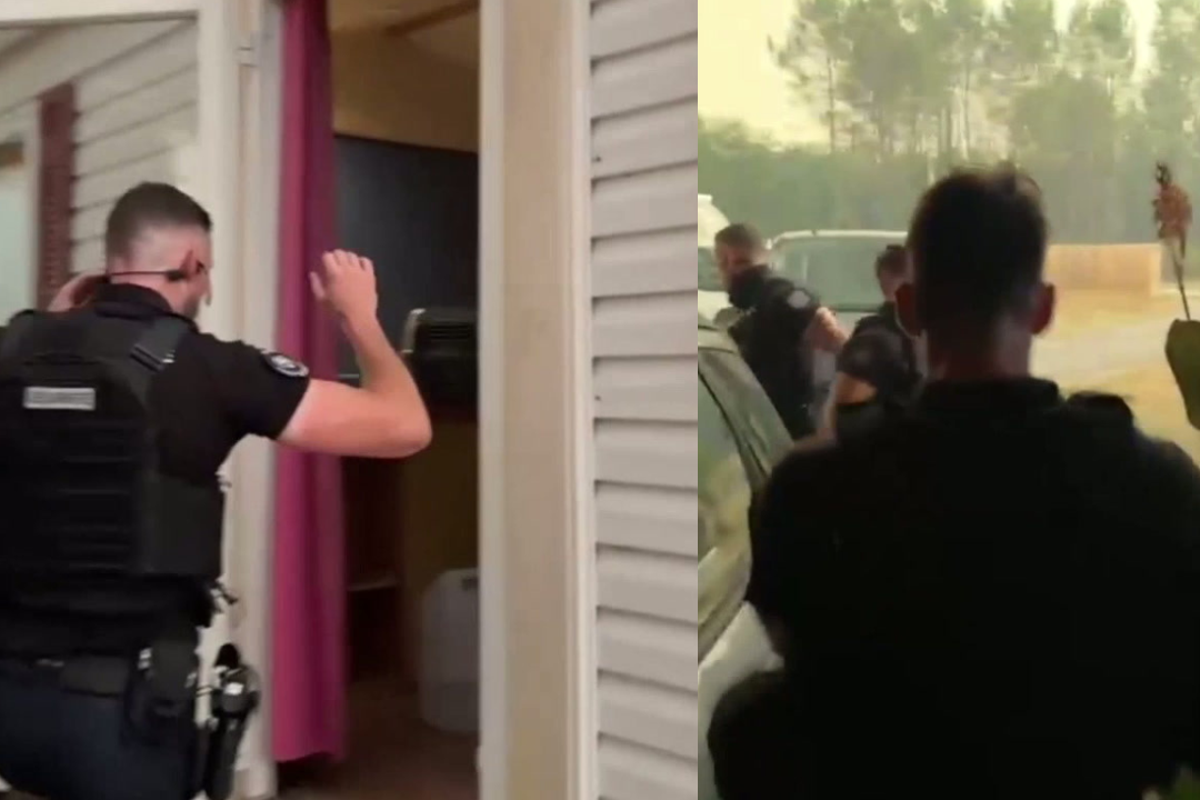
The siren screams through the pine forests of Southern France. It is not a drill. It is the sound of a home becoming a memory in under ten minutes. When authorities tell you to leave your life behind and run, they aren't being dramatic. They are acknowledging a terrifying reality that has changed the way we handle climate-driven disasters.
I have spent time looking at how European emergency services manage these rapidly accelerating crises. The sheer speed at which a Mediterranean wildfire moves is something most people simply cannot comprehend until they see the sky turn black at noon. It is not a slow burn. It is an explosive event.
Why Speed Is The Only Factor That Matters
When a fire starts in the tinder-dry scrubland of Provence or the Var, the fuel is already primed. We have seen record-breaking heat waves across Europe that have turned lush landscapes into giant matchsticks. The humidity drops. The wind picks up. A spark from a car, a discarded cigarette, or even a lightning strike can trigger a wall of flame that moves faster than a sprinting human.
Emergency responders know this. That is why the directive is always the same. Do not pack. Do not hunt for the cat. Do not try to gather your passports or jewelry. You have minutes, not hours, before the road becomes a death trap.
Most civilian fatalities in these scenarios happen for one reason. People hesitate. They spend those crucial five minutes trying to decide what to save. By the time they reach the door, the heat radiation alone is enough to stall a car engine or melt the wiring. You are not choosing between your house and your safety. You are choosing between your life and a pile of ash.
The Reality Of Tactical Evacuation
You might wonder how police and firefighters decide who goes first. It is a brutal calculation. They prioritize clearing the bottleneck areas. If they can keep the main roads open, they can move thousands of people out of the path of the flames. If one person decides to linger or argue at a roadblock, the entire chain of evacuation stalls.
This is where the frustration comes in for ground teams. They are often dealing with outdated infrastructure. Many of these French villages are built on ancient, winding paths that were never designed to handle an emergency mass exodus of hundreds of cars.
Lessons From The Front Lines Of Fire Zones
I remember talking to a wildfire analyst who pointed out a grim truth about modern fire zones. You cannot fight fire in the middle of a windstorm. It is physically impossible. The water just evaporates before it hits the canopy. This means that for the first few hours, the only strategy is containment and evacuation.
If you are traveling in these regions during the summer, you need to understand the local warning systems.
- Follow local radio stations. They are your primary source of truth when cell towers go down or get overwhelmed.
- Identify your evacuation routes early. Don't assume the GPS will guide you out. In a fire, the fastest route is often the one that gets blocked first.
- Keep your fuel tank full. Trying to find a gas station during a mass evacuation is a recipe for being stranded.
- Pack a go-bag weeks ahead. If you live in a high-risk area, you should have your vital documents and medications ready to grab in under sixty seconds.
Addressing The Human Element In Crisis
People often underestimate the psychological terror of these events. It is not just about the fire. It is about the loss of agency. You are being forced out of your sanctuary by an invisible, uncontrollable force. That is why you see so many people ignoring orders. They are in shock.
Police officers aren't being cruel when they scream at you to move. They are trying to shock you out of that paralysis. If you find yourself in this situation, look at the officers and follow their hand signals immediately. Don't look for explanations. Don't ask for a minute to think. The environment has changed, and your survival depends on your ability to disconnect from your property and prioritize your physical self.
We are seeing larger, more intense, and more frequent fires because of shifting weather patterns. The old maps of "safe zones" are being rewritten by the realities of a warming climate. If you are going to spend time in Southern Europe during the summer months, you have to treat the fire risk with the same level of seriousness that you would treat an approaching hurricane or flood.
Stay alert to the daily fire risk index provided by the local prefecture. If they raise the warning level, do not go deep into the woods. Do not host dry-grass bonfires. Keep your windows closed to prevent embers from blowing into your home. The next time the police tell you to leave your belongings and go, don't think twice. Just leave. Your life is not replaceable, but everything else is.