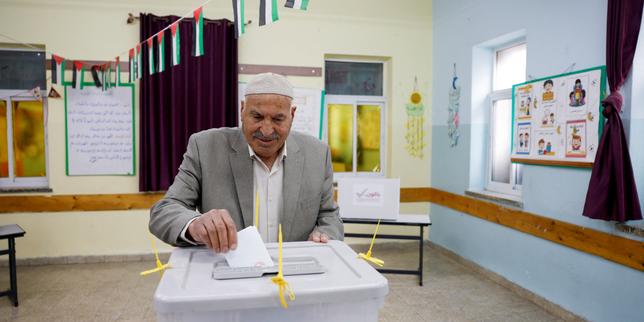
The call for Palestinians to return to the ballot box for the first time since the Gaza conflict began is not merely a logistical challenge. It is a high-stakes gamble with a fractured national identity. While international observers and local officials point to these municipal elections as a sign of "returning to normalcy," the reality on the ground suggests something far more volatile. This is an attempt to validate a political structure that has effectively remained in stasis for nearly two decades, now forced to operate under the shadow of unprecedented destruction and internal displacement.
The primary hurdle is simple. You cannot have a fair or functional election when the population is in a state of constant transit and survival. In the West Bank, where these votes are concentrated, the tightening of movement and the economic collapse of the Palestinian Authority (PA) have turned local governance from a matter of public service into a desperate scramble for resources. Also making waves recently: The Grieving Mother and the Finality of the Swiss Solution.
The Shell of Local Governance
To understand why this specific vote matters, one must look at the decay of the Palestinian Authority’s legitimacy. Since the last legislative elections in 2006, the democratic process has been more of a ghost than a reality. Presidential mandates expired years ago. Parliamentary sessions are non-existent. In this vacuum, municipal councils have become the only tangible point of contact between the citizen and a crumbling state apparatus.
But these are not typical town hall meetings. Municipalities in the West Bank are currently struggling to provide basic electricity and water, often while their budgets are frozen or redirected to cover the PA’s massive wage deficits. Asking a citizen to vote for a local representative when that representative has no power to fix a pothole—let alone stop a military incursion—is a hard sell. It creates a disconnect where the act of voting feels like a performance for the benefit of foreign donors rather than a tool for domestic change. More insights into this topic are explored by The Guardian.
The Gaza Void
The most glaring issue is the absence of Gaza from the democratic equation. While the headline suggests a post-war democratic awakening, the reality is a bifurcated process. Gaza remains a battlefield. The administrative infrastructure required to register voters, vet candidates, and secure polling stations in the Strip has been pulverized.
This exclusion creates a dangerous precedent. By proceeding with elections that only truly encompass the West Bank, the political leadership risks formalizing the geographic and political split that has plagued the territories since 2007. It sends a message to the residents of Gaza that their voice is secondary to the administrative survival of the West Bank-based elite.
Money and the Donor Trap
Western nations have long tied aid packages to the promise of democratic reform. This puts the Palestinian leadership in a corner. They need the funds to prevent a total social collapse, but they fear the outcome of a truly free vote. If the "wrong" candidates win—those aligned with militant factions or anti-normalization movements—the aid could dry up immediately.
This has turned the electoral process into a managed exercise. Candidates are often vetted not just for their local popularity, but for their palatability to the international community. It is a system of "democracy-lite" where the stakes are high enough to be dangerous, but the options are narrow enough to be stifling.
The local business class also plays a quiet, decisive role here. In cities like Ramallah and Nablus, municipal seats are often occupied by individuals with deep ties to the private sector. These figures view the election as a way to secure contracts and protect their interests in a shrinking economy. For the average resident, the choice is often between a candidate who is part of the established elite and one who is an unknown quantity with no resources to effect change.
The Security Dilemma
Then there is the issue of the security coordination. Any candidate running for office in the West Bank must navigate the reality of the PA’s security relationship with Israel. This creates a ceiling for political discourse. A candidate who speaks too forcefully about resistance or radical change finds themselves under the scrutiny of both their own government and the neighboring military forces.
This environment breeds a specific type of candidate: the technocrat. These are individuals who promise better sewage management and more efficient lighting while avoiding the larger, more painful questions of national sovereignty. While practical, this focus ignores the fact that Palestinian municipal life is inseparable from the political occupation. You cannot manage a city’s water supply if you do not control the pipes that lead into it.
The Youth Disconnect
More than half of the Palestinian population is under the age of 30. For this demographic, the 2006 elections are a historical footnote they weren't old enough to participate in. They have grown up in a world where "democracy" is something discussed in NGOs but never experienced at the ballot box.
The current push for elections is seen by many young Palestinians as a cynical move to pacify a restless generation. They see a leadership that is aging and out of touch, attempting to wrap itself in the flag of democratic legitimacy without offering a seat at the table. This is why we see a rise in independent "youth lists" and grassroots movements that bypass traditional party lines. These groups are often disorganized and underfunded, but they represent the only genuine energy in the current political landscape.
Fragmented Lists and Local Rivalries
Unlike national elections, municipal votes are often decided by clan and family ties. In many villages, the "election" is settled before a single vote is cast, through backroom deals between the heads of the largest families. This tribalism provides a layer of social stability, but it is the antithesis of a modern democratic state.
It also makes the results incredibly difficult to predict. A landslide victory for a certain family in a rural district doesn't necessarily mean a shift in ideological alignment; it might just mean that family had a better turnout strategy or more influential elders. This fragmentation makes it nearly impossible for a unified national opposition to emerge from the municipal level.
The Logistics of Despair
Holding an election requires more than just boxes and paper. It requires a census that hasn't been updated properly in years. It requires a postal system that functions. It requires the ability for candidates to travel between towns to hold rallies—something that is currently impossible for many due to the hundreds of checkpoints and roadblocks currently in place.
The Palestinian Central Elections Commission is an island of professionalism in a sea of chaos, but even they cannot overcome the physical reality of the territory. If a candidate cannot travel five miles to the next village to speak to voters, the election is a localized affair, not a national movement.
The timing is also suspect. Critics argue that by holding these elections now, the PA is trying to capitalize on the international focus on Gaza to push through a West Bank-centric agenda. It is a move designed to show the world that the PA is still the "sole legitimate representative" of the people, even as its popularity at home reaches historic lows.
The Failure of the "Day After" Planning
International diplomats often talk about the "day after" the war in Gaza. They envision a revitalized Palestinian Authority taking the reins of a unified territory. These municipal elections are being framed as the first step toward that reality. But you cannot build a house starting with the roof.
The foundational issues—the occupation, the internal split, the economic dependency, and the lack of a clear national strategy—remain untouched. Without addressing these, the election is a cosmetic fix for a structural failure. It is like repainting a car with a dead engine. It might look better in the brochure, but it’s not going to get you where you need to go.
The international community's insistence on these elections as a benchmark for progress is part of the problem. It allows foreign governments to check a box labeled "democratic support" while ignoring the worsening humanitarian and political crises. It is a form of diplomatic theater that everyone participates in because the alternative—admitting that the current political framework is dead—is too frightening to contemplate.
For the Palestinian voter, the choice is increasingly grim. They can participate in a system that they know is flawed and limited, or they can stay home and allow the status quo to solidify. Neither option offers a clear path toward the sovereignty and dignity they have been promised for decades. The ballot box, once a symbol of hope, has become a reminder of how little has actually changed.
The real test will not be the number of people who show up to vote, but what happens the day after the results are announced. If the new council members find themselves as powerless as their predecessors, the last shred of faith in the democratic process will vanish. At that point, the struggle for leadership will move from the polling stations back to the streets, where the rules are much simpler and the outcomes far more violent.
True reform requires more than a signature on a voter registration form; it requires a complete dismantling of the patronage systems that have turned local governance into a tool of control rather than a vehicle for public will. Until the underlying power structures are challenged, every election remains a shadow play performed for an audience that is no longer watching.