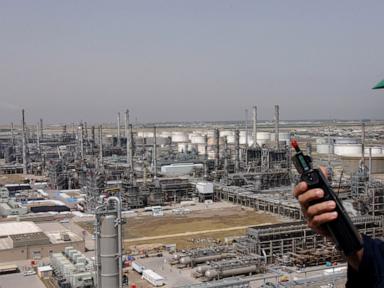
OPEC+ is attempting to project a united front by agreeing to a modest expansion of monthly oil production, but the decision exposes deep systemic cracks within the alliance as global crude prices slide. The move aims to balance the competing demands of member states desperate for cash against a backdrop of slowing global demand, particularly from China. By trickling more crude into a saturated market, the alliance hopes to defend its market share without triggering a complete price collapse. It is a high-stakes gamble that signals desperation rather than strength, revealing a cartel running out of tools to manipulate global energy economics.
The Cracks in the Unified Front
The decision to lift production targets comes at a time when traditional market dynamics are failing to respond to standard cartel interventions. For decades, the formula was simple. When prices dropped, the group cut supply to force them back up.
That playbook no longer works.
Internal compliance has degenerated into a game of creative accounting. Several member nations routinely exceed their allocated production quotas, driven by the urgent need to fund domestic budgets. Iraq and Kazakhstan, for instance, have consistently pumped above their limits, offering vague promises of future compensation cuts that rarely materialize in full.
By officially raising the production ceilings slightly, the leadership is attempting to normalize the overproduction that is already happening on the ground. It is a tactical retreat disguised as a coordinated strategy. If you cannot force your members to stop pumping, you simply rewrite the rules to make their cheating legal. This shifts the burden of price stabilization onto a handful of core producers, primarily Saudi Arabia, which has borne the brunt of voluntary production cuts to keep the market afloat.
The Ghost of American Shale
The elephant in the room is the relentless output from non-OPEC producers, led by the United States.
Every time the cartel restricts supply to defend a specific price floor, it inadvertently hands a lifeline to its fiercest competitors. American shale drillers, alongside producers in Guyana, Brazil, and Canada, have proved remarkably resilient. They have used technological refinements to lower their break-even costs, meaning they can turn a profit at price points that would strain the national budgets of most Middle Eastern states.
Consider the mechanics of the global supply balance. If the cartel cuts one million barrels from the market, but non-aligned nations add 1.2 million barrels over the same period, the net effect on global prices is negligible. The only tangible result for the alliance is a permanent loss of market share. The current decision to increase production, even modestly, represents an admission that ceding more ground to the Western hemisphere is no longer a viable option.
The Demand Problem That Production Can Not Fix
While supply side politics dominate the headlines, the real crisis for the energy sector lies on the demand side of the ledger.
Economic data from major industrialized nations continues to flash warning signs. The manufacturing sector in China, the world's primary engine for oil demand growth, has shown persistent signs of contraction. The rapid adoption of electric vehicles, high-speed rail networks, and liquefied natural gas trucks in the Chinese domestic market is structurally altering how the country consumes energy. This is not a cyclical downturn that will bounce back next quarter. It is a permanent structural shift.
Meanwhile, Western economies are grappling with the lagging effects of prolonged high interest rates. Industrial activity has cooled, and consumer spending on transport has plateaued. When the world's two largest economic engines are slowing down simultaneously, adding more oil to the market—no matter how modest the volume—runs counter to traditional economic logic. The move highlights a grim reality. The group is more afraid of losing its grip on the market than it is of sub-seventy-dollar crude.
The Fiscal Break Even Pressure
To understand why certain nations pushed for this production increase, one must look at their national budgets.
+----------------+-------------------------------+
| Member State   | Estimated Fiscal Break-Even   |
|                | Oil Price (USD per Barrel)    |
+----------------+-------------------------------+
| Saudi Arabia   | $85 - $90                     |
| UAE            | $65 - $70                     |
| Iraq           | $75 - $80                     |
| Algeria        | $90+                          |
+----------------+-------------------------------+
The data demonstrates the divergent pressures inside the alliance. A country like the United Arab Emirates, with a lower break-even point and a highly diversified economy, can tolerate lower prices if it means selling a higher volume of crude. Conversely, nations with massive public spending commitments require significantly higher prices to avoid running deficits.
This divergence creates a fundamental conflict of interest. The nations needing immediate cash flow cannot afford to sit on idle production capacity. They want to monetize their reserves now, fearing that the long-term energy transition will render those assets less valuable in the decades to come.
The Limits of Verbal Intervention
For the past two years, the alliance has relied heavily on aggressive rhetoric and sudden, unannounced production tweaks to spook short-sellers and speculators. Traders were repeatedly warned that shorting crude would be a painful exercise.
That psychological warfare has lost its edge.
Wall Street and commodity trading desks are increasingly looking past the announcements to focus on hard data, such as satellite tracking of oil tankers and inventory build-ups in major ports. The market sees through the rhetoric. When the group announces a modest increase amid falling prices, traders do not see a confident group managing a transition. They see an alliance reacting to events rather than dictating them. The era where a single press release from Vienna could send shockwaves through global markets is drawing to a close.
Defending a specific price floor requires absolute discipline, a luxury the current coalition does not possess. As long as non-OPEC supply continues to expand and global economic activity remains sluggish, the cartel will find itself caught in a trap of its own making, forced to choose between shrinking relevance or lower revenues. The modern energy landscape does not care about historical monopolies, and the current production tweak proves that even the world's most powerful oil club must eventually bend to the laws of supply and demand.