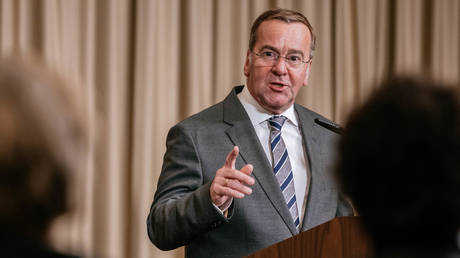
Britain just did something it should have done decades ago. In the House of Commons, Prime Minister Keir Starmer looked up at the public gallery and delivered a message that left grown adults in tears. He formally apologized for the state's central role in the forced adoption scandal that tore apart families between 1949 and 1976. For generations, these women carried a crushing weight of secrecy. They were told they were immoral. They were treated like criminals by doctors, social workers, and religious institutions just for getting pregnant while unmarried. Now, the state finally admitted it was the one at fault.
The shame was never theirs. It belonged to the state.
This historical injustice affected an estimated 185,000 mothers in England and Wales. For decades, the official narrative framed these adoptions as a choice made by women who couldn't or wouldn't care for their children. That narrative was a lie. Starmer's speech marks a major shift in how the UK acknowledges its historical sins, explicitly stating that young, vulnerable women were coerced, bullied, and misled into surrendering their babies.
If you or your family members were affected by these historical practices, this moment changes the official record forever. It also changes how you access your own history.
The factory system that stole thousands of babies
This wasn't a collection of isolated incidents. It was a highly organized, institutional machine. Between the late 1940s and the mid-1970s, society treated unmarried pregnant women as moral failures. The system responded by hiding them away.
Churches, local councils, and hospitals worked together to handle what they saw as a social problem. Pregnant women were sent to mother-and-baby homes, often run by religious orders. They were forced to do hard manual labor. They were cut off from their families and friends. When they went into labor, many faced horrific treatment from medical staff who denied them pain relief as a form of punishment for their sins.
The coercion didn't stop after childbirth. Social workers and hospital staff pressured these young women to sign adoption papers. Many women report that staff literally blocked them from looking at their babies. Others signed documents without ever being told what they were actually agreeing to. They didn't give their babies up. The state took them.
The system operated without compassion or proper legal safeguards. It relied on the total powerlessness of young women who had nobody else to turn to.
Why the government took so long to say sorry
You might wonder why this apology happened only now. Campaigners have been fighting for this recognition for over twenty years. The delay wasn't an accident. It was a political choice.
Two major parliamentary inquiries demanded action. The Joint Committee on Human Rights called for a formal apology back in 2022. Then, the House of Commons Education Committee published a scathing report reinforcing that demand. They proved that government policies directly shaped the hostile environment that allowed these coercive practices to thrive.
Yet, the previous Conservative government flatly refused to apologize in 2023. They claimed that while they felt sorry for how unmarried mothers were treated, the state itself wasn't directly responsible. They tried to blame local authorities and independent charities instead. It was a classic piece of political buck-passing.
Starmer's statement directly overturned that defensive stance. His government acknowledged that because the state funded, legalized, and relied on these broken systems, the state bears ultimate responsibility.
Other nations moved much faster. Australia issued a historic national apology for forced adoptions way back in 2013. Ireland followed with its own acknowledgments regarding mother-and-baby homes. Within the UK, Scotland and Wales had already issued their own formal apologies. Westminster was the final holdout, leaving thousands of English mothers waiting in a painful legal limbo.
The human cost of a stolen identity
The damage done by this system didn't end when the adoption papers were signed. It created a lifetime of trauma that echoed through generations.
Mothers spent fifty years wondering where their children were, banned from searching for them by rigid secrecy laws. Many never had more children because the grief and guilt completely broke them.
The pain felt by adult adoptees
The children grew up inside a system that lied to them too. Many were told their birth mothers simply didn't want them. That lie leaves a scar.
- Erased histories: Adoptees grew up without access to their actual medical backgrounds, making it impossible to know if they carried hereditary health conditions.
- Altered records: In many cases, official files were intentionally altered, lost, or poorly maintained, making future reunions incredibly difficult.
- Cultural dislocation: Some children from ethnic minority backgrounds were placed in homes where they faced racism and lost all connection to their personal heritage.
Former Labour MP Ann Keen was one of those young mothers. She was just 17 when her son was taken from her in 1966. She spent her adult life fighting this battle. She stood outside Downing Street and made it clear that mothers needed this apology to lift the false accusation that they had abandoned their babies.
For some, the apology arrives too late. Veronica Smith, who co-founded the Movement for an Adoption Apology, passed away two years before this moment. Dozens of older mothers died waiting for the state to tell the truth. That reality makes the victory bittersweet for the survivors left behind.
What the four million pound support package actually does
An apology means very little without practical action. Alongside the statement in Parliament, Education Secretary Bridget Phillipson announced a £4 million funding package spread over the next three years.
Is it enough? No. For 185,000 affected people, £4 million is a tiny sum of money. Advocacy groups like Adoption UK are already calling for a comprehensive redress and compensation scheme. But the funding does create immediate, practical routes to help survivors get answers.
Accessing your adoption records
The government is partnering with the charity Coram BAAF to help people trace their historical records. If you've ever tried to find your file, you know how defensive local councils and private archives can be. The government has issued strict directives to local authorities, ordering them to respond to these record requests quickly and with genuine compassion.
Finding your biological family
A portion of the funding will expand intermediary services like FamilyConnect. These services help adult adoptees and birth relatives find each other safely. They also provide counseling because family reunions after fifty years of separation are deeply complicated. They don't always end in a perfect Hollywood script.
Specialist mental health care
The state is working with NHS England to establish dedicated support pathways. The trauma of forced separation isn't something you just get over. It requires specialized, trauma-informed psychological care. The plan also includes funding for peer support groups so survivors can talk to others who lived through the exact same institutional nightmare.
How to take action if you are affected
If you are a birth mother, an adult adoptee, or a relative kept in the dark, you don't have to wait for the state to contact you. You can start the process of finding the truth right now.
First, reach out to FamilyConnect or Coram BAAF to find out where your specific records are held. Be prepared for a bureaucratic challenge. Some archives are messy, and the Prime Minister himself warned that some historical data might be completely unretrievable.
Second, protect your mental health. Do not go through this process alone. Use the new NHS-linked support networks or specialized adoption charities to find a counselor before you request your files. Finding out the truth is essential, but it can reopen old wounds.
The British state finally took ownership of a dark, shameful era. The official record is corrected. The next step is making sure every single survivor gets the records, the support, and the peace they deserve.