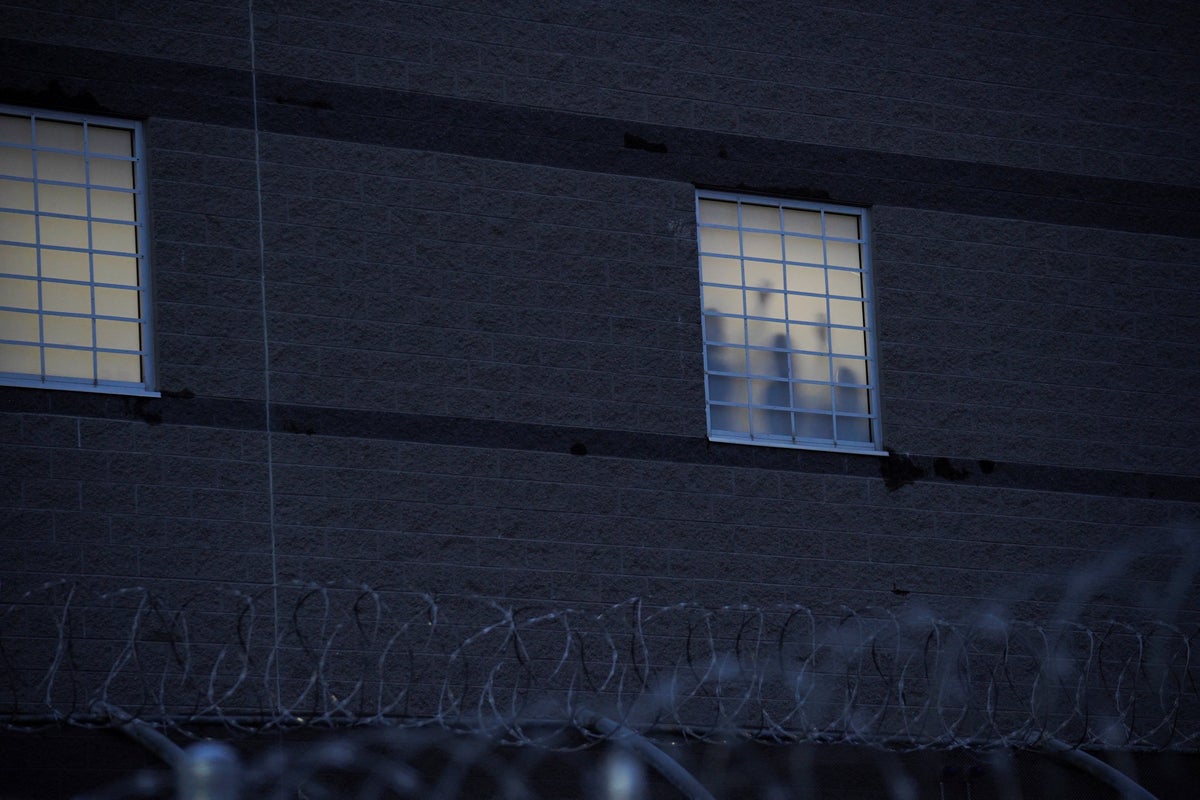
The metal tray hits the slot with a hollow, vibrating clang. It is 5:00 PM inside the Elizabeth Detention Center in New Jersey. On the tray sits a lukewarm mound of mystery meat, white rice, and a slice of bread that has already begun to sweat inside its plastic wrap.
An arm reaches out from the shadows of the bunk, but not to take the food. The hand pushes the tray back through the slot, completely untouched. Meanwhile, you can explore similar stories here: The Anatomy of Tactical Restraint: Deconstructing the US Kinetic Response in Southern Iran.
Across the hall, the same metallic rejection echoes down the corridor. Clang. Clang. Clang.
For days, this sound has replaced the standard ambient noise of the facility. Hundreds of immigrant detainees across New Jersey have stopped eating. They are not refusing food because they lack an appetite. They are refusing food because, in a system that has systematically stripped away their names, their freedom, and their connection to the outside world, their appetite is the very last thing they still own. To understand the full picture, we recommend the detailed article by NBC News.
To look at a standard news headline about an ICE hunger strike is to see a collection of dry statistics. A three-line paragraph might note that "approximately 300 detainees are participating in a coordinated protest over facility conditions." Another sentence might quote a government spokesperson insisting that "nutritional standards are being strictly monitored."
But statistics do not feel the biting chill of a broken HVAC system in the dead of winter. Statistics do not smell the black mold blooming in the corners of a communal shower facility. To understand why a human being decides to starve themselves in the dark, you have to look past the spreadsheets and step directly into the damp air of the cells.
Imagine a man named Carlos. He is a hypothetical composite of the dozens of individuals currently housed in these facilities, but his circumstances are entirely real. Carlos has lived in New Jersey for twelve years. He paid taxes, mowed his lawn, and walked his daughter to the school bus every morning at 7:15 AM. One Tuesday, a broken taillight changed everything. Now, he sits in a concrete room, waiting for a court date that keeps shifting like sand.
When Carlos first arrived, he tried to follow every rule. He kept his head down. But after three months of drinking water that tastes heavily of rust, after watching his cellmate develop a severe skin rash that the facility medic treated with nothing but a single strip of medical tape, something broke inside him.
The tipping point was not a grand act of cruelty. It was the slow, crushing realization that within these walls, his humanity had become an administrative error.
The strike began in the quietest way possible. A whisper passed from bunk to bunk during the brief hour of recreation. Tomorrow, we don't eat.
When a person chooses to go on a hunger strike, the body reacts with predictable, terrifying precision. By day three, the liver exhausts its glycogen stores. The brain, desperate for fuel, demands glucose, forcing the body to break down its own muscle tissue. Headaches arrive first, sharp and blinding, followed by a profound, heavy fatigue that makes even lifting a plastic cup feel like hauling concrete.
Yet, the striking detainees describe a strange phenomenon that occurs around day five. The physical hunger pangs begin to dull, replaced by a razor-sharp mental clarity. When you remove the daily ritual of chewing and swallowing substandard food, you are left with nothing but time and your own resolve.
The state-level response to these protests is almost always a masterclass in bureaucratic minimization. Facility administrators frequently point to compliance checklists. They highlight the presence of on-site medical staff. They issue press releases assuring the public that the detainees are being offered three meals a day, as if the mere presence of a tray absolves the system of the rot inside the building.
But the real problem lies elsewhere. It is buried deep within the private prison complex that drives the American immigration detention apparatus. Many of these facilities are operated by third-party corporations that profit directly from minimization. Every penny saved on a detainee's meal, every dollar withheld from building maintenance, and every shift left understaffed by medical professionals represents a direct injection into the corporate bottom line.
This is not a conspiracy theory; it is simple arithmetic. When human beings are transformed into daily bed-occupancy metrics, the incentive to provide "humane and constitutional" conditions evaporates.
Consider what happens next when a strike gains traction. The facility's internal climate shifts from passive indifference to active psychological warfare. Striking detainees report that guards will intentionally bring in highly aromatic foods, eating warm pizza or fresh burgers right outside the cell bars. In some instances, the ambient temperature in the housing units suddenly drops, forcing the already weakened, shivering protestors to consider whether a hot bowl of thin broth is worth abandoning their collective stance.
Outside the facility walls, a different kind of battle is being waged. Families gather on the cracked asphalt of the perimeter parking lot, holding cardboard signs that flutter in the highway wind.
Maria is real, and she stands by the chain-link fence every afternoon. Her husband is inside. She has not touched his hand in four months. Every time her phone rings, her heart drops into her stomach, terrified that the voice on the other end will be a doctor informing her that her husband’s kidneys have begun to fail.
"He told me on the tablet call that he is doing this for our children," Maria says, her voice dropping to a whisper as a semi-truck rumbles past on the nearby interstate. "He said if he has to live like an animal here, he will never be able to look them in the eye when he comes home."
The legal framework surrounding these strikes is a labyrinth of shifting goalposts. Civil rights attorneys file emergency injunctions, citing unconstitutional living conditions that violate the Fifth and Eighth Amendments. They document the lack of clean drinking water, the denial of basic dental care, and the prolonged use of solitary confinement as a retaliatory tool to break the strike's leadership.
In response, government attorneys argue operational necessity. They claim that the facility must maintain order, and that collective action poses a direct security threat to the staff. The legal arguments are dry, sterile, and entirely detached from the smell of bleach and sweat that defines the daily reality of the dorms.
It is easy for the average citizen to look away from this crisis. The narrative surrounding immigration in America has been so thoroughly poisoned by partisan rhetoric that it is difficult to see the people through the political smoke. We are told to focus on borders, on law enforcement, on sovereignty.
But a hunger strike forces us to confront a much simpler, far more uncomfortable question: What is the baseline of dignity that we owe to any living soul under our custody?
If a nation's moral fabric is judged by how it treats those who are completely helpless, then the concrete warehouses of New Jersey offer a grim indictment. These are not convicted criminals serving time for violent offenses. The vast majority are civil detainees, individuals holding a status equivalent to someone fighting a contract dispute or a housing eviction, yet they are locked behind triple-reinforced steel doors.
The sun begins to set over the marshlands surrounding the detention facility, casting long, orange shadows across the razor wire. Inside, the dinner trays are being collected. Most of them are still full, the food congealing under the harsh fluorescent lights.
A guard walks down the tier, checking the locks. He stops in front of a cell where a young man is lying perfectly still on his back, his eyes fixed on the water stain on the ceiling.
"You want the tray or not?" the guard asks, his voice tired, devoid of malice but stripped of empathy.
The young man doesn't turn his head. He doesn't say a word. He simply shakes his head once, a slow, deliberate movement that carries the weight of a hundred unwritten laws and unbroken spirits.
The guard grunts, slides the untouched food back onto his cart, and moves to the next door. The metal wheels squeak against the linoleum floor, a lonely, mechanical rhythm that marks another night where the most powerful statement a man can make is to refuse to open his mouth.