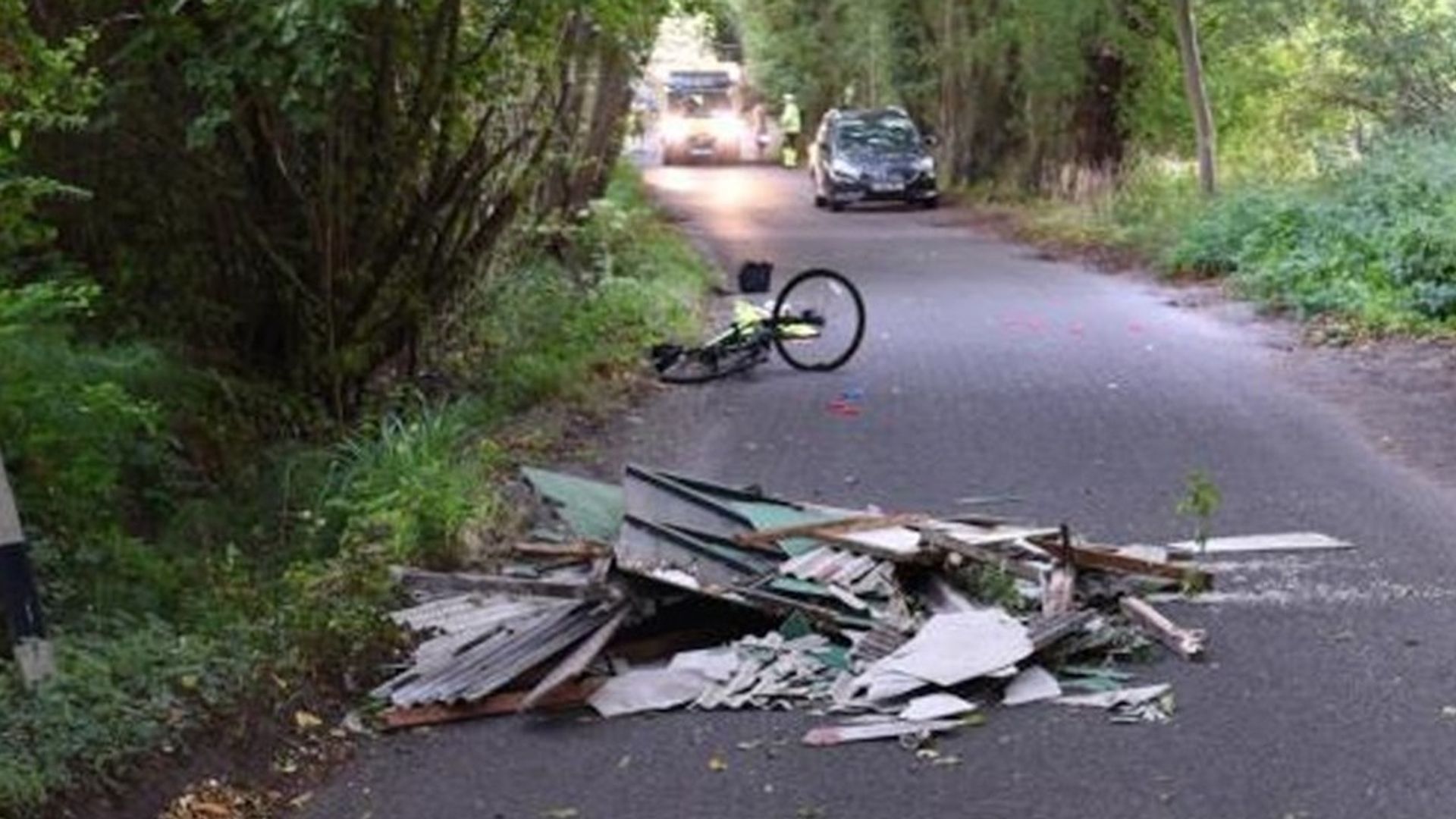
A pile of old furniture and black bags left on a dark country lane isn't just an eyesore. For a cyclist, it’s a lethal trap. We recently saw this play out in a harrowing case where a fly-tipper’s laziness resulted in a cyclist suffering a life-altering head injury. The perpetrator is behind bars, but the victim’s life will never be the same.
This isn't an isolated incident or some freak accident. It's the direct result of a growing culture of illegal dumping that treats our public roads like private scrapyards. When you're on two wheels, you don't have a roll cage or a ton of steel protecting you. You have a helmet and your reflexes. On a poorly lit road, those aren't always enough to save you from a sofa dumped right in the cycle path.
The Human Cost of Illegal Dumping
The court heard how the victim was cycling at night when they struck a large deposit of rubbish left in the middle of the road. The impact was catastrophic. A severe head injury doesn't just mean a scar or a few weeks off work. It often means cognitive impairment, personality changes, and a grueling road to recovery that costs thousands in medical bills and lost earnings.
The man responsible for this particular dump probably thought he was just saving a few quid on tip fees. Instead, he traded a stranger’s health for a bit of convenience. The judge didn't hold back, handing down a custodial sentence that sends a clear message: fly-tipping is a violent act when it endangers lives.
We need to stop looking at illegal dumping as a "victimless" environmental crime. It’s a public safety crisis. According to the Department for Environment, Food & Rural Affairs (DEFRA), local authorities in England dealt with over a million fly-tipping incidents in recent years. While most of these happen on highways, a significant portion occurs on backroads and rural routes—the exact places where cyclists go to avoid heavy traffic.
Why Fines Aren't Stopping the Rot
Current legislation allows for massive fines, yet the problem persists. Why? Because the "man with a van" economy is booming. You see the ads on social media all the time. "Cheap waste removal. No job too small."
If the price sounds too good to be true, it's because they aren't paying the commercial disposal fees at a licensed site. They’re driving ten minutes down the road and tossing your old mattress into a ditch. Or worse, right onto the tarmac where a commuter will hit it at 20mph.
The legal system is finally starting to catch up. For a long time, fly-tipping was handled with a slap on the wrist—a fixed penalty notice that felt like a business expense to these criminals. But when bodily harm enters the equation, the charges shift from environmental violations to more serious criminal negligence. We’re seeing more cases where the "intent" doesn't matter. You didn't intend to hurt the cyclist, but by dumping the waste, you created the conditions for the injury. That's enough for a cell door to slam shut.
How to Protect Yourself on the Road
You can't control what some idiot decides to throw out of their truck, but you can change how you handle the risk. Night riding is when most of these collisions happen because rubbish blends into the shadows.
- Invest in high-lumen lighting. Don't settle for "be seen" lights. You need "to see" lights. We're talking 800 lumens or higher for unlit roads. You need to see the texture of the road 30 yards ahead, not just a few feet.
- Ride the "primary position" in the dark. Don't hug the curb. Most fly-tipping happens at the edges of the road or in cycle lanes that aren't regularly swept. Riding further out in the lane gives you more time to react and keeps you clear of the "gutter clutter."
- Report every "near miss" rubbish pile. Use apps like Love Clean Streets or contact your local council immediately. If a pile of trash is there today, it’ll be a bigger pile tomorrow.
The Responsibility of the Homeowner
If you hire someone to take away your rubbish and they dump it in a lane, you are legally liable. It’s called the "Duty of Care." If the police find a bill with your name on it in that pile of trash, they're coming to your door.
Don't just take their word that they're "licensed." Ask for their waste carrier licence number. Check it on the Environment Agency website. It takes two minutes. If they can't provide it, they’re going to dump your stuff illegally. You might think you're saving £50, but you could end up with a criminal record and the knowledge that your old sofa caused someone a brain injury.
Legal Precedents and Shifting Tide
The jailing of this fly-tipper marks a shift in how the UK handles road hazards. For years, cycling advocacy groups like British Cycling and Cycling UK have pushed for "presumed liability" and harsher penalties for road endangerment. While we aren't at presumed liability yet, the courts are clearly losing patience with the "I didn't think it would hurt anyone" defense.
The reality is that our infrastructure is failing. Council budgets are squeezed, and tip opening hours are being cut. But that's no excuse for creating death traps. If you see someone fly-tipping, don't confront them—these people aren't exactly known for their stellar conflict resolution skills. Get a plate number. Get a photo. Report it.
The Next Steps for a Safer Ride
If you’re a cyclist, check your insurance policy today. Does it cover "uninsured" obstacles or legal support for non-vehicle collisions? Many standard policies are surprisingly thin when a car isn't involved.
For everyone else, stop looking for the cheapest way to get rid of your junk. The true cost of that "cheap" removal could be a neighbor's life. If you see waste on the road, don't just swerve around it and move on. Stop, pull over if it’s safe, and move what you can, or drop a pin and call the non-emergency police line if it’s a major hazard.
Waiting for the council to find it during a routine patrol isn't enough. By then, the ambulance might have already been there.