The lights do not just illuminate a room. They represent a silent contract between a state and its people that the basic machinery of life will continue to function while the sun is down. When that contract is threatened, the conversation shifts from tactical military maneuvers to something far more intimate and terrifying. It becomes about the refrigerator holding a week’s worth of food, the hospital ventilator keeping a grandfather breathing, and the water pump that prevents a city from thirsting in the desert heat.
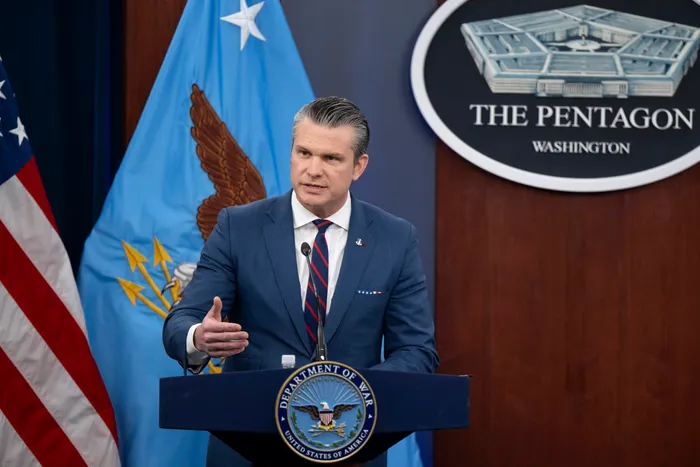
Pete Hegseth, the man positioned to lead the most powerful military force in human history, has repeatedly signaled a willingness to tear up the traditional rulebook of engagement. His rhetoric regarding Iran has moved past the usual posturing over missile batteries or command centers. Instead, he has aimed his sights at the "civilian infrastructure" that keeps eighty-five million people connected to the modern world. Don't forget to check out our earlier post on this related article.
This is not a abstract debate about policy. It is a fundamental shift in how we define the target.
The Anatomy of a Blackout
Think of a city like Isfahan or Tehran. It isn't just a dot on a map for a pilot to find. It is a living organism. When a power grid is targeted, the impact ripples outward like a stone dropped into a still pond, but the ripples are made of cold and darkness. If you want more about the background of this, The Guardian offers an excellent summary.
First, the traffic lights go dark. Chaos claims the intersections. Then, the digital heartbeat of the city—the internet, the banking systems, the cellular towers—simply vanishes. In the 21st century, when you kill the power, you kill the ability of a society to coordinate its own survival.
The Geneva Conventions were not written by poets; they were written by survivors of total war who understood that once you start blowing up power plants and water treatment facilities, the line between "soldier" and "child" disappears. Hegseth’s stance suggests that this line is a luxury we can no longer afford. He argues for a "disproportionate" response, a term that, in military circles, usually means making the cost of defiance so high that the civilian population can no longer bear it.
But history is a stubborn teacher.
When you target the things people need to live, you rarely find they surrender in gratitude. Instead, you forge a brand of desperation that is far more dangerous than any standing army. You take a father who was indifferent to politics and, by taking away the electricity he needs to keep his daughter’s insulin cold, you give him a reason to hate that will last for generations.
The Invisible Stakes of Cyber Warfare
Modern warfare has moved beyond the "kinetic"—the loud, messy business of bombs and steel. Hegseth’s threats often overlap with the realm of digital sabotage. It is much cleaner to click a mouse in a room in Virginia and watch a turbine in a distant land spin itself into scrap metal.
No blood is shed in the initial moment. No buildings are leveled.
Yet, the result is the same. If a cyberattack hits a sewage treatment plant, the "target" isn't a general. The target is the water supply of a million families. If the goal is to "bring Iran to its knees," the weight of that pressure is felt most acutely by the elderly who can’t navigate darkened stairwells and the small business owners whose life savings rot in a dead freezer.
We often talk about "precision" as if it is a moral virtue. We tell ourselves that because we can hit a specific transformer from ten thousand miles away, the war is somehow "cleaner." This is a comforting lie. Precision in targeting infrastructure is merely the ability to be more efficient at causing widespread, systemic misery.
Hegseth’s repeated assertions that "all options are on the table" regarding civilian sites ignore the reality that these sites are the nervous system of a nation. To sever them is to perform surgery with a sledgehammer.
A Departure from the Warrior Code
There is a specific kind of internal logic to Hegseth’s worldview. It is the logic of the "crusader," a term he has used and one that implies a battle not just of nations, but of civilizations. In this mindset, there are no "innocent" bystanders because the entire society is the enemy.
This view stands in stark contrast to the traditional American military ethos that has, at least in principle, sought to minimize civilian suffering to maintain the "moral high ground." When that high ground is abandoned in favor of "maximum pressure" through infrastructure destruction, the United States loses its most potent weapon: the image of being a disciplined, lawful power.
Consider the hypothetical case of a young engineer in Tabriz. He spends his days maintaining the electrical relays that power the local maternity ward. He isn't a member of the Revolutionary Guard. He doesn't care about regional hegemony. He cares about voltage and resistance. If a strike—whether by a Tomahawk missile or a line of malicious code—destroys his station, he isn't "neutralized." He is radicalized.
The strategy of targeting infrastructure assumes that the civilian population will blame their own leaders for the hardship. It assumes they will rise up and demand a change. But the psychology of siege tells a different story. When the lights go out, people look for someone to blame, and they usually pick the person who pulled the plug.
The Fragile Architecture of Peace
The world’s infrastructure is more interconnected than it has ever been. We live in a global web of supply chains and digital pathways. When a major player like the United States signals that civilian infrastructure is a fair target, it sets a new global precedent.
If we can do it, why can’t others?
If we decide that a power plant in Iran is a legitimate target, we have effectively signaled to every adversary on earth that our own power plants, our own water systems, and our own hospitals are now part of the "gray zone" of conflict. We are essentially tearing down the fences that keep modern life from descending into the brutality of the Middle Ages.
Hegseth’s rhetoric isn't just a threat to Iran; it’s a threat to the stability of the international order. It’s a gamble that American power is so absolute that we will never have to pay the price for the rules we break. It is a belief that we can live in a world where the lights stay on for us, even as we systematically flick the switches for everyone else.
But darkness has a way of spreading.
The danger of this approach isn't just the immediate loss of life or the destruction of property. It’s the erosion of the idea that there are some things too sacred to be used as pawns in a geopolitical game. It’s the loss of the understanding that even in our most violent disagreements, we must protect the basic systems that allow a mother to feed her child and a doctor to save a patient.
Once those boundaries are gone, they don't come back. We find ourselves in a world where every city is a potential battlefield and every civilian is a target. We find ourselves staring into the gloom, wondering which side of the switch we’ll be on when the next order is given.
War is often described as the failure of diplomacy, but the destruction of civilian infrastructure is the failure of humanity itself. It is the ultimate admission that we have run out of ideas, leaving only the desire to see the other side suffer in the dark.
The hum of the power grid is the sound of civilization. If we silence it, we might find that the silence is louder—and more terrifying—than any explosion.