For decades, we looked at Mars and saw a corpse.
We saw a rusted, frozen desert, stripped of its atmosphere, whipped by sterile winds, and utterly, unevatably dead. When the rovers crawled across its surface, they sent back pictures of dust. Beautiful dust, sure, but dust all the same. We comforted ourselves with the timeline: yes, maybe Mars had water billions of years ago, but the core froze, the magnetic field collapsed, and the planet breathed its last breath before humanity’s earliest ancestors even learned to walk upright.
We were wrong.
Mars wasn’t a corpse. It was a patient in a deep coma, hiding a heartbeat.
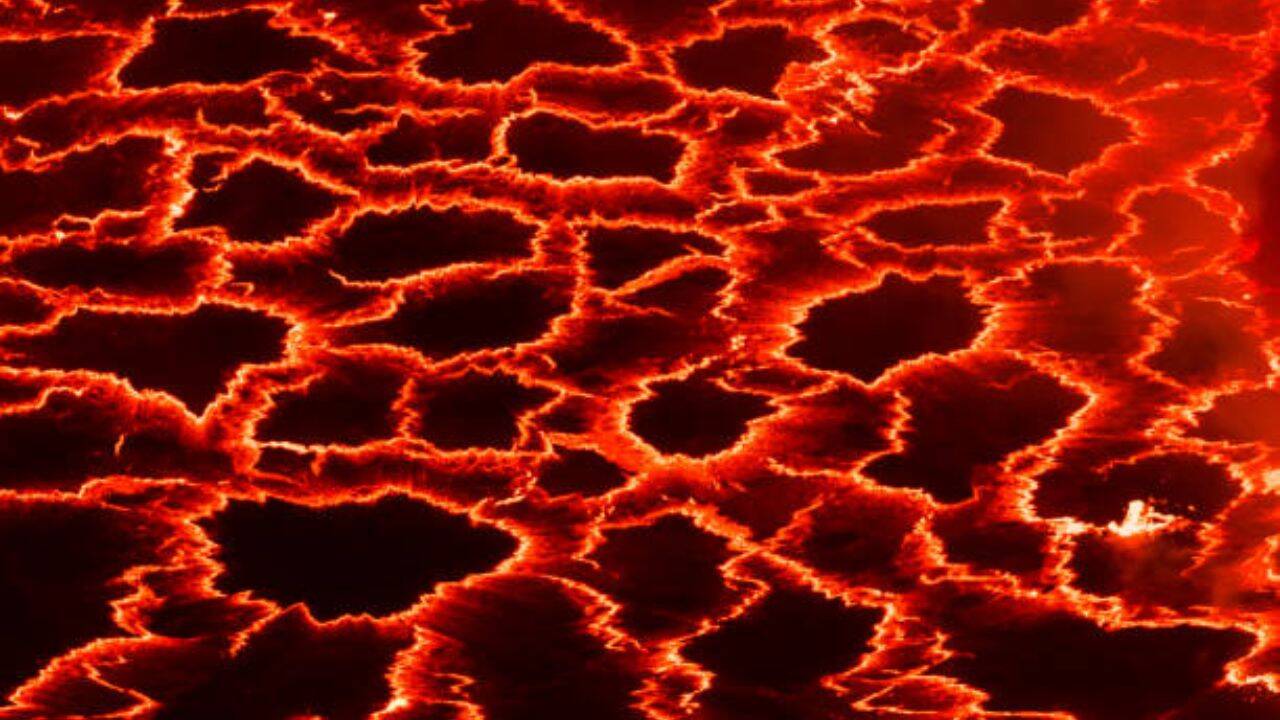
Not long ago, planetary scientists looking at data from orbital radar systems realized that beneath the Elysium Planitia—a flat, deceptively boring plain near the Martian equator—something massive was moving. Or rather, something massive had stayed warm far longer than anyone thought possible. Deep beneath the red dirt lies a giant plume of molten rock, a magma system stretching thousands of miles across, that was actively churning just a billion years ago.
To a geologist, a billion years is yesterday. To an astrobiologist, a billion years changes absolutely everything.
The Cold Room in Pasadena
To understand what this feels like, you have to picture the people who spend their lives staring at pixels from another world.
Let us invent a researcher named Sarah. She represents a very real cohort of scientists at places like the Jet Propulsion Laboratory. Sarah spends her days in a windowless room, analyzing radar echoes that take minutes to travel across the void at the speed of light. For years, her job has been an exercise in managing disappointment. She looks at ancient lakebeds that dried up before the Earth's moon even settled into its current orbit. She studies ghosts.
One afternoon, the data shifts.
The radar waves bouncing back from beneath the Martian surface don't look like solid, frozen rock. They show a swelling. A bruise beneath the skin of the planet. The calculations show that the mantle beneath Elysium Planitia has pushed the surface up by more than a mile.
Sarah presses her fingers to her temples. If the mantle pushed up, it means there was heat. If there was heat a billion years ago, Mars was not the dead rock we claimed it was during the age of Earth's complex multicellular life.
Suddenly, the timeline ruptures.
On Earth, a billion years ago, the oceans were teeming with green scum, the beginnings of everything we are today. We used to think that while Earth was throwing its cosmic party, Mars was a frozen graveyard. Now, the data whispers a different story: while Earth was evolving life, Mars still had a stove burning in the basement.
The Recipe for a Miracle
Life is incredibly stubborn, but it is also lazy. It needs three things to get off the ground, and it hates having to look hard for them.
First, it needs water. We know Mars had that. The surface is carved with ancient rivers that would make the Amazon look like a creek. Second, it needs organic compounds. The rovers have sniffed those out too, buried in the mudstones of old craters. But the third ingredient is the trickiest: an energy source.
Sunlight is great if you are on the surface, but the surface of Mars is a death trap. It is bombarded by solar radiation that shreds DNA like a weedwhacker. To survive, early Martian life had to go underground.
But underground is cold. Unless you have a furnace.
Consider what happens when you mix subterranean water with a massive, active magma system. You get hydrothermal vents. You get hot springs. You get pockets of warm, mineral-rich soup shielded from the deadly radiation of space. On Earth, these exact environments are where scientists believe life actually started—not in a sunlit pond, but in the pitch-black darkness of the ocean floor, powered by the chemical heat of the planet’s interior.
The discovery of this hidden magma system means Mars had the perfect kitchen for life, and the stove stayed on for billions of years longer than our textbooks allowed.
The Invisible Stakes
This is not just an academic debate about old rocks. The stakes are intensely personal for anyone who has ever looked up at the night sky and felt a crushing sense of isolation.
If Mars died early, it means life is a cosmic fluke. It means the window for a planet to birth living things is terrifyingly small—a brief flash of lightning in a dark room, gone before it can lead anywhere. If a planet has to maintain a molten core, a thick atmosphere, and a massive ocean just to keep a few microbes alive, then we are likely utterly alone in this vacuum.
But if Mars kept its furnace burning, the universe suddenly feels much more crowded.
It means habitability is not a fragile crystal that shatters at the first chill. It means a planet can lose its oceans, lose its sky, and still protect its children in the deep, warm dark. The hunt for life shifts from looking for fossils on the surface to looking for survivors in the basement.
The doubts creep in, of course. Scientists are paid to be professional skeptics. How do we know the magma didn't cool down entirely? How do we know the water didn't leak out into space before the heat could do its work? We don't. Not for sure. The uncertainty is a heavy weight, a lingering fog over every press release and peer-reviewed paper. We are operating on whispers from satellites orbiting hundreds of miles above a world we cannot touch.
Yet, the geometry of the swelling beneath Elysium Planitia does not lie. Something pushed the ground up. Something kept the subsurface warm.
Moving the Shovels
This changes where we go next. And how we get there.
For years, exploration strategies focused on the low-hanging fruit: ancient river deltas where dried mud might hold the skeletons of microbes that died three billion years ago. We sent robots to scratch the surface dirt, hoping to find a hint of ancient history.
That strategy is now obsolete.
The real story of Mars is subterranean. If we want to find out if we share this solar system with another tree of life, we have to stop scratching and start digging. We need drills that can pierce through kilometers of basalt. We need seismic sensors that can listen to the faint, deep thrumming of a world that refused to die quietly.
Imagine a future astronaut, standing on the flat, featureless expanse of Elysium Planitia. Beneath their heavy boots, through miles of solid crust, the planet is still holding onto the remnants of its ancient fire. They set up a drill, not looking for gold or oil, but for a drop of water that has been kept warm since before the dinosaurs walked the Earth.
We spent centuries treating Mars as a mirror of our distant past, or a warning of our eventual future. We thought it was a finished book, closed and left on a shelf to gather dust.
Now we know we have only read the first chapter. The rest of the pages are buried deep in the dark, waiting for someone with a big enough shovel to go down and read them.