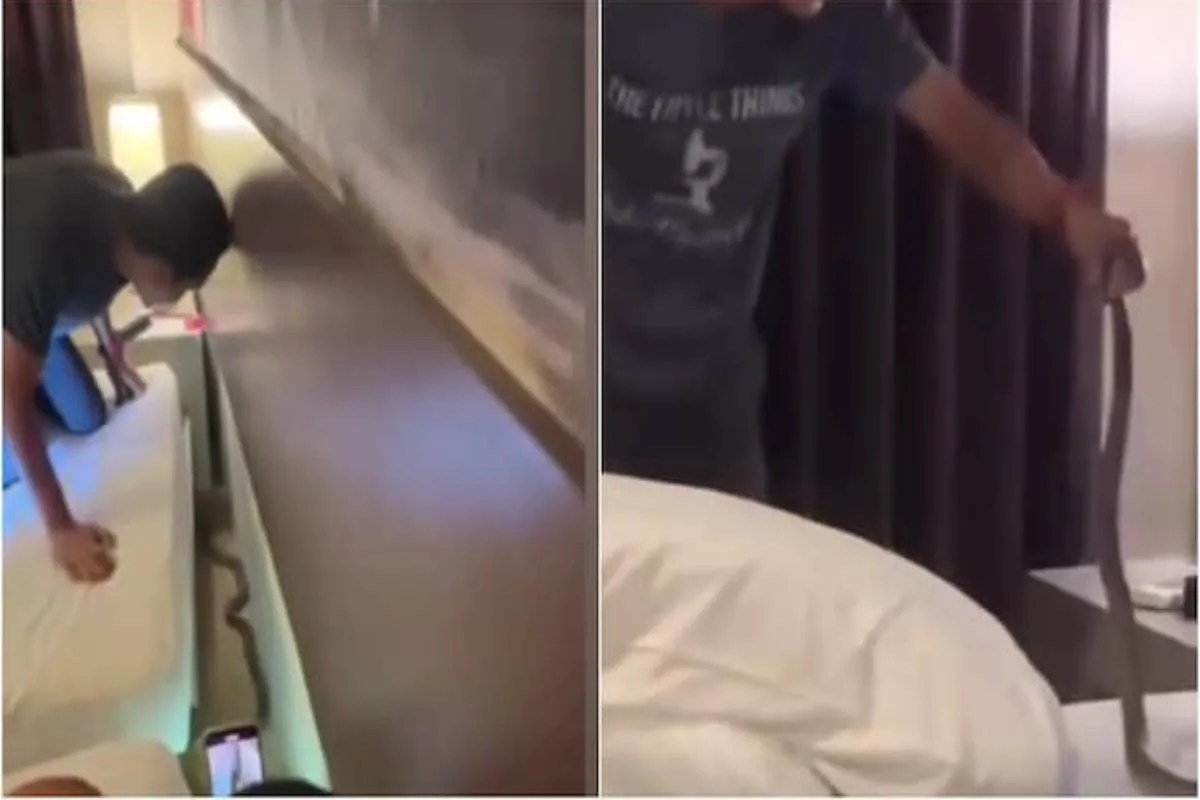
The viral video of a "horror scene" featuring a snake in a hotel bed is not news. It is a failure of logic. Every few months, a graining smartphone clip surfaces showing a serpent coiled near a pillow, followed by a wave of digital hysteria that treats a statistical anomaly like a systemic threat. You are being sold a cheap version of fear.
The headline screams about "bone-chilling scenes" and "life-threatening encounters," but let’s be honest: you have a better chance of being struck by lightning while winning the lottery than finding a cobra in your Marriott suite. The media loves the "snake in the room" trope because it triggers a primal, reptilian response in the human brain. It sells ads. It doesn't sell truth.
The Myth of the Unsafe Sanctuary
We view hotels as sealed bunkers, sterilized cubes of glass and steel designed to keep the "wild" out. This is your first mistake. A hotel is a building. Like any building, it has plumbing, ventilation, and structural gaps.
If a snake ends up in a room, it isn't an act of malice or a breakdown of the hospitality industry. It is biology. In tropical or rural regions, snakes follow heat signatures and prey. They don't want to cuddle with you; they want a dark, quiet place to regulate their temperature.
The industry insider truth? Most "infestations" are actually just one-off incidents caused by guest negligence—leaving balcony doors open in high-altitude or jungle-adjacent resorts—rather than a failure of housekeeping. Yet, we blame the brand. We demand refunds for a force of nature.
Statistics vs. Sensationalism
Let’s look at the numbers. There are roughly 17.5 million hotel rooms in the world. Even if we saw one "snake in a room" video every single day, the probability of it happening to you is mathematically negligible.
- Yearly snakebite deaths in developed infrastructure: Near zero.
- Yearly deaths from falling out of hotel beds: Significantly higher.
- Yearly deaths from poorly maintained hotel heaters (Carbon Monoxide): A genuine threat you ignore while checking under the sheets for a python.
You are worried about the wrong things. You obsess over a cold-blooded intruder because it makes for a great story at dinner, while you ignore the mold in the AC unit or the bacteria on the "sanitized" TV remote. These are the things actually impacting your health, but they don't go viral on Instagram.
The Problem With "Safety" Content
Common travel advice tells you to "check your room" upon arrival. This is theater. Most travelers "check" by glancing under the bed and maybe opening the closet. If a snake is actually in your room, it is in the drywall, the drop-ceiling, or the plumbing.
If you want to be a contrarian traveler, stop looking for snakes and start looking for integrity.
- Check the seals: If you can see light under your room’s entry door, anything can get in. That’s a maintenance failure, not a nature problem.
- Inspect the perimeter: Is the hotel dumping food waste near guest wings? That attracts rodents. Rodents attract snakes.
- Understand the geography: If you book an "eco-resort" in the middle of a rainforest and then scream when a lizard or snake appears on your porch, you aren't a victim; you are an intruder who didn't read the brochure.
Stop Demanding Sterile Environments
The demand for "zero-nature" hotels is actually making travel worse. To satisfy the paranoid traveler, hotels pump rooms full of high-toxicity pesticides and synthetic fragrances to mask the smell of chemicals. You are trading a 0.00001% chance of a snake encounter for a 100% guarantee of breathing in endocrine-disrupting aerosols.
I have spent fifteen years in the high-end travel sector. I’ve seen guests have mental breakdowns over a spider while they blissfully ignore the fact that the hotel’s pool hasn’t had its pH levels checked in three weeks. We have lost the ability to weigh risks.
The Reality of the "Video" Evidence
Look closely at the videos that circulate. Notice the framing. Notice the timing. Many of these "shocker" videos are staged or involve non-venomous species handled by people looking for clout. In the rare instances where they are real, they are usually the result of extreme weather events—floods or heatwaves—that drive wildlife into human structures.
It is a tragedy of the commons: one freak occurrence becomes a "trend" in the eyes of the public.
How to Actually Handle an Encounter
If you find a snake in your room, do not film it for TikTok. Do not try to be a hero with a clothes hanger.
- Back away. Snakes don't have a vendetta against you.
- Close the door. Keep it contained in one room.
- Call the front desk. They have a protocol (or should).
The real "horror" isn't the animal. It's the hysterical reaction of a society so disconnected from the natural world that we view a displaced reptile as a personal affront to our dignity.
Stop clicking on the "bone-chilling" headlines. The snake isn't the predator in this scenario. The person selling you the fear is.
Go back to sleep. The bed is fine.



:max_bytes(150000):strip_icc()/asturian-cider-sidra-asturiana-3083087-FINAL-a366e2fe9b294136901c0eb49a148f1a.jpg)