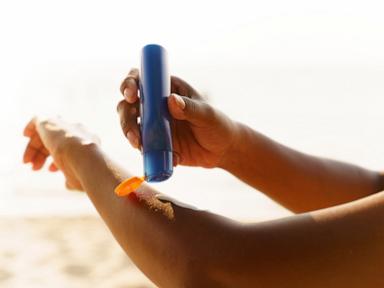
The media is currently tripping over itself to celebrate the FDA green-lighting the first new sunscreen ingredient in decades. Headlines are painting this as a historic victory for public health, a triumph of innovation, and the ultimate shield against skin cancer.
They are wrong. They are pushing a lazy consensus.
The collective cheer greeting this regulatory milestone misses a glaring, uncomfortable truth: a new molecule will not fix a broken consumer habit. For years, I have watched cosmetic chemists spend millions chasing the holy grail of UV filters while ignoring how human beings actually use the product. We do not have a formulation crisis. We have an execution crisis.
Adding another chemical to the back of a bottle does not change the fact that the average person applies less than half of the required amount to achieve the SPF printed on the label. It does not fix the reality that people forget to reapply every two hours. By treating a behavioral problem as a chemical engineering problem, the industry is setting consumers up for a false sense of security.
The Dose Makes the Poison and the Protection
Let us look at the math the beauty industry ignores.
To achieve the rated Sun Protection Factor (SPF) during standardized testing, labs apply sunscreen at a density of 2 milligrams per square centimeter ($2\text{ mg/cm}^2$).
Standard Testing Protocol: 2 mg/cm²
Average Consumer Application: 0.5 to 1.0 mg/cm²
In the real world, consumers apply between 0.5 and 1.0 $\text{mg/cm}^2$. Because the relationship between application density and UV protection is highly non-linear, applying half the amount does not give you half the protection. It can drop your actual SPF 50 down to an effective SPF 15 or lower.
An advanced UV filter cannot magically bend the laws of physics. If you apply a microscopic layer of a brand-new, European-style molecule, the UV photons will still find the gaps.
The Illusion of Total Blockage
Consumers hear "new ingredient" and think "forcefield." Here is what the science actually says about SPF scaling:
- SPF 15 blocks roughly 93% of UVB radiation.
- SPF 30 blocks roughly 97% of UVB radiation.
- SPF 50 blocks roughly 98% of UVB radiation.
The marginal gains between SPF 30 and SPF 50 are tiny. The bottleneck in skin protection is not the efficiency of the filter; it is the uniformity of the film left on the skin. When a new ingredient enters the market, it is usually hyped for its superior broad-spectrum coverage or its elegant texture. But texture is a double-edged sword. When a lotion feels weightless, people tend to apply less of it. They spread it thinner. They chase a "naked skin" feeling, which completely undermines the physical barrier required to scatter and absorb photons.
Why the FDA Kept the Gates Locked For So Long
The public narrative is that the FDA is a stagnant, bureaucratic monster keeping Americans trapped in the dark ages of skincare while Europe enjoys superior UV filters. This narrative is simplistic.
The FDA regulates sunscreens as over-the-counter (OTC) drugs, whereas the European Union regulates them as cosmetics. This distinction is critical. Under the FDA framework, an ingredient must undergo rigorous Material Safety Data Sheet (MSDS) reviews, chronic toxicity testing, and human absorption studies.
FDA Classification: Over-the-Counter (OTC) Drug
EU Classification: Cosmetic Product
When researchers published a landmark study in JAMA showing that active ingredients like avobenzone, oxybenzone, and octocrylene absorb into the human bloodstream far beyond the threshold of systemic concern, the FDA did what any responsible drug regulator would do. They demanded data. They asked manufacturers to prove that these systemic levels did not cause endocrine disruption or reproductive toxicity.
The industry balked because generating that data costs tens of millions of dollars. The decades-long delay was not a failure of governance; it was a refusal by chemical manufacturers to fund the safety profiles required for drug-level clearance.
The Trade-off Nobody Talks About
The new ingredient being heralded as a savior comes with its own baggage. To make these new filters stable and cosmetically elegant, formulators often rely on specific solvent systems and penetration enhancers.
While the new filter itself might be highly stable under sunlight, the overall vehicle can still cause contact dermatitis or ocular irritation in a significant percentage of the population. I have reviewed clinical trial drop-out rates for novel topicals; the moment you optimize a formula purely for UV absorption, you almost always compromise skin barrier compatibility for sensitive skin types.
Dismantling the People Also Ask Mythos
If you look at what people search for, the questions reveal a deep misunderstanding of skin biology.
Is a higher SPF always better?
No. The higher the SPF, the higher the concentration of active chemical filters required. This increases the risk of contact allergies and chemical sensitivity without providing a meaningful increase in photon blockage. An SPF 100 applied poorly is vastly inferior to an SPF 30 applied heavily and evenly.
Do new ingredients prevent skin aging better than old ones?
Aging (photoaging) is primarily driven by UVA rays, which penetrate deeper into the dermis, degrading collagen and elastin. While it is true that newer ingredients often boast superior UVA absorption profiles compared to old-school options like avobenzone, they still degrade if exposed to sweat, friction, and sebum. A new molecule does not stick to your face any better when you sweat through a July afternoon.
Are mineral sunscreens safer than new chemical ones?
Zinc oxide and titanium dioxide are highly stable, but they require a thick, opaque layer to work via scattering and reflection. The moment you micronize zinc oxide to remove the white cast, you alter its optical properties, shifting its protection curve and raising new questions about nanoparticle penetration into skin furrows. There is no free lunch in formulation.
Stop Chasing Ingredients and Fix Your Application
If you want to actually protect your skin, stop waiting for a miracle chemical to arrive on the shelves of your local pharmacy. The tools you have right now are entirely sufficient if you stop using them incorrectly.
1. Weigh Your Dose
Ignore the "two-finger rule." It is imprecise because finger lengths and nozzle diameters vary wildly. You need approximately 1.2 grams of product for the face and neck alone. Buy a cheap jewelry scale, weigh out your usual dollop of sunscreen, and see how far short you are falling. It will shock you.
2. Layer, Don't Slather
You cannot comfortably apply 1.2 grams of sunscreen in one go without looking like a grease slick. Apply half the amount, let the volatile silicones and water evaporate for three minutes to form the first film layer, then apply the second half. This creates a dense, overlapping lattice of UV filters that maximizes the actual SPF on your skin.
3. Treat Sunscreen as a Secondary Defense
The ultimate contrarian truth of the skincare industry is that the best sunscreen is the one you do not have to wear. Sunscreen is an imperfect, temporary shield.
- Physical shade does not degrade after two hours.
- UPF 50+ clothing does not wash off with sweat.
- Behavioral modification avoiding peak UV hours (10 AM to 4 PM) does not require FDA approval.
The industry wants you to believe that a new ingredient means you can spend twelve hours baking on a beach without consequences. They want to sell you the poison and the antidote in the same bottle.
Stop buying the hype. The new molecule won't save you from a bad application, a thin layer, and a culture that views a deep tan as a sign of health rather than a radiation scar. Throw away the news articles, double your current dosage, and put on a hat.