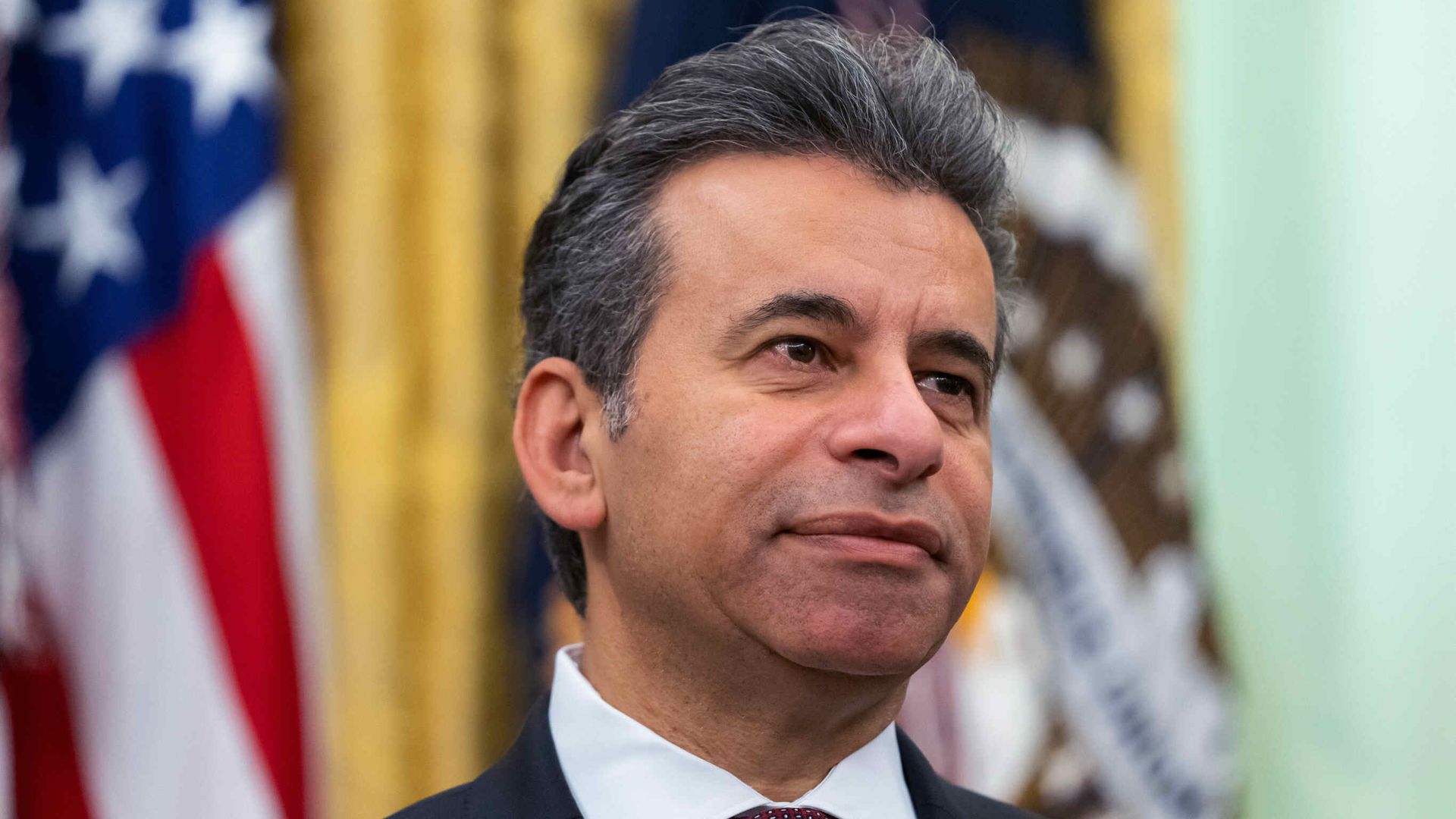
The media is currently hyperventilating over the departure of the FDA Commissioner. They are calling it a "crisis of stability." They are framing it as a "high-profile exit" that signals a sinking ship. They are wrong. In fact, they are so fundamentally wrong that they are missing the most important structural reality of federal bureaucracy: stability is the enemy of innovation.
When a top-tier official leaves the Food and Drug Administration, the ivory-tower pundits wring their hands about "lost institutional knowledge." I’ve spent two decades watching these cycles from the inside and the corridors of power. Institutional knowledge is often just a polite term for "the way we’ve always done it," which in the context of drug approval, usually means "slowly and with maximum red tape."
If you want a stagnant agency that treats 21st-century biotechnology with 19th-century skepticism, by all means, keep the same person in the big chair for a decade. But if you want an agency that actually responds to the velocity of modern medicine, you need a revolving door.
The Stability Trap
The standard narrative suggests that a resignation equals chaos. This premise assumes that the FDA is a fragile glass ornament that shatters if the person at the top changes their business card.
The FDA is a $6 billion-plus machine with over 18,000 employees. The idea that a single political appointee’s departure halts the machinery of drug safety is a fairy tale told by people who have never managed anything larger than a Twitter thread.
The real danger isn't turnover; it’s calcification.
When leadership persists too long, the agency develops "regulatory capture" not from external lobbyists, but from internal inertia. Programs become untouchable. Medium-tier managers build fiefdoms. Radical ideas—like decentralized clinical trials or real-world evidence integration—go to die in a committee that hasn't changed its membership since the Blackberry was a status symbol.
The Three-Year Burnout is a Feature Not a Bug
Most critics point to the "short tenure" of recent commissioners as a sign of failure. I argue it’s a biological necessity for the agency.
The pressure of the FDA is immense. You are squeezed between pharmaceutical giants demanding speed, patient advocacy groups demanding miracles, and a skeptical public demanding absolute zero risk. Absolute zero risk is a mathematical impossibility, yet the Commissioner is expected to deliver it.
High-burnout rates at the top ensure that the person leading the charge actually has the energy to fight the internal status quo. After three years, even the most aggressive reformer becomes part of the furniture. They start prioritizing "internal harmony" over "disruptive efficiency."
We should stop viewing these resignations as "exits" and start viewing them as system refreshes.
Why the Market Loves a Resignation
Look at the stock tickers. If a resignation truly signaled the collapse of the regulatory framework, the biotech sector would be in a freefall. It isn't.
Smart money knows that a change at the top is an opportunity to re-litigate outdated stances. Whether it’s the agency’s position on accelerated approval pathways or the lingering debate over Lab-Developed Tests (LDTs), a new face brings a new set of ears.
The "chaos" the media reports is actually just price discovery for regulatory policy.
The Expertise Fallacy
"But we’re losing a scientist!" the headlines scream.
The FDA Commissioner is not a scientist in the way a bench researcher is. They are a Chief Risk Officer. Their job is to manage the political and public appetite for risk. The actual science happens at the career staff level—the thousands of reviewers who stay through every administration.
When a Commissioner leaves, the science stays. The only thing that changes is the risk tolerance profile. And frankly, the FDA’s risk tolerance has been misaligned with the pace of genomic medicine for years. A departure is the only way to recalibrate that scale.
The Myth of the Independent Agency
The press loves to pretend the FDA is a monastery of pure science, untouched by the grubby hands of politics. When an official leaves during a transition or a political firestorm, it’s framed as "political interference."
Let's get real: The FDA has always been political. It’s an executive agency. It answers to the President. To act shocked when political shifts lead to leadership changes is either naive or dishonest.
The "independence" of the FDA is a useful fiction that allows the agency to take unpopular stands, but at the end of the day, it must reflect the priorities of the voters. If the electorate wants faster access to life-saving drugs even at the cost of higher uncertainty, the leadership should reflect that. If they want a more cautious approach, the leadership changes again.
This isn't a "threat to public health." It’s accountability.
Stop Asking "Who is Next" and Start Asking "What is Next"
People Also Ask: "Who will replace the FDA chief?"
This is the wrong question. It doesn't matter if it’s a career veteran or a wild-card outsider. The system is designed to absorb the individual.
The right question is: "Which legacy hurdles will the interim head be too afraid to defend?"
Interim leaders are often the most effective periods for the agency. Because they aren't worried about their "legacy" or a long-term political career, they often clear the deck of administrative backlog that the permanent Commissioner was too busy "strategizing" about.
The Actionable Truth for Industry Stakeholders
If you are a CEO of a mid-cap biotech or a regulatory consultant, don’t mourn the exit.
- Re-submit the "Impossible" Requests: Policy positions that were hard "nos" under the previous regime are suddenly "maybes." The institutional memory of an agency is surprisingly short during a leadership vacuum.
- Ignore the "Headless Agency" Narrative: The reviewers are still at their desks. Your PDUFA dates are still valid. The machine is humming; only the hood ornament has changed.
- Leverage the Interim Window: Use this time to push for pilot programs. Interim leaders are frequently looking for easy wins to prove they can "keep the lights on" while actually moving the needle.
The Final Reckoning
The "Fourth High-Profile Official Out" headline is designed to make you feel like the walls are closing in. It’s clickbait for the risk-averse.
In reality, we are witnessing the healthy shedding of a skin. The FDA is a massive, slow-moving organism. Without the occasional shock of a high-level resignation, it would eventually stop moving altogether.
We don't need "stability" in a world where cancer is being reprogrammed by mRNA and CRISPR is editing the human germline. We need a leadership structure that is as fluid and adaptable as the science it oversees.
If that means a new Commissioner every two years, so be it. The cost of a few "high-profile resignations" is nothing compared to the cost of a stagnant agency clinging to the safety of 1995.
The king is dead. Long live the machine.