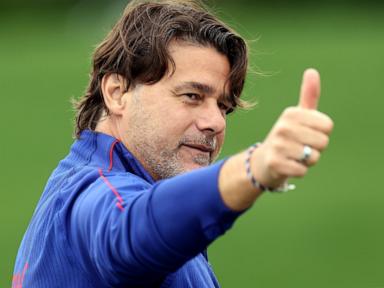
The lazy consensus across the sports media landscape is clear. Mauricio Pochettino signs a contract extension through the 2030 World Cup, the federation breathes a sigh of relief, and everyone assumes American soccer has secured its ultimate savior.
It is a comfortable narrative. It is also entirely wrong.
Locking down a high-profile manager for a five-year horizon past a home World Cup cycle sounds like stability on paper. In practice, it is a masterclass in reactionary panic. I have watched federations and franchises panic-buy long-term certainty because they were terrified of the alternative, only to watch those exact contracts turn into multi-million dollar buyout anchors by the time the midterm reality set in.
Let us dismantle the flawed logic driving this premature coronation.
The World Cup Cycle Trap
International soccer does not operate on club timelines. A five-year contract in the club game allows a manager to build an identity, cycle through youth academies, and weather a down season. On the international stage, a five-year deal spanning two distinct World Cup cycles creates a dangerous vacuum of accountability.
The standard operational window for an international manager is a single four-year cycle. You hire a tactician, they absorb the unique player pool, they execute the tournament, and you evaluate. If it fails, you cleanly pivot. If it succeeds, you negotiate from a position of leverage.
By extending Pochettino through 2030 before a single ball has been kicked in earnest at a home tournament in 2026, US Soccer has stripped itself of its primary management tool: performance-based leverage.
What happens if the team stalls out in the group stage of 2026? Under the current agreement, the federation is either locked into an expensive multi-year rescue mission or staring down a catastrophic buyout fee that drains resources away from grassroots development where the real battle for American soccer supremacy is actually being fought.
The Myth of the Messianic Coach
There is a recurring delusion in North American sports culture that the right manager is a wizard who can magically transmute mediocre raw materials into elite gold.
Pochettino is an exceptional club manager. His work at Tottenham Hotspur and Paris Saint-Germain proved his tactical acumen in environments with deep daily contact hours, sophisticated tactical integration, and elite positional depth.
An international manager gets roughly seventy training days a year.
That is not enough time to implement the intricate, high-intensity tactical pressing structures that defined Pochettino’s best club sides. International football is not about systems; it is about simplicity, emotional resonance, and managing egos within a compressed window. When you hand a club manager a national team job, you are forcing a chess grandmaster to play speed-chess with half the pieces missing.
We saw this movie before with Gregg Berhalter. We saw it with Jurgen Klinsmann. We keep changing the driver while ignoring that the vehicle itself has structural limitations.
The structural limitation of the United States men's national team is not tactical sophistication on the touchline. It is the developmental pipeline that produces players who can thrive under the white-hot intensity of a knockout match in a major tournament without shrinking from the moment.
The Financial and Cultural Cost of Long-Term Security
Long-term contracts breed complacency. This is not an indictment of Pochettino’s character; it is human nature. When a coach knows their livelihood is secured for half a decade regardless of whether they beat Panama or lose to Trinidad and Tobago, the edge dulls.
Furthermore, let us talk about the financial exposure. US Soccer is a non-profit governing body that constantly pleads poverty when funding youth initiatives, referee retention programs, and coaching education licenses in underserved markets. Yet, they can magically unearth eight-figure compensation packages for foreign managers with elite pedigrees.
If you are going to invest that kind of capital into a single individual, the return on investment cannot simply be qualifying out of a softened CONCACAF qualification process. The return must be systemic transformation. But a national team manager has zero control over youth leagues, pay-to-play barriers, or MLS roster rules.
Pochettino cannot fix the American player pool from a desk in Chicago or a luxury apartment in London.
The Alternative Reality
Imagine a scenario where US Soccer kept Pochettino on his initial deal through the summer of 2026.
If the team overperforms, reaches the quarterfinals, and plays with an identity that captures the nation's imagination, you extend him then—with the wind at your back, mutual leverage, and clear proof of concept. If the team implodes, you shake hands, thank him for his service, and hand the keys to an energetic domestic mind who actually understands the bizarre, bruising geography of CONCACAF qualifying.
Instead, the federation chose the illusion of stability. They bought insurance against their own anxiety.
The media will praise this extension as proactive leadership. It is actually reactive cowardice. Real leadership means holding elite professionals accountable to results on the pitch, not preemptively rewarding them for potential they have yet to prove in the unique arena of international football.
The 2030 World Cup cycle is a lifetime away in this sport. Locking in the manager now is a bet that history suggests will end in an expensive, bitter buyout before the decade is even half over.