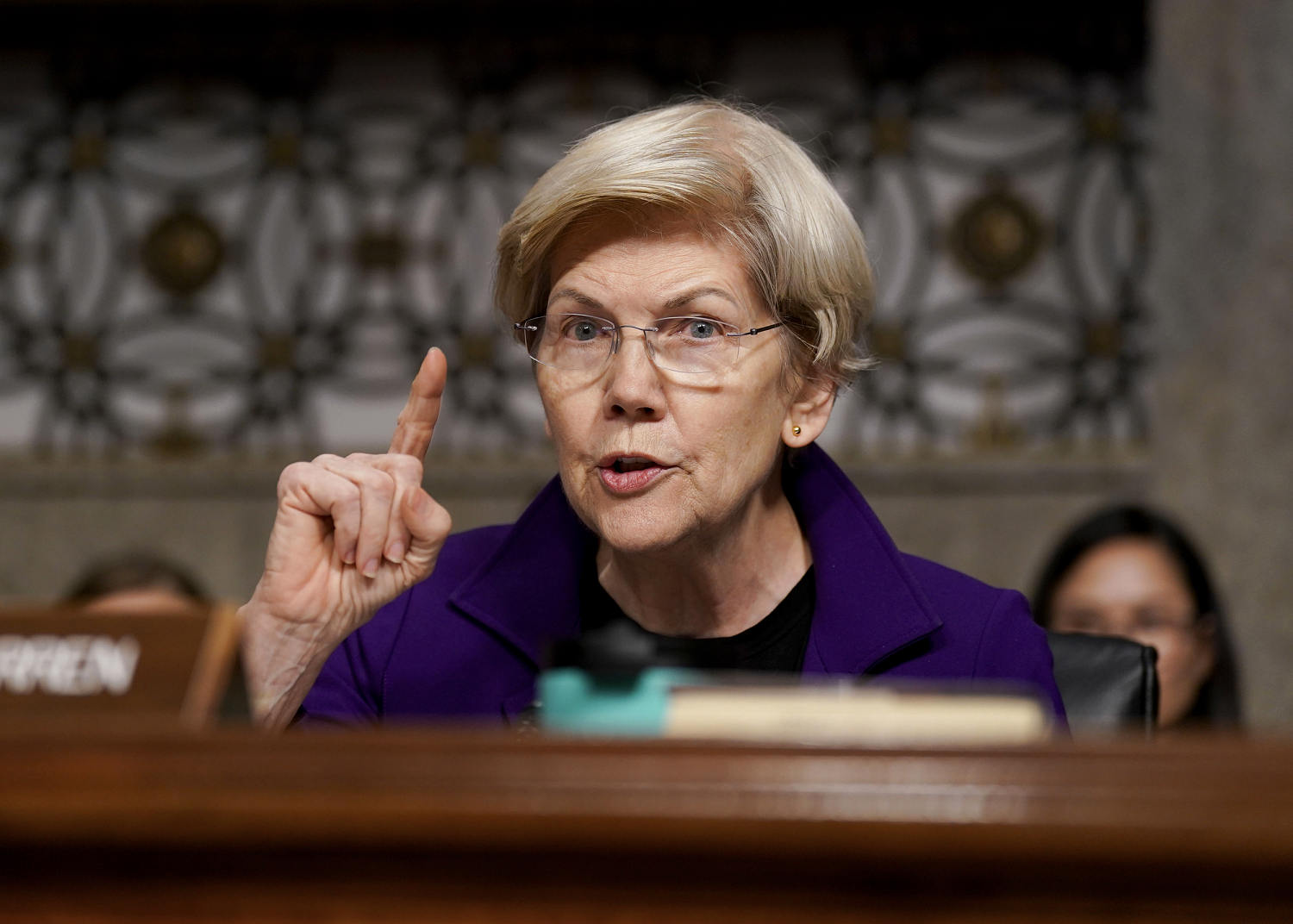
The mid-November 2026 litigation hold notice issued by Aaron Reitz, U.S. Attorney for the Southern District of Texas, to Senator Elizabeth Warren represents an operational test of the separation of powers rather than a routine administrative inquiry. Following President Donald Trump's directive to the Department of Justice to examine Democratic lawmakers over perceived threats to private citizens and associates, Reitz deployed federal prosecutorial correspondence to preemptively chill incoming Senate Banking Committee oversight. Understanding this confrontation requires stripping away partisan rhetoric to analyze the underlying constitutional mechanics, the asymmetric legal leverage available to each branch, and the institutional friction created when executive enforcement collides with legislative immunity.
The Architecture of the Confrontation
According to reporting by Time, CBS News, and The Guardian, the dispute escalated in mid-November 2026 after Democratic lawmakers signaled plans to launch investigations into the administration and private associates of President Trump following the midterm election cycle. President Trump publicly instructed the Department of Justice to investigate Democratic members of Congress for allegedly threatening individuals, a directive subsequently echoed by U.S. Attorney General Todd Blanche.
Acting on this executive posture, U.S. Attorney Aaron Reitz transmitted formal litigation hold letters on official Justice Department letterhead to Senator Elizabeth Warren—positioned to assume the chairmanship of the Senate Banking Committee—as well as other Democratic lawmakers, including Senator Elissa Slotkin, Senator Richard Blumenthal, and Representative Robert Garcia. Reitz's correspondence accused Warren of preparing to turn congressional oversight into a weapon against private citizens and warned of "significant legal consequences" should she fail to preserve all relevant records and communications.
Standard media coverage treats these exchanges as isolated political theater, missing the structural mechanics at play. When a federal prosecutor issues a preservation notice to a sitting senator regarding anticipated committee activity, the action operates across three distinct dimensions:
- Preemptive Discovery Framing: By issuing a litigation hold before a formal grand jury subpoena exists, the prosecutor attempts to freeze internal legislative deliberative records, creating a retroactive tripwire for obstruction or spoliation claims if communications are deleted.
- Jurisdictional Projection: A U.S. Attorney in the Southern District of Texas extending prosecutorial warnings to a Massachusetts senator operating in Washington, D.C. tests venue boundaries and signals centralized coordination from Main Justice rather than organic, district-level criminal intake.
- Asymmetric Reputational and Legal Cost: Even where a prosecution is legally foreclosed, forcing a legislative office to retain outside counsel, segregate staff communications, and litigate privilege imposes immediate operational drag on committee ramp-up.
Constitutional Friction and the Speech or Debate Firewall
The central legal question raised by Reitz's warning is what the Department of Justice can actually execute against a sitting member of Congress conducting oversight. In the American constitutional system, the primary barrier protecting legislative investigations from executive retaliation is Article I, Section 6, Clause 1—the Speech or Debate Clause.
The clause stipulates that for any speech or debate in either House, senators and representatives "shall not be questioned in any other place." Over decades of jurisprudence, the Supreme Court has interpreted this protection broadly to insulate core legislative acts from both civil liability and criminal prosecution by the executive branch. Under established precedent, core legislative acts include:
- Committee Hearings and Subpoenas: Issuing subpoenas, scheduling hearings, and questioning witnesses within the sphere of legitimate legislative activity.
- Investigative Fact-Finding: Gathering information to inform potential legislation, budget appropriations, or regulatory reform.
- Internal Legislative Deliberations: Communications among members and committee aides directly tied to drafting bills, preparing oversight reports, or structuring committee inquiries.
Because the Senate Banking Committee holds broad statutory jurisdiction over financial institutions, securities markets, banking regulation, and consumer protection, inquiries into the financial dealings of presidential associates or administration policies routinely fall within the outer perimeter of legitimate legislative inquiry. If Senator Warren's investigative actions remain tethered to formal committee business, the Speech or Debate Clause operates as an absolute jurisdictional bar against Justice Department prosecution. Courts will generally dismiss executive attempts to subpoena legislative records or indict members based on legislative acts before a trial even commences.
Where Legislative Immunity Erodes
Despite the strength of the Speech or Debate Clause, legislative immunity is not an impenetrable blanket. The friction in the Warren-Reitz standoff sits precisely along the gray zones where Supreme Court doctrine narrows Article I protections. Prosecutors seeking to bypass legislative immunity historically target three specific vulnerabilities:
First, informal and political communications receive no constitutional shield. In United States v. Brewster and Hutchinson v. Proxmire, the Supreme Court drew a sharp line between protected legislative acts and unprotected political activities. Press releases, social media posts, campaign fundraising appeals, town hall speeches, and informal threats delivered outside the formal committee process are not legislative acts. When a lawmaker announces an investigation on cable news or social media using aggressive rhetoric, those public statements fall outside Speech or Debate protection—though they remain heavily protected by the First Amendment unless they cross the exceptionally high threshold of true threats, incitement, or extortion.
Second, pre-investigative coordination with outside parties creates evidentiary exposure. While staffers act as alter egos of the member for legislative purposes (Gravel v. United States), communications between a senator's office and external advocacy groups, political consultants, or private litigants are not automatically privileged. If the Justice Department alleges that a lawmaker conspired with private actors to harass individuals outside the bounds of legitimate legislative fact-finding, prosecutors may attempt to subpoena the third-party communications rather than the senator's internal files.
Third, procedural obstruction and record destruction occupy a contested legal boundary. A litigation hold letter from a U.S. Attorney does not carry the self-executing legal force of a court order or a grand jury subpoena; failing to comply with a unilateral executive letter is not, by itself, a crime. However, under federal obstruction statutes such as 18 U.S.C. § 1519, knowingly destroying documents with the intent to impede a federal investigation can trigger criminal liability if the underlying conduct is not shielded by Speech or Debate privilege. By sending a formal notice early, the prosecutor establishes actual knowledge on the record, eliminating an ignorance defense if non-privileged records later disappear.
Competing Institutional Perspectives and Deterrence Mechanisms
The clash between Reitz and Democratic lawmakers highlights two fundamentally incompatible theories of institutional abuse currently operating in Washington.
From the perspective of the Department of Justice and White House allies—including public backing from administration officials such as Stephen Miller—congressional oversight has morphed into punitive lawfare aimed at private citizens whose only nexus to government is their personal or political association with President Trump. Proponents of the DOJ's intervention argue that legislative committees lack general law enforcement authority and cannot use public hearings and compulsory subpoenas solely to expose, bankrupt, or politically damage private individuals without a bona fide legislative purpose (Watkins v. United States). Under this view, the executive branch has an affirmative duty to protect citizens from abusive congressional harassment and to investigate whether lawmakers are crossing from oversight into unlawful intimidation
Executive Deterrence and Congressional Oversight When Prosecutors Warn Lawmakers
news
When a sitting U.S. Attorney formally warns a United States Senator against investigating associates of the President, the conflict is not a routine political dispute. It is a structural collision between Article I oversight authority and Article II prosecutorial discretion, operating under the shadow of the Speech or Debate Clause. Most surface-level news coverage treats these exchanges as partisan theater. In practice, they represent a calculated deployment of institutional friction designed to raise the political, legal, and operational costs of legislative inquiry before a single subpoena is enforced.
Understanding the mechanics of this confrontation requires separating public rhetoric from constitutional leverage. A U.S. Attorney serves at the pleasure of the President and acts as a localized node of the Department of Justice. A Senator, particularly one sitting on committees with jurisdiction over banking, finance, or the judiciary, possesses broad investigative powers derived from the implied authority to legislate. When the former issues a warning to the latter regarding associates of the Chief Executive, both actors are testing the boundaries of separation-of-powers doctrine in real time.
The Architecture of Institutional Friction
To analyze why a prosecutor would intervene in a legislative inquiry—and why a lawmaker would press forward despite the warning—one must map the competing incentives and constraints governing both offices. Neither actor operates in a vacuum; each is bound by distinct statutory frameworks, reputational risks, and enforcement bottlenecks.
The Three Pillars of Executive Pushback
A formal warning from a federal prosecutor to a member of Congress generally rests on three operational arguments, regardless of the specific wording used in public correspondence:
- Interference with Active Investigations: The Department of Justice routinely asserts that parallel congressional inquiries compromise ongoing criminal or civil probes. The mechanism is straightforward: public congressional questioning can tip off targets, taint witness recollections, or force premature disclosures of investigative techniques. By framing a Senator's inquiry as a threat to prosecutorial integrity, the U.S. Attorney attempts to seize the institutional high ground.
- Jurisdictional Overreach and Legislative Nexus: Under Supreme Court precedent, notably Watkins v. United States and Trump v. Mazars USA, LLP, congressional investigations must serve a valid legislative purpose. They cannot function as ad hoc law enforcement trials. A prosecutor's warning often signals that the executive branch views the Senator's actions as an unconstitutional assumption of judicial or prosecutorial functions—specifically, targeting private citizens (associates of the President) rather than evaluating statutory gaps.
- Chilling Effects and Third-Party Compliance: While a U.S. Attorney cannot easily prosecute a Senator for investigative acts, the prosecutor holds immense leverage over the third parties from whom the Senator seeks information. Banks, compliance officers, and corporate counsel respond to perceived DOJ hostility by slowing down document production, demanding formal subpoenas instead of voluntary compliance, and invoking narrow interpretations of regulatory safe harbors.
The Legislative Counter-Matrix
Senator Elizabeth Warren's investigative methodology typically relies on aggressive document requests, public letters demanding regulatory accountability, and the exposure of financial or ethical conflicts of interest. Against executive pushback, the legislative branch relies on its own structural defenses:
- The Speech or Debate Clause (Article I, Section 6): This constitutional provision immunizes members of Congress from executive branch questioning or prosecution for acts within the "legitimate legislative sphere." Historically, courts have construed investigative committee work as falling squarely inside this sphere, neutralizing direct criminal threats against lawmakers themselves.
- The Power of Public Record: Unlike federal prosecutors, who are bound by Grand Jury secrecy rules (Federal Rule of Criminal Procedure 6(e)) and DOJ media guidelines, Senators can publish letters, enter findings into the Congressional Record, and hold televised hearings. The objective is frequently transparency and public pressure rather than criminal conviction.
- Regulatory Leverage: A Senator on a key oversight committee does not need the DOJ to discipline corporate actors or financial institutions. Lawmakers control confirmation votes, statutory authorizations, and agency budgets, creating a parallel channel of pressure on the institutions connected to presidential associates.
The Cost Function of Pre-Emptive Warnings
In institutional strategy, an explicit warning from a U.S. Attorney functions as a cost-shifting mechanism. It alters the expected value of the investigation for every stakeholder involved.
First, it imposes an evidentiary tax on the Senator's staff. Every subsequent information request must be meticulously drafted to demonstrate a direct nexus to pending or potential legislation. If a letter reads like a criminal referral or an accusation of statutory guilt against private individuals, the executive branch gains ammunition to challenge the inquiry in federal court should it escalate to a subpoena enforcement battle.
Second, it introduces asymmetric timeline risk. Congressional terms are fixed—two years for the House, six for the Senate, with committee leadership shifting every two-year cycle. Federal litigation over executive privilege or investigative jurisdiction routinely takes 18 to 36 months to reach appellate resolution. By signaling early resistance, the U.S. Attorney projects that any compulsory process will be bogged down in procedural warfare until the political calendar resets.
Third, it creates a reputational signaling effect for external witnesses. When a private citizen or corporate entity receives a document request from a Senator alongside a public warning from a U.S. Attorney characterizing that inquiry as improper or obstructive, the recipient faces a classic principal-agent dilemma. Cooperating with Congress risks alienating the Department of Justice—the entity with actual indictment power. Refusing Congress risks public shaming and a potential contempt citation, which historically carries far lower immediate personal risk than a federal felony investigation.
Separating Known Facts from Strategic Hypotheses
Rigorous analysis requires distinguishing between established legal mechanics and inferred political motivations, especially when evaluating high-profile clashes involving associates of Donald Trump and senior Democratic lawmakers.
What is structurally established:
- U.S. Attorneys operate under the supervision of the Attorney General and the broader hierarchy of the Department of Justice, which maintains longstanding institutional policies against congressional interference in active criminal matters.
- Individual Senators lacking committee chairmanship authority cannot unilaterally issue subpoenas; they rely on voluntary disclosures, Freedom of Information Act mechanisms, agency inspectors general, or the cooperation of a committee chair to compel testimony.
- Courts apply a four-factor balancing test (established in Mazars) when evaluating congressional subpoenas touching upon the President's personal or business affairs, requiring Congress to show that other sources cannot reasonably provide the information and that the burden on the executive branch is not undue.
What remains an analytical hypothesis:
- Whether a specific warning from a U.S. Attorney reflects genuine protection of an active, sensitive criminal docket or serves primarily as a political shield for presidential allies cannot be verified without access to internal DOJ case files.
- The exact degree to which private financial institutions or corporate associates alter their compliance posture in response to a prosecutor's public statement versus confidential legal advice remains opaque, though standard corporate risk management strongly favors deferring to the agency with prosecutorial authority.
The Enforcement Bottleneck in Congressional Oversight
A critical flaw in standard political commentary is the assumption that a Senator's investigative demand carries automatic legal force. In reality, congressional oversight suffers from a severe enforcement bottleneck when the executive branch refuses to cooperate.
If a target ignores a Senator's inquiry, the legislative branch has three theoretical remedies, each carrying steep operational limitations:
- Criminal Contempt of Congress (2 U.S.C. § 192): Congress votes to refer the non-compliant party to the U.S. Attorney for the District of Columbia—or another relevant federal district—for criminal prosecution. The fatal flaw in this mechanism is circularity: the U.S. Attorney is part of the very executive branch opposing the investigation. Under longstanding Office of Legal Counsel (OLC) opinions, the DOJ maintains that it retains prosecutorial discretion and is not compelled to present a congressional contempt citation to a grand jury.
- Civil Enforcement via Federal Courts: A Senate committee can authorize a civil lawsuit seeking a judicial order compelling compliance. While this bypasses DOJ prosecutorial discretion, it runs directly into the timeline trap. Motions to dismiss, standing challenges, and interlocutory appeals routinely consume years, rendering the information obsolete for immediate legislative purposes.
- Inherent Contempt: Historically, Congress possessed the power to direct its Sergeant at Arms to detain a contumacious witness and try them at the bar of the Senate. This mechanism has not been used since the 1930s. Deploying it in the modern era would trigger immediate habeas corpus litigation, severe institutional backlash, and logistical chaos.
Because all three enforcement pathways are heavily constrained, the true currency of a Senate investigation is not legal compulsion—it is asymmetric publicity and regulatory pressure. A U.S. Attorney's warning attempts to neutralize that currency by delegitimizing the inquiry in the eyes of the public and the legal establishment before the narrative solidifies.
Operational Limitations of Both Strategies
Neither the prosecutor's warning nor the Senator's investigative push is a silver bullet. Both carry distinct failure modes that practitioners must account for when modeling outcomes.
For the U.S. Attorney, the primary risk is overreach and the Streisand Effect. Issuing a formal warning to a sitting Senator is an extraordinary step that immediately elevates a routine oversight letter into national front-page news. If the prosecutor's warning appears partisan or legally tenuous, it validates the Senator's underlying premise—namely, that associates of the executive branch are receiving special protection from the justice system. Furthermore, if the DOJ subsequently fails to bring charges or demonstrate a legitimate active investigation, the warning looks like pure political interference, eroding institutional credibility with federal judges who will preside over future DOJ cases.
For the Senator, the primary risk is doctrinal dilution. When lawmakers pursue high-profile targets adjacent to a President without securing formal committee backing or maintaining strict discipline around legislative purpose, they invite adverse judicial rulings. A single poorly framed subpoena fight that reaches the appellate level can produce precedent that narrows congressional oversight powers for decades, harming future lawmakers across the political spectrum.
The Strategic Playbook for Navigating Executive-Legislative Deadlocks
When executive deterrence collides with legislative oversight, outcomes are determined by procedural discipline rather than rhetorical volume. To prevail in this environment, an oversight team must execute a precise sequence of operational adjustments:
- Anchor Every Inquiry in Explicit Statutory Text: Eliminate all language resembling a criminal accusation from public correspondence. Frame every document request around specific, pending bills, regulatory gaps under the Bank Secrecy Act, or oversight of federal agency enforcement patterns. This insulates the inquiry against Mazars challenges and strips the U.S. Attorney of the "rogue prosecution" argument.
- Shift Targets from Private Individuals to Regulated Entities: Instead of demanding records directly from presidential associates—who have maximum incentive to litigate and invoke Fifth Amendment or executive privilege claims—direct inquiries to the federal regulators, inspectors general, and publicly traded institutions overseeing those transactions. Regulated entities operate under strict statutory reporting duties and cannot easily hide behind executive branch political posturing.
- Establish a Formal Protocol for Parallel Proceedings: Proactively offer the Department of Justice a structured deconfliction agreement. By formally inviting the U.S. Attorney to identify specific witnesses or documents that would compromise an active criminal probe—under a non-disclosure framework—the Senator forces the prosecutor into a binary choice: either prove a real investigation exists or admit the warning was purely rhetorical.
- Convert Oversight Findings into Immediate Legislative Riders: Do not wait for multi-year court battles to enforce subpoenas. Use the evidentiary record already assembled through public filings and whistleblower disclosures to attach targeted transparency mandates and Inspector General reporting requirements to must-pass appropriations or authorization bills.
The collision between a U.S. Attorney and a Senator over presidential associates is ultimately a test of institutional endurance. Prosecutors hold the monopoly on criminal enforcement, giving them decisive short-term leverage over third-party compliance. Lawmakers hold the monopoly on statutory architecture and public framing. When executive officials deploy pre-emptive warnings to deter oversight, the winning counter-strategy is never to match the rhetoric—it is to methodically convert political friction into permanent statutory constraints.