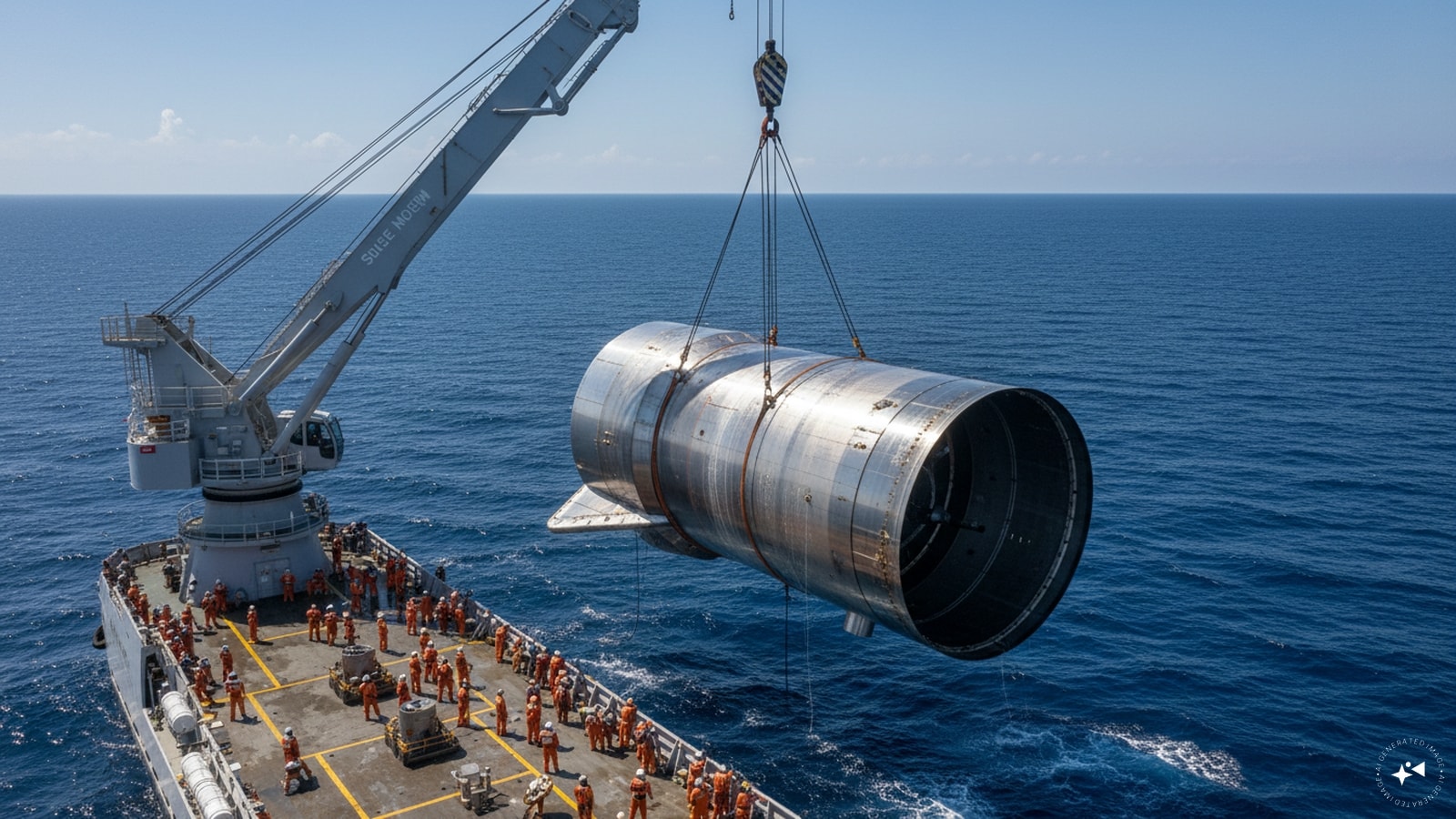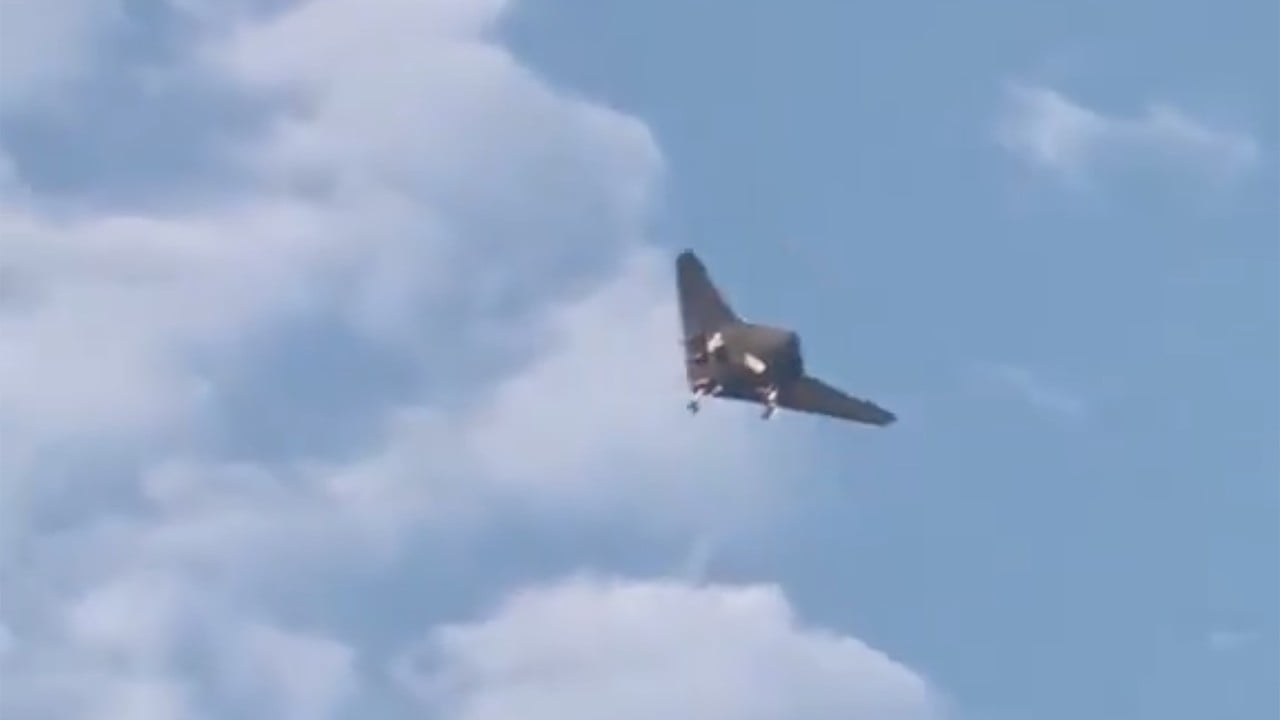
The defense punditry is having another collective meltdown over Beijing's hardware. Standard commentary treats the pairing of the GJ-21 stealth combat drone and the Type 076 amphibious assault ship Sichuan as a routine evolution of naval power. Mainstream observers look at a 40,000-ton hull, an electromagnetic catapult, and a flying-wing unmanned aircraft, then lazily shout that the United States Navy has lost its monopoly on capital ship innovation.
They are missing the entire point.
Focusing on whether the Sichuan is a "light aircraft carrier" or an oversized landing helicopter dock misses the structural revolution happening beneath the waterline. Analysts love to debate tonnage, deck space, and catapult lengths while completely ignoring the brutal economic asymmetry driving this architecture. The real story is not that China built a drone-carrying amphib. The real story is that they have abandoned the multi-billion-dollar manned carrier paradigm entirely, while Western defense contractors keep building expensive legacy targets for hypersonic attrition.
The Flawed Logic Of The Manned Air Wing
For decades, the lazy consensus in naval strategy dictated that power projection required a nuclear-powered supercarrier crammed with seventy-odd multirole fighters and thousands of sailors. This philosophy assumes that human pilots are irreplaceable assets worth sinking half a national defense budget into protecting, housing, and recovering.
Imagine a scenario where a conflict breaks out in the Western Pacific. A traditional carrier air wing relies on continuous sorties of manned fighters like the F-35C or J-15 variants, requiring massive logistics trains, complex maintenance cycles, and high-risk recovery operations.
The Type 076 and its GJ-21 ecosystem shreds this assumption. By decoupling tactical air power from human life support systems, you eliminate the single heaviest constraint in naval architecture: the pilot.
- Zero Crew Footprint: A flying-wing stealth UCAV like the GJ-21 does not need life support, ejection seats, or extended rest cycles.
- Thermal And Radar Reduction: Without a cockpit canopy and vertical control surfaces, the radar cross-section drops exponentially compared to manned fighters.
- Expendable Economics: A 15-ton subsonic stealth drone built for catapult launch costs a fraction of a fifth-generation manned fighter.
When you scale this concept, the math changes completely. A single Type 076 carrying a mixed complement of rotary assets and low-observable strike drones projects deep-strike and reconnaissance capability without risking a single aviator's life. Western commentators calling this vessel a "compromise design" or a "light carrier" do not understand that compromise is precisely the objective. It is cheap enough to risk in contested littoral zones where a hundred-billion-dollar supercarrier would never dare tread.
Dismantling The Catapult Obsession
Most coverage of the Sichuan fixates on its electromagnetic aircraft launch system (EMALS). Pundits marvel at how an amphibious assault ship managed to squeeze a carrier-grade catapult onto its deck. They treat EMALS as the holy grail of naval engineering, as if having a linear induction motor automatically guarantees tactical dominance.
That perspective is dangerously superficial. Catapults are merely mechanical shovels. What matters is the weight and aerodynamic efficiency of what gets thrown off the end of the deck.
The GJ-21 is optimized for this exact interface. Unlike traditional naval fighters that require massive wing structures to handle high-alpha carrier landings, flying-wing platforms leverage distributed lift and internal weapon bays. The electromagnetic catapult on the Sichuan provides precise velocity control, allowing heavy, fuel-laden stealth drones to launch rapidly without burning internal fuel reserves on takeoff.
[Traditional Carrier Paradigm] -> Heavy Manned Jets -> High Cost/Risk -> Vulnerable Hubs
[Type 076 / GJ-21 Matrix]     -> Subsonic UCAVs    -> Low Cost/Risk  -> Distributed Swarms
This structural shift renders traditional fleet defense calculations obsolete. You cannot deter a distributed network of low-cost, low-observable strike platforms using traditional blue-water attrition models designed for Cold War dogfights.
The Real Vulnerability Nobody Discusses
To provide a genuinely objective view, we must admit the glaring weaknesses of this approach. Contrarian analysis means tearing down your own arguments just as fast as the mainstream ones.
The Achilles' heel of the Type 076 and drone-centric naval aviation is not mechanical reliability; it is command-and-control dependency. Manned fighters have human brains inside the cockpit capable of autonomous tactical execution when electronic jamming severs satellite links. A subsonic flying-wing strike drone relying on datalinks in a heavily contested electromagnetic spectrum faces catastrophic mission failure if those links go dark.
While onboard artificial intelligence is advancing rapidly, autonomous lethal engagement in congested littoral environments remains an engineering nightmare full of ethical and operational landmines. If the datalink between the Sichuan and its air wing is jammed or spoofed, those expensive stealth assets become flying paperweights.
Yet, Beijing appears willing to accept this risk because the alternative—continuing to build vulnerable, multi-billion-dollar floating fortresses—is a dead end.
Stop viewing the Sichuan through the lens of twentieth-century naval categorization. It is not a light carrier trying to be a heavy carrier. It is an entirely new class of asymmetric node designed to make traditional carrier battle groups obsolete through sheer economic and tactical attrition.
The future of naval warfare belongs to whoever can field disposable mass that behaves like precision stealth. The sea trials off Shanghai are not a demonstration of future potential. They are a post-mortem on the way the West builds navies.