The media is collective losing its mind over the Pentagon's rolling declassification of Unidentified Anomalous Phenomena (UAP) files. From legacy newsrooms to late-night talk shows, the narrative is painfully uniform: the government is finally pulling back the curtain on alien visitors, and we are on the precipice of cosmic disclosure.
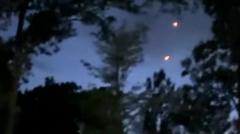
They are pointing to the latest batch of documents, FBI digital renderings, and witness statements as definitive proof that something truly otherworldly is buzzing our airspace. Law enforcement special agents are describing "grapes being expelled from a basketball" over the northeastern United States. iPhone footage captures "plasma-like spheres" hovering above ponds.
It makes for incredible ratings. It is also completely misinterpreting what is actually happening.
The lazy consensus treats these declassified drops as an admission of extraterrestrial contact. In reality, this data dump is a masterclass in bureaucratic misdirection, sensor artifacts, and the weaponization of public paranoia. The government isn't hiding aliens; they are hiding the profound limitations of their own surveillance technology and the emergence of hyper-advanced, terrestrial electronic warfare.
The Mirage of the Flawless Eyewitness
The cornerstone of the latest hysteria is the shift from grainy military sensor data to civilian and law enforcement eyewitness testimony. Pundits claim that because five federal agents saw orange and red orb-like lights in October 2023, the event is unassailable.
I have spent years analyzing how organizations process intelligence data under high-stress conditions. The hardest truth to accept in counter-reconnaissance is that human perception is an incredibly leaky bucket. When a law enforcement officer or a pilot sees an object "accelerate instantly with perfect, smooth coordination," they are not reading a telemetry instrument. They are applying a cognitive overlay to a visual anomaly.
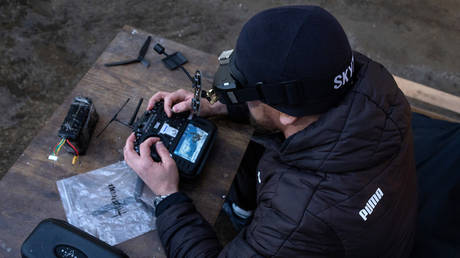
Imagine a scenario where an advanced drone deployment system utilizes a swarm of lightweight, carbon-composite quadcopters equipped with high-intensity LED arrays. When these drones change their positioning relative to a viewer on the ground, the lack of depth perception at night creates a powerful optical illusion. The brain interprets a light turning off and another turning on miles away not as two separate events, but as a single object moving at impossible, non-ballistic speeds.
The Pentagon explicitly stated that the materials archived are "unresolved cases." That does not mean "unexplainable by the laws of physics." It means the chain of custody for the data is so poor, and the corroborating telemetry so sparse, that it is impossible to form a definitive conclusion. The All-domain Anomaly Resolution Office (AARO) isn't validating alien life; they are cleaning out their junk drawer.
The Sensor Trap Nobody Talks About
Let’s look at the hard physics of the military footage from earlier tranches, like the objects captured over the Persian Gulf or near submarines. The public sees a geometric shape darting across an infrared screen and assumes it's a physical craft breaking the sound barrier without a sonic boom.
They are ignoring the mechanics of modern optical systems.
A significant percentage of these "orbs" and "flying shapes" are the direct result of focal plane array artifacts, glare, and aerodynamic heating on the protective housing of the cameras themselves. When a multi-million dollar targeting pod on a fighter jet tracks a cold object against a hot background, a sharp turn by the jet can cause the tracking software to loop. The resulting video looks like a craft pulling 100 Gs.
Furthermore, we are living through an explosion of atmospheric drone tech and electronic spoofing. If a foreign adversary wants to map American radar vulnerabilities, they do not send a stealth bomber. They send low-observable, radar-reflective balloons or localized plasma-generation fields created by high-intensity lasers. These fields can literally ionize the air, creating a glowing "orb" that appears on both thermal cameras and radar screens, moving at speeds that would liquefy a human pilot.
By dumping these files onto a public website and letting people "draw their own conclusions," the government shifts the burden of proof. It converts a glaring national security vulnerability—our inability to quickly identify sophisticated, terrestrial electronic spoofing—into a fun, sci-fi mystery for the masses.
The Cost of the Distraction
There is a distinct downside to this sudden wave of absolute transparency. By feeding the public's insatiable appetite for UFO lore, the conversation is successfully steered away from actionable defense realities.
While the internet argues over whether Apollo astronauts saw "fireflies" or frozen condensation, peer adversaries are rapidly iterating on dark-sky technologies. Near-space reconnaissance platforms, stealth loitering munitions, and decentralized drone swarms are actively redefining the modern battlespace.
Every hour spent dissecting a grainy rendering of a "potato-shaped" object over Colorado Springs is an hour not spent discussing the massive proliferation of sub-orbital surveillance assets operating just outside our traditional defense networks. The rolling disclosure isn't an awakening. It is a highly effective chaff flare designed to blind public scrutiny.
Stop looking at the sky for signs of cosmic intelligence. The real threats, and the real technologies driving these anomalies, were built right here on Earth, stamped with standard industrial serial numbers, and deployed by adversaries who are thrilled that you think they are Martians.