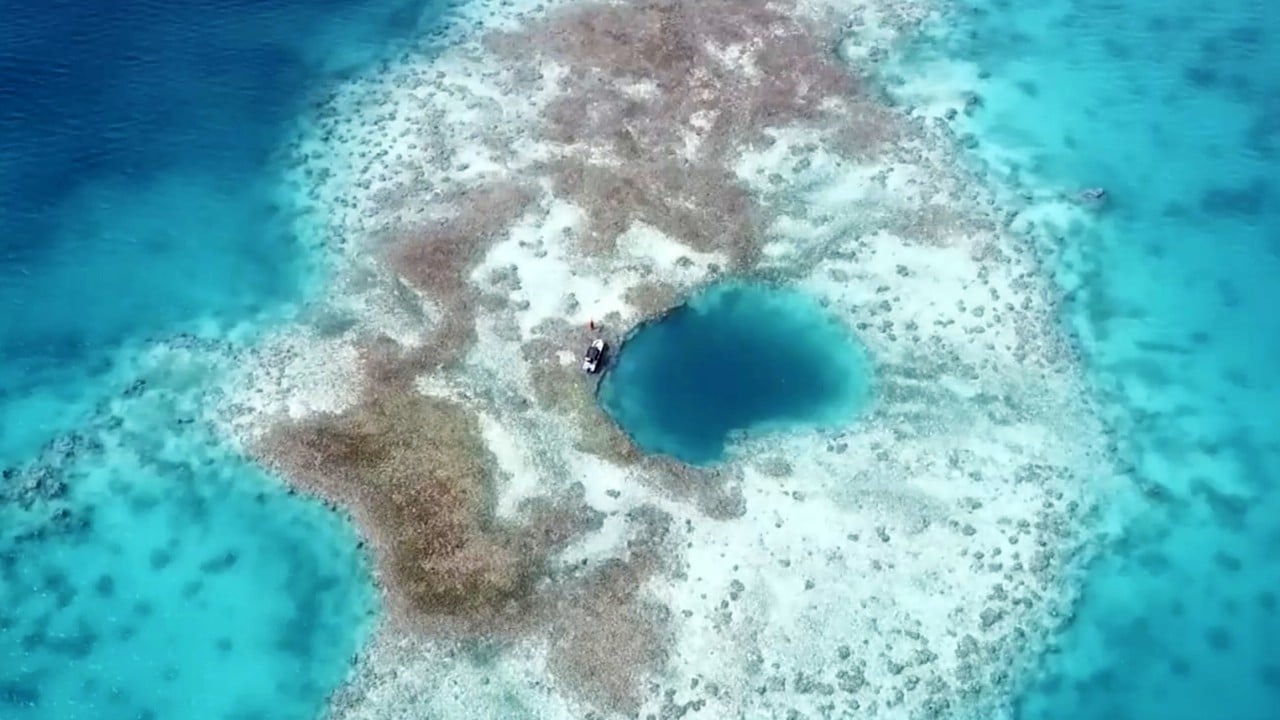
Science and raw geopolitics just collided again in the most contested waters on earth. China's Ministry of Ecology and Environment announced a massive finding right in the middle of a global flashpoint. They found a globally rare, 3,200-year-old coral reef blue hole inside the central lagoon of Scarborough Shoal.
If you're tracking the bitter territorial standoff between Beijing and Manila, you know this isn't just an innocent nature documentary moment. Scarborough Shoal sits roughly 120 nautical miles off the coast of Luzon, well within the Philippines' exclusive economic zone. Yet China has held de facto control over it since a tense maritime standoff in 2012.
By dropping a detailed scientific report on this rare underwater sinkhole, Beijing isn't just mapping the ocean floor. They're dropping a flag.
The Science Inside the Hole
Let's look at the actual data first because the physical structure is genuinely fascinating. According to the data released by the South China Institute of Environmental Sciences and Guangxi University, this isn't your typical deep-ocean sinkhole. It's a specific, coral reef growth structure-type marine blue hole. That's a mouthful, but it basically means the hole developed right inside a high-density patch reef area within the shoal's central lagoon.
The dimensions paint a vivid picture:
- Surface Opening: 1,491.7 square meters
- Maximum Diameter: 56.3 meters
- Maximum Depth: 16.6 meters
- Shape: A steep, funnel-shaped internal structure
Scientists used radiocarbon dating on sediment cores to trace the origins back at least 3,200 years. The field surveys logged 165 species of hard corals and 184 distinct fish species thriving in and around the rim. Divers even filmed green sea turtles navigating the funnel.
For geologists, this thing is a time capsule. Because it's isolated, the layers of sediment at the bottom capture historical sea-level fluctuations and regional climate shifts stretching back through the Holocene. It’s an pristine, undisturbed climate archive.
Why Environmental Science Is the New Sovereignty Weapon
Here's what most casual news readers miss. In the South China Sea, scientific data is a direct tool for legal and political positioning.
By conducting extensive scuba operations, deploying remotely operated vehicles, running drone photogrammetry, and gathering environmental DNA samples, Beijing is building an administrative track record. They want to show the world that they are the ones managing, researching, and protecting these waters.
This scientific offensive didn't happen in a vacuum. Just months prior, China announced a strict new nature reserve covering about 8,700 acres along the northeastern side of Scarborough Shoal. The reserve splits the area into a restricted "core zone" for the fringing reef and an "experimental zone" extending into the surrounding waters.
If a state successfully establishes environmental protection laws and conducts major state-backed scientific expeditions in a disputed territory, it builds a quiet narrative of governance. It’s a soft-power strategy to cement control without firing a single shot.
The Irony of the Conservation Angle
You can't talk about a new nature reserve or a protected blue hole at Scarborough Shoal without talking about the extensive physical damage the reef has already sustained.
Independent satellite tracking from organizations like the Asia Maritime Transparency Initiative previously revealed massive scarring across Scarborough’s shallow reefs. The culprit wasn't climate change alone. It was years of destructive giant clam harvesting by Chinese fishing fleets.
Fishermen historically dragged heavy brass propellers in wide semicircles around their anchor chains to chop up the reef surface and dig out buried clams. That brutal harvesting method destroyed roughly 1,900 acres of coral at Scarborough Shoal—more than almost any other reef in the region.
So when a state environmental agency suddenly publishes glossy reports about protecting a rare 3,200-year-old blue hole in the exact same lagoon, it raises serious eyebrows among regional neighbors. It feels less like a sudden passion for marine biology and more like a calculated pivot to restrict access to the shoal under the banner of green conservation.
What Happens Next on the Water
If you want to understand where this situation is actually heading, ignore the scientific press releases and watch the coast guard deployments.
The immediate result of these environmental designations and new discoveries will likely be tighter restrictions on who can enter the lagoon. Under China's nature reserve regulations, human presence in the core zones is outright banned without advance municipal approval from Chinese authorities.
Expect to see Chinese Coast Guard vessels using the protection of the newly discovered blue hole ecosystem as a legal justification to block Philippine fishing boats from entering the mouth of the lagoon. What used to be a standard geopolitical blockade will now be framed as an eco-friendly enforcement zone.
For the international community and maritime strategists, the playbook is clear. The fight for the South China Sea isn't just about building artificial military bases anymore. The new frontline is wrapped in the language of marine science, biodiversity tracking, and environmental protection.