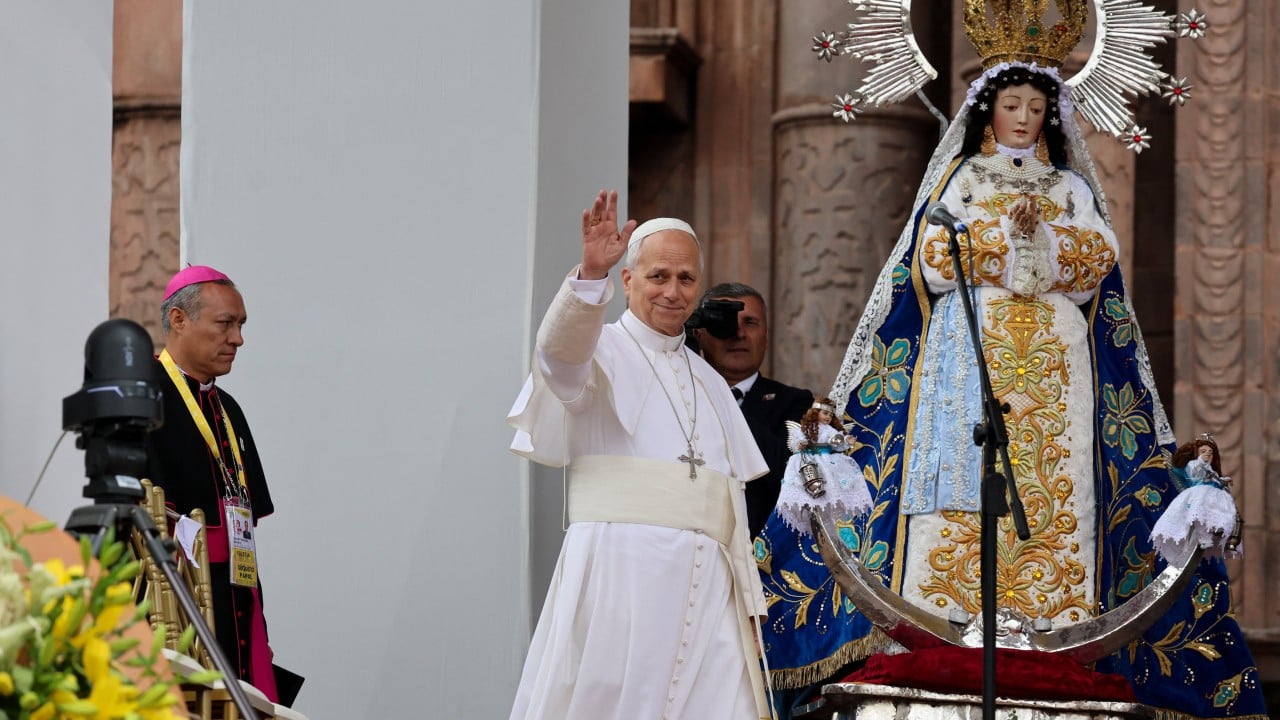
Traveling to extreme altitudes after a major pulmonary operation isn't just a bold itinerary choice. It's a physiological gamble that doctors usually tell everyday patients to avoid at all costs. When news broke about Pope Leo visiting the high Andes, testing recovery from lung cancer surgery, most observers focused purely on the symbolic optics of a religious leader returning to the global stage.
They missed the real story.
Going above 11,000 or 12,000 feet in the Andean altiplano puts immediate, measurable strain on the human cardiopulmonary system. Even a healthy athlete feels the sudden drop in barometric pressure. For someone who has undergone lung resection, the stakes aren't theoretical. Every breath delivers fewer oxygen molecules, forcing the remaining lung tissue and the right side of the heart to work overtime just to maintain baseline blood saturation.
The Medical Reality of High-Altitude Travel After Lung Resection
Let's strip away the ceremonial pageantry and look at the clinical facts. Standard thoracic surgery guidelines—including protocols published by the American Thoracic Society and the British Thoracic Society—treat significant elevation changes with extreme caution for post-operative lung patients.
When a surgeon removes a lobe or a wedge of pulmonary tissue to treat cancer, the body loses a chunk of its alveolar surface area. That's the microscopic real estate where oxygen crosses into your bloodstream. At sea level, you have plenty of reserve capacity. You barely notice the deficit while sitting in an office or walking down a flat hallway.
Climb into the Andes, and that reserve disappears fast.
At 3,500 meters (roughly 11,500 feet)—a common elevation across major Andean cities like Cusco or La Paz—the partial pressure of oxygen drops by more than 30 percent compared to sea level. Your body responds immediately. Breathing rates spike. Heart rate climbs. Blood vessels in the lungs constrict in a reflex known as hypoxic pulmonary vasoconstriction.
In a healthy person, that reflex helps redirect blood to better-oxygenated parts of the lung. In a post-surgical patient with reduced vascular bed capacity, that same constriction can trigger sharp spikes in pulmonary artery pressure. Doctors watch closely for acute mountain sickness, high-altitude pulmonary edema, and dangerous drops in arterial oxygen saturation ($SpO_2$).
Honestly, most pulmonologists wouldn't sign off on a leisure trip to the Andes within the first year after lung cancer surgery unless the patient passed a rigorous battery of pre-travel tests.
How Doctors Actually Clear a High-Risk Patient for Elevation
You don't just pack a bag and hope for the best when your medical team manages high-profile travel. Before any patient with a history of thoracic surgery steps onto a plane bound for South America's mountain spine, specialists run specific diagnostic simulations.
- Spirometry and DLCO testing. Doctors measure forced expiratory volume ($FEV_1$) and diffusing capacity of the lungs for carbon monoxide (DLCO). These numbers tell clinicians how efficiently gas actually moves across the remaining lung membranes.
- Hypoxia-altitude simulation testing (HAST). Patients breathe a controlled gas mixture containing roughly 15 percent oxygen—mimicking cabin pressure and high-elevation air—while monitors track heart rhythm and blood oxygen levels.
- Echocardiography. Cardiologists check right ventricular function to ensure the heart can handle increased resistance in the pulmonary arteries without straining.
- Supplemental oxygen protocols. Even when a patient clears testing, medical teams travel with portable oxygen concentrators, pulse oximeters, and standing orders for acetazolamide to speed up acclimatization.
I've seen plenty of regular travelers underestimate the Andes because they feel fine at home. They land at high altitude, walk briskly up a cobblestone street, and hit a wall of crushing fatigue and dizziness within two hours. When you combine that environment with a demanding public schedule—speeches, outdoor appearances, greeting crowds—the physical toll multiplies.
Why the High Andes Carry Such Deep Symbolic Weight
So why take the risk at all? Because in the Andes, geography and faith aren't separate things.
For centuries, communities across Peru, Bolivia, Ecuador, and northern Chile have practiced a Catholicism deeply intertwined with the mountain landscape itself. Pilgrimages to high-altitude shrines draw hundreds of thousands of people who walk for days across freezing passes. When a pontiff travels there rather than staying in comfortable lowland capitals, the message lands instantly with local populations. It signals solidarity with indigenous and rural communities that often feel ignored by coastal power centers.
Historical precedent backs this up. Past papal visits to the Andean region—including stops in cities sitting well above 8,000 and 11,000 feet—have consistently prioritized direct contact with mountain communities despite intense logistical headaches. Vatican medical teams have long relied on careful staging strategies, such as overnight stays at intermediate altitudes, shortened public speeches, and strict limits on physical exertion during the first 48 hours on the ground.
Still, optics don't override biology. A rigorous travel schedule leaves very little margin for error if a respiratory infection or sudden weather shift hits. Andean mountain weather turns fast, dropping temperatures below freezing as soon as the sun dips behind a ridge. Cold, dry air irritates bronchial passages and triggers coughing spasms—something any post-thoracic surgery patient wants to avoid.
What Everyday Travelers With Lung Conditions Can Learn From This
Most people reading about Pope Leo visiting the high Andes aren't planning an international diplomatic tour. Maybe you're a survivor of lung cancer, COPD, or pneumonia wondering if you can ever visit Machu Picchu, Denver, or the Swiss Alps again.
The answer isn't an automatic no. It's a conditional yes—if you stop guessing and start measuring.
1. Never rely on how you feel at sea level.
Feeling strong during a three-mile walk at home tells you almost nothing about how your lungs will perform at 10,000 feet. Ask your pulmonologist specifically about a formal pre-flight or high-altitude evaluation at least six weeks before booking non-refundable tickets.
2. Build a mandatory acclimatization buffer into your route.
Flying straight from sea level to 11,000 feet is the fastest way to ruin a trip or land in an emergency clinic. Whenever geography allows, spend two to three nights at an intermediate elevation around 5,000 to 7,000 feet first. Let your kidneys and red blood cells begin adjusting before pushing higher.
3. Arrange portable oxygen before you depart.
Don't assume you can easily rent medical-grade concentrators at a remote mountain hotel. Airline rules require specific FAA-approved battery setups and advance physician documentation—often 48 to 72 hours prior to takeoff.
4. Monitor numbers, not pride.
Carry a reliable fingertip pulse oximeter. Know your baseline sea-level reading and ask your doctor what specific drop requires rest, supplemental oxygen, or immediate descent. Ignoring early headaches, shortness of breath at rest, or a racing pulse doesn't make you tough. At high altitude, stubbornness is a medical liability.
Watching a world leader test physical limits in one of the harshest inhabited environments on earth naturally grabs headlines. If you're navigating life after lung surgery yourself, use that spectacle as a practical reminder: respect the altitude, verify your lung capacity with real clinical data, and plan every vertical step before you leave the ground.


