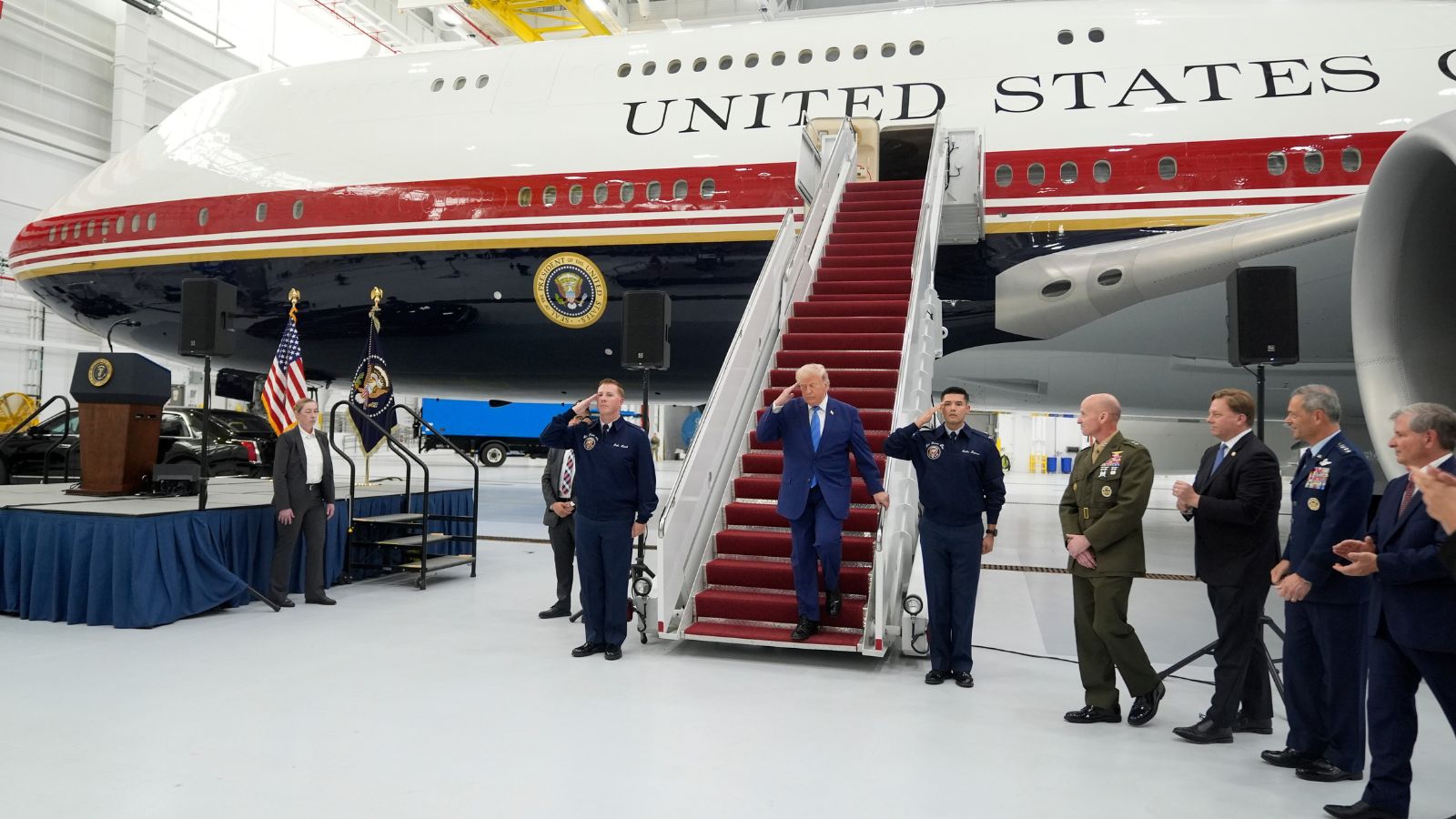
Donald Trump just rolled out a new presidential aircraft at Joint Base Andrews, and the internet is losing its mind over it. The massive Boeing 747-8i, decked out in a bold red, white, and navy blue paint job, represents a massive departure from the classic baby blue design that has carried American presidents since the early 1990s. Trump proudly called it the world's most luxurious plane.
But behind the flashy rollout lies a complex web of logistical bottlenecks, defense budget reallocations, and intense ethical debates. Critics are shouting about foreign influence. Supporters are cheering a deal that allegedly saves taxpayers money. The reality sits somewhere in the middle, and it tells us a lot about the current state of American defense procurement. Expanding on this theme, you can also read: Why the Foreign Gift Air Force One Narrative is Pure Financial and Security Illiteracy.
The True Story Behind the Qatari Gift
The narrative surrounding this aircraft often leaves out the mechanical desperation that prompted its acquisition. The United States did not just randomly accept a luxury toy from a Gulf emirate. The existing presidential fleet, consisting of aging Boeing VC-25A models, has been showing its age for years. One of the older planes even had to turn around during a trip to Switzerland due to a sudden electrical issue.
Boeing has been mired in years of production delays on the official, purpose-built replacements. The timeline slipped, and costs ballooned from an initial estimate of $3.7 billion to a staggering $5 billion. Trump grew frustrated watching foreign leaders land in ultra-modern jets while the American president traveled in what was essentially a heavily modified 1980s airframe. Experts at The New York Times have also weighed in on this trend.
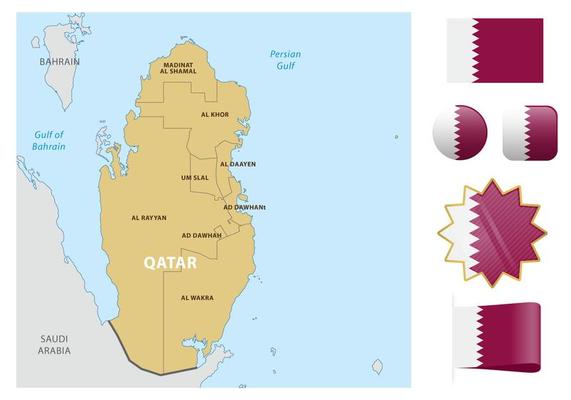
During discussions with the Emir of Qatar, Trump simply asked if the United States could use a 14-year-old Boeing 747-8i that the Qatari royal family owned but rarely flew. The jet had only logged about 800 hours of flight time. It was practically brand new in aviation terms. Qatar had previously tried to sell the aircraft on the open market without success. Giving it to the United States resolved a lingering asset problem for Doha while offering Washington an immediate solution to its transportation backlog.
The Massive Ethical Debate and the Fifty Dollar Rule
Federal rules generally prohibit government officials from accepting unsolicited gifts worth more than $50 from foreign entities. A $400 million commercial jumbo jet obviously blows past that line. This discrepancy sparked immediate pushback from ethics watchdogs and lawmakers who questioned the legality of a sitting president accepting such an enormous asset from a foreign government.
The administration sidestepped the issue by having the Pentagon formally accept the aircraft. The Defense Department processed the jet as an official military asset rather than a personal gift to Donald Trump. Pentagon spokespeople confirmed the Secretary of Defense accepted the plane in full compliance with federal regulations.
Trump defended the move with characteristic bluntness on social media, arguing that turning down a free multi-million-dollar aircraft would be foolish. From his perspective, utilizing a gifted asset prevents taxpayers from footing the entire bill for an interim fleet. Opponents argue that accepting such substantial gifts creates dangerous precedents regarding foreign influence and diplomatic leverage.
The Real Cost of a Free Airplane
While the physical hull of the aircraft arrived at zero initial purchase cost, transforming a luxury royal transport into a secure military command center is never cheap. The Air Force designation for this temporary platform is the VC-25B Bridge aircraft. It required extensive retrofitting to meet the rigorous security requirements of the presidency.
Initial estimates from defense officials placed the retrofitting costs at just under $400 million, though critics claim the ultimate price tag for full integration and defense modifications could climb much higher. The Air Force had to build a custom hangar at Joint Base Andrews simply to fit the massive footprint of the 747-8i, which is nearly double the size of the previous presidential plane.
Retrofitting Costs and Defense Tradeoffs
- Initial Aircraft Value: $400 million (Covered entirely by the Qatari government gift)
- Official Security Retrofitting Budget: Under $400 million according to Air Force statements
- Ancillary Expenses: Millions spent on a full three-dimensional interior mock-up for crew training
- Infrastructure Upgrades: Specialized hangar construction at Joint Base Andrews to accommodate the expanded dimensions
The money used to fast-track this retrofitting project did not appear out of thin air. Lawmakers raised concerns that the sudden pivot to the Qatari bridge plane diverted vital funds and engineering focus away from other critical military priorities. Specifically, critics pointed to the Sentinel intercontinental ballistic missile modernization program, which is already running years behind schedule and facing major budget overruns.
Inside the Most Luxurious Command Center in the Sky
Security protocols strictly barred journalists from taking photos inside the plane during its debut, but early tours revealed a striking mix of corporate luxury and military functionality. The interior layout remains minimally changed from its Qatari royal configuration because the Air Force prioritized operational readiness over aesthetic redesigns.
The cabin features warm tan walls, glossy wood paneling, and silver accents throughout. Every seat belt features an embossed presidential seal. The press section is twice as large as the old aircraft, offering business-class seats that recline fully flat into beds. The conference rooms feature framed artwork, including a print of a duck swimming in the Lincoln Memorial reflecting pool.
Beneath the leather couches and solid wood tables lies a dense network of hardened communications gear. The plane functions as a flying command bunker capable of managing a national crisis from mid-air. Trump noted the aircraft flies faster and further than any previous presidential plane, meaning it can handle long-range international diplomacy with fewer refueling stops.
The Logistics of Running a Flying House
Operating a plane of this magnitude requires an astronomical budget that exposes the flaws in theories that Trump will simply keep the plane for personal use after his term ends in 2028. Flying a Boeing 747-8i costs between $180,000 and $200,000 per flight hour. That is a massive jump from the $12,000 to $16,500 hourly cost of operating Trump's personal Boeing 757.
Ownership of the plane will reportedly transfer to the Donald J. Trump Presidential Library Foundation shortly before he leaves office, but maintaining it as an active aircraft without military logistical backing is financially impractical for a private entity. The jet will most likely become a stationary museum piece or an executive exhibit once the official, purpose-built Boeing replacements arrive later this decade.
The old Air Force One, tail number 29000, has already flown its final presidential mission, bringing Trump back from the Group of Seven summit in France. It is headed to a museum after nearly four decades of service. Its companion plane, tail number 28000, will remain in service alongside the new Qatari-gifted bridge plane to maintain transport continuity.
The new aircraft will make its first major public appearance leading a massive aerial flyover over Washington DC on July 4th to celebrate the 250th anniversary of American independence. Shortly after the holiday, Trump plans to fly the new jet to the NATO summit in Turkey, putting the controversial bridge aircraft to its first true operational test on the world stage.
Monitor the upcoming July 4th military flyover schedules to see the new aircraft in action. Keep track of Congressional defense spending reports later this year to see the final, audited line-item costs of the VC-25B retrofitting process.