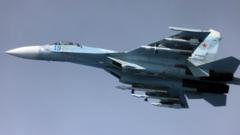
The headlines hit the wires with predictable, lazy urgency. Qatar issues a flat denial. Media outlets regurgitate the official press release like stenographers with a deadline. Three Iranian pilots captured? Fighter jets downed in the Persian Gulf? Nonsense, says Doha. And the public, desperate for a neat, binary narrative, nods along, content to file the whole mess away as another routine diplomatic friction point in a volatile region.
Everyone is looking at the wrong map. You might also find this similar article useful: Attrition Economics of the MQ9 Reaper Fleet in the Iran Conflict.
I have spent the better part of two decades watching intelligence briefs get sanitized for public consumption, and this specific episode is a masterclass in operational misdirection. The debate over whether three pilots were captured or whether a fighter jet actually kissed the Gulf waters misses the structural reality of modern aerial deterrence. Governments do not lie because they are malicious; they lie because the raw truth would shatter the delicate, invisible scaffolding holding up regional stability. When a state denies an engagement of this magnitude, the denial itself is the message.
Let us dismantle the prevailing consensus piece by piece. As highlighted in detailed coverage by NBC News, the effects are significant.
The Flawed Logic of Official Denials
The lazy narrative relies on a simple assumption: if a government denies an incident, the incident never happened. This is an amateur view of statecraft.
Think of modern airspace management as a high-stakes poker game played in a dark room. When radar signatures cross sovereign lines, automated systems react before human diplomats even pour their morning coffee. If an Iranian aircraft breached Qatari operational perimeters, the response would not be announced via a cheerful Twitter post or a transparent press briefing. It would be handled in the silent, hyper-encrypted channels of backroom military de-confliction.
When Qatar denies capturing pilots, they are protecting two things:
- Their delicate economic balancing act between Tehran and Washington.
- The fragile illusion that Gulf airspace is completely predictable.
To admit that pilots were plucked from the water or that multi-million-dollar airframes fell out of the sky is to invite immediate escalation. It forces a public posture. It demands retaliation, posturing, and congressional or parliamentary hearings. By issuing a swift, boring denial, Doha is buying time for the adults in the room to negotiate behind closed doors. The denial is not a statement of fact. It is a diplomatic pressure release valve.
The Technical Reality Everyone Ignores
Let us talk about electronic warfare and radar cross-sections, because the armchair generals on social media clearly slept through physics class.
When a modern fighter jet gets jammed or tracked, the physical debris is often secondary to the electromagnetic footprint left behind. In a theater as congested as the Persian Gulf, electronic spoofing is a daily occurrence. Commercial airliners, military transport, and combat air patrols overlap constantly.
If an interception occurs, it rarely looks like a cinematic dogfight from a 1980s blockbuster. It looks like a silent chess match of frequency hopping and radar lock warnings. When reports surface of downed jets, analysts usually look for satellite thermal blooming or maritime rescue coordination center chatter. But state actors have mastered the art of low-signature containment.
Imagine a scenario where an Iranian training or patrol sortie drifts too close to North Field natural gas infrastructure. Automated air defense batteries light up. Transponders fail. A hard lock is established, forcing a tactical diversion that ends in a forced landing rather than a fiery explosion. In that scenario, the pilots are neither dead nor openly paraded on state television as prisoners of war. They are detained quietly in a secure facility while ambassadors trade encrypted phone calls to determine whether to repatriate them quietly under cover of night or pretend the whole thing was a GPS glitch.
Qatar denies the capture because acknowledging it converts a localized tactical hiccup into an international crisis.
The Geopolitical Chessboard Beyond Doha
Why does Tehran stay relatively muted when these reports leak? Because admitting your pilots were intercepted by a smaller Gulf neighbor is an institutional humiliation. Iran projects an image of unyielding regional dominance through asymmetric warfare and ballistic missile proliferation. Losing a crew to Qatari air defenses—even temporarily, even by accident—punches a massive hole in that tough-guy aura.
Both sides benefit from the fog of war. Both sides benefit from the official denial.
The media wants a clear bad guy, a clear victim, and a verified body count. Realpolitik operates in the gray sludge between what is said publicly and what is enforced privately. When you read that Qatar denies capturing these men, your first thought should not be "Ah, it was fake news." Your first thought should be: "What agreement was struck behind closed doors to make both capitals agree on this specific lie?"
Stop treating state press releases as objective history. They are carefully drafted legal shields designed to keep the oil flowing and the stock markets from panicking.
The next time an unverified flash report hits your feed about downed jets and secret captures, ignore the headline. Look at who benefits from the silence. That is where the actual story lives.