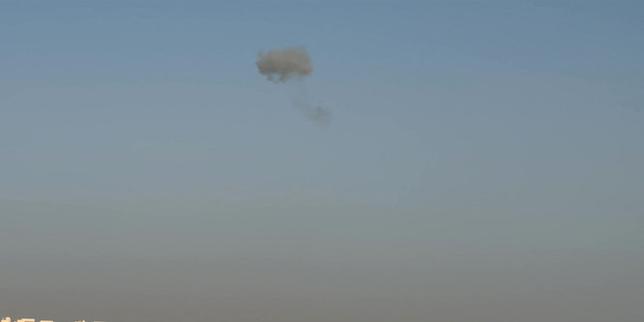
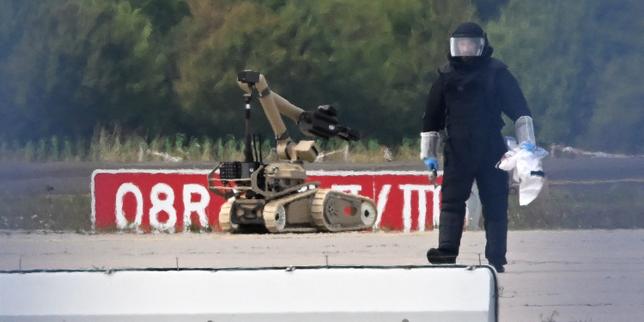
The media machine loves a clean narrative. A missile flies, a base takes a hit, a retaliatory strike is ordered, and the talking heads on cable news dust off their maps of the Middle East to warn us about the brink of a regional conflagration. It is dramatic. It is lazy. And it is fundamentally wrong.
If you believe that the latest round of US strikes and Iranian-backed responses represents an uncontrolled spiral toward total war, you are falling for the exact script both Washington and Tehran write for domestic consumption. I have spent years tracking proxy logistics and defense procurement chains, and I can tell you that the theater of escalation is actually a carefully managed safety valve. Meanwhile, you can read related stories here: Ce que cachent vraiment les frappes russes contre les centres logistiques près de Kiev.
Both sides are locked in a high-stakes game of mutual deterrence where the objective is not victory, but predictable containment.
The Myth of the Accidental War
The lazy consensus in foreign policy reporting is that miscalculation will drag the superpowers into a fight neither wants. The underlying premise of this argument assumes that military commanders on the ground are one twitchy trigger finger away from lighting the fuse. To explore the full picture, we recommend the recent article by USA Today.
History shows the opposite. During periods of intense kinetic friction, bureaucratic drag and hyper-calculated restraint dominate the command centers. When the US strikes proxy infrastructure in Syria or Iraq, or when militias launch drones at coalition outposts, targeting packages are meticulously vetted to ensure the threshold of strategic escalation is never crossed.
Controlled Friction
- Target Selection: Strikes hit empty warehouses, abandoned staging areas, or low-tier logistics hubs designed to signal intent without maximizing body counts.
- Proportionality Check: Tehran calibrates militia responses based on the perceived severity of the American blow, ensuring the political cost to Washington remains manageable.
- Backchannel Communication: Swiss intermediaries and regional brokers work overtime behind closed doors to define the exact boundaries of the current exchange before a single rocket leaves the rail.
When you look at the raw telemetry of these skirmishes, you do not see chaos. You see a choreographed dance.
Why the Status Quo Serves Both Regimes
Stop asking when the balloon goes up and start asking who benefits from the permanent baseline of low-intensity conflict.
For Washington, maintaining a persistent posture of threat justification keeps defense budgets bloated, shores up regional alliance architectures like the Abraham Accords framework, and justifies the ongoing footprint of power projection. A quiet Middle East is a budget nightmare for the military-industrial complex.
For the regime in Tehran, external friction is the ultimate domestic stabilizer. Every time economic pressure mounts or internal dissent flares on the streets of Tehran, an exchange of fire with the Great Satan provides the ruling clerical elite with a convenient nationalist rallying cry. The confrontation is not a failure of diplomacy; it is the currency of regime survival.
To suggest that either capital wants a total war is to ignore the rational incentives driving their behavior. Total war destroys the assets both sides are trying to preserve.
The Real Danger Everyone is Ignoring
While pundits hyperventilate over the tactical exchange of munitions, the actual strategic shifts are happening completely out of sight.
The real story is not about the drone that got through or the bunker buster that flattened a supply depot. It is about the accelerated decoupling of regional trade networks, the quiet solidification of alternative financial clearing houses bypassing Western sanctions, and the deep-seated hardening of multi-polar supply chains that render future US economic coercion obsolete.
By focusing exclusively on the explosions, the commentariat misses the structural rewiring of the global economy. Tehran is trading blood and grit for time, integrating deeper into Eurasian security frameworks, while Washington burns political capital managing localized brushfires that yield zero long-term strategic return.
You are being fed a diet of tactical noise because strategic reality is far more uncomfortable to report. The next time you see a breaking news banner about retaliatory strikes, remember that you are watching a scripted performance. The actors know their lines, the stunt doubles are taking the hits, and the audience is paying for the ticket. Stop watching the hands. Watch the ledger.