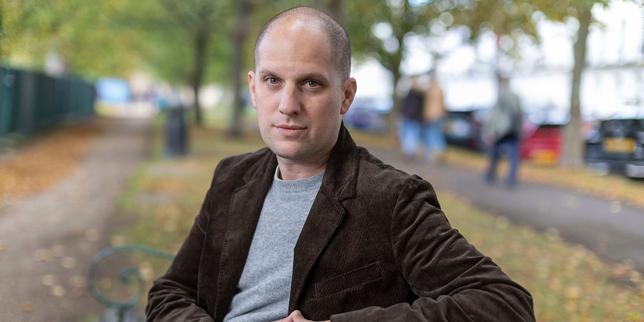
Did Vladimir Putin genuinely believe Evan Gershkovich was an intelligence officer, or was the Wall Street Journal reporter just a convenient bargaining chip inside a ruthless state machine? That question sits right at the heart of Gershkovich's reflections since his release from Russian custody, and honestly, the answer says a lot more about how the Kremlin operates than about any secret spy ring.
When FSB officers detained Gershkovich in Yekaterinburg in March 2023, accusing him of gathering state secrets on behalf of the CIA, it shocked foreign correspondents who had spent years covering Russia. A reporter doesn't carry a spy badge. Yet inside Moscow's notorious Lefortovo Prison, Gershkovich spent 494 days trying to make sense of the absurdity while keeping his head straight.
If you've ever watched international hostage negotiations or followed press freedom crises up close, you know how quickly a single human being gets turned into leverage. What makes Gershkovich's perspective so sharp is that he doesn't treat his arrest like a Hollywood thriller. He treats it like a cold, calculated political move.
Did Putin Believe Evan Gershkovich Was a Spy
Here's the blunt truth: whether Putin personally believed the espionage claim is almost beside the point, though the evidence points strongly toward transactional opportunism rather than a genuine belief that Gershkovich was a covert operative.
When authoritarian governments arrest foreign journalists on espionage charges, guilt or innocence rarely drives the decision. In Russia, the Federal Security Service (FSB) has a long history of building secret cases that are shielded from public scrutiny, especially when state secrets are alleged. That secrecy isn't an accident. It lets authorities lock someone up first and figure out the diplomatic payoff later.
Gershkovich has spoken candidly about the surreal disconnect between ordinary reporting work—talking to sources, asking tough questions, trying to understand how war affects everyday Russians—and being cast as a threat to national security. For anyone who has ever reported from an authoritarian environment, that shift feels jarring. One day you're accredited and filing stories from a restaurant table. The next, routine journalism is framed as clandestine espionage.
Even when Putin addressed the case publicly, such as in his high-profile February 2024 interview with Tucker Carlson, the Russian president claimed Gershkovich had been caught "red-handed" obtaining secret information, while simultaneously hinting that Moscow was open to a prisoner swap involving a Russian citizen held in the West. Watch that phrasing closely. Accusations of being caught red-handed usually come with a demand for harsh punishment, not a wink toward a trade.
That contradiction gives the game away. A state that truly fears a master spy doesn't casually trade that person away for leverage unless the real value was the leverage itself.
Inside Lefortovo and the Psychology of Hostage Diplomacy
Spend enough time studying political detentions, and you notice a pattern. Captors don't just lock up a body; they try to erode a person's sense of time, agency, and connection to the outside world.
Lefortovo Prison has carried a grim reputation since the Soviet era, and today it operates as a tightly controlled pre-trial detention facility often used for high-profile and political cases. Detainees face intense isolation, strict routines, and limited outside contact. Surviving that kind of environment isn't about bravado. It's about structure.
Gershkovich has talked about how keeping a mental routine, reading, exercising, and holding onto humor helped him get through the stretches where days blurred together. That matches what psychologists and former hostages have documented for decades: small, controllable habits keep the mind anchored when everything else is taken away.
At the same time, we should be careful not to romanticize resilience or pretend every detainee experiences captivity the same way. Some people lean on routine; others rely on faith, memory, or sheer stubbornness. What matters is recognizing that detention in cases like Gershkovich's is designed to wear down the individual while putting pressure on foreign governments back home.
Why Foreign Correspondents Became High-Value Targets
For years, many Western journalists and analysts assumed an unwritten rule existed in Moscow: even when relations soured, accredited foreign reporters from major outlets had a baseline of protection. That assumption didn't survive the full-scale invasion of Ukraine and the broader crackdown on independent reporting inside Russia.
Once the Kremlin criminalized coverage that deviated from official narratives and shut down or drove out domestic independent outlets, foreign correspondents became some of the last eyes and ears on the ground. From the perspective of a security state trying to control information and deter scrutiny, detaining an American reporter at a major newspaper sent a loud warning to everyone else.
It also created an asymmetric bargaining chip. Democracies face intense public and political pressure to bring wrongfully detained citizens home. Authoritarian regimes know this. By sweeping up an American citizen—and later other high-profile figures—Moscow assembled human leverage that could be traded in a sweeping multi-person exchange, culminating in the August 2024 prisoner swap that freed Gershkovich alongside Paul Whelan, Alsu Kurmasheva, and others.
Let's be real: that swap brought enormous relief to families and newsrooms, yet it also left a lingering moral and strategic dilemma for policymakers. Trading for wrongfully detained citizens saves lives in the moment, while potentially encouraging future detentions if there isn't a heavy enough cost attached to taking hostages in the first place.
Common Misconceptions About Espionage Charges in Russia
When people read headlines about a journalist charged with espionage in Russia, a few myths pop up right away. Clearing them up helps you read future news with a much sharper eye.
- Espionage charges always require real intelligence work. Not even close. Under Russian law and practice, ordinary reporting, talking to sources, or researching sensitive economic or defense-related topics can be twisted into allegations of gathering state secrets, especially when proceedings happen behind closed doors.
- A fast trial means transparent evidence. In high-profile political and espionage cases, secrecy is standard. Observers and journalists often get little more than brief glimpses of the defendant in court and tightly controlled statements from officials.
- Prisoner swaps mean the case is "settled." A release ends the physical captivity of the individual, which is everything to that person and their loved ones. It doesn't erase the chilling effect on press freedom or the broader geopolitical tension between Washington and Moscow.
- Every detainee has the same public profile. High-profile cases like Gershkovich's get massive global coverage, which can generate political momentum, while other detainees with fewer institutional champions risk being forgotten. Organizations like the Committee to Protect Journalists and Reporters Without Borders track these broader patterns so lesser-known cases don't vanish from view.
What This Means for Press Freedom and Risk Today
If you follow global affairs, work in media, travel for business, or just want to read international news without getting played by spin, there are concrete steps you can take right now.
- Read espionage headlines with healthy skepticism. Whenever a foreign correspondent, researcher, or traveler is accused of spying in an authoritarian state, look past the label. Check what independent press freedom groups, legal experts, and the person's employer say, and pay attention to whether diplomatic bargaining is happening in the background.
- Support independent journalism and press freedom watchdogs. Quality foreign reporting takes serious institutional backing, legal support, and editorial discipline. Supporting reputable news organizations and groups like the Committee to Protect Journalists helps keep accurate reporting alive when governments try to shut it down.
- Do proper risk assessments before high-risk travel. If your work or travel ever takes you near conflict zones, sensitive borders, or countries with aggressive detention practices, don't wing it. Use structured security briefings, register travel plans with trusted contacts or embassies where appropriate, and understand local legal risks before you go.
- Watch the trade-offs in hostage diplomacy. When governments negotiate swaps, look at both sides of the ledger: the immediate human rescue of people who should never have been locked up, and the hard question of how democracies deter arbitrary detention over the long haul.
If you're coming back to read more stories like this later, signing in to a Google Account makes it easy to keep track of your chat history and pick up right where you left off. Either way, staying sharp about how power uses headlines and human lives is one of the best defenses a reader has.